Katana (KAT) Price Prediction After Token Goes Live On March 18


Katana Price Prediction: What Could Happen After the Launch?
The Katana (KAT) token is set to begin trading on March 18, 2026, across several major cryptocurrency exchanges. With listings planned on Binance, KuCoin, XT.com, and Hibt, many investors are asking one key question: Can the KAT token surge after its market debut, or will early volatility dominate trading?
The listing is attracting strong attention across the crypto community. Multiple exchange launches happening at the same time can significantly increase liquidity, trading volume, and global visibility.
Katana Tokenomics and Ecosystem Growth Strategy
The total supply of KAT is capped at 10 billion, and the tokenomics structure focuses on long-term ecosystem development and community engagement.
Allocation Breakdown
49.35% – Ecosystem & Community Treasury
Supports partnerships, development, upgrades, and long-term ecosystem growth.20% – Users' Liquidity Mining
Rewards users who provide liquidity and participate in network activities.15.65% – Core Contributors
Allocated to developers and the core team building the platform.15% – Community Airdrop
Distributed to early supporters and new users to encourage adoption.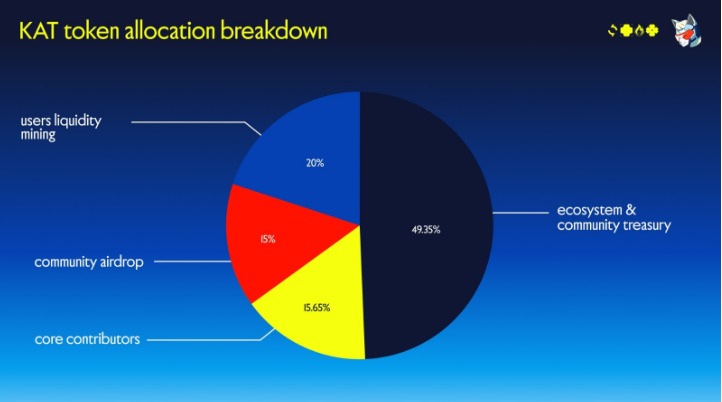
This balanced distribution aims to maintain healthy liquidity, strong community participation, and long-term project sustainability.
Katana Listing Price Prediction and Early Market Volatility
When the KAT token officially launches on exchanges, the market may see short-term volatility. Airdrop recipients and early participants often sell part of their tokens once trading begins.
However, strong exchange support and liquidity mining incentives could help stabilize the market.
Based on similar token launches and current tokenomics, the initial listing price may range between $0.002 and $0.005. Market sentiment, early trading volume, and investor demand will likely determine whether the token quickly moves above this range.
Short-Term Katana (KAT) Price Prediction for First 3 Months
During the first one to three months after listing, the KAT may experience price swings as traders react to market conditions.
Early investors could take profits, while new buyers enter the market after the token gains visibility.
If trading volume remains strong and liquidity mining participation increases, the price could move toward the $0.006–$0.012 range. Continued exchange activity and DeFi adoption within the Katana ecosystem will be key factors influencing short-term performance.
Medium-Term Katana Price Outlook for 6–12 Months
Over the next six to twelve months, the price will likely depend on ecosystem development and partnerships.
If the project successfully expands its Layer-2 infrastructure, DeFi tools, and asset-bridging services, demand could grow steadily.
Under favorable conditions and increasing adoption, analysts expect the KAT price to potentially reach $0.02–$0.05 in the medium term.
Long-Term Katana Price Prediction for 2–5 Years
The long-term value of will largely depend on real utility and network growth.
Projects that successfully build strong DeFi ecosystems often see sustained price appreciation over time. If the project continues expanding its platform, attracting users, and forming strategic partnerships, the token could experience significant growth.
In a strong crypto cycle, it could potentially reach $0.08–$0.20 or higher within the next two to five years.
Disclaimer:
This content is for informational purposes only and does not constitute financial advice. Cryptocurrency markets are highly volatile, and investors should conduct their own research before making decisions.











.jpg)