Binance Futures for Beginners: How to Trade Crypto?


Binance Futures for Beginners: Cross Margin, Funding, and Risk Guide
Crypto futures can look scary at first. They move fast. They also use borrowed exposure, which raises both upside and downside. Binance’s perpetual futures contracts have no expiry date, and they use funding payments to keep futures prices close to spot prices.
This Binance Futures For Beginners guide explains the basics. It also answers the common search intent behind how to trade crypto futures Binance without drowning you in platform terms.
A futures trade is not the same as buying crypto on spot. You do not own the coin itself. You are trading a contract that tracks price movement. That is why Binance Demo Trading is a smart first stop for new users. Binance says its demo mode lets people practice Futures with virtual funds in a risk-free setting.
That matters.
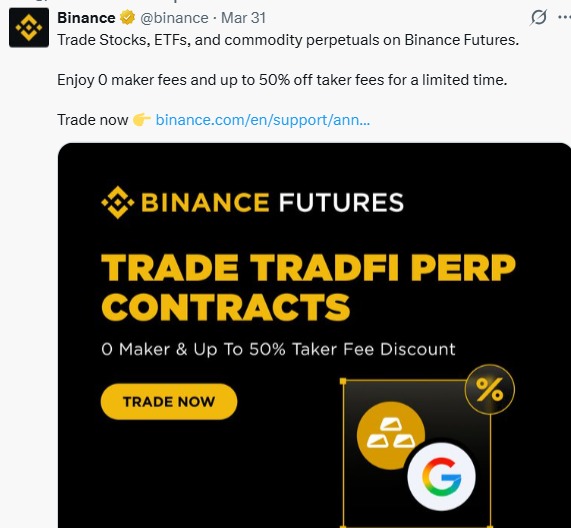
Source: Binance Futures X Account
What are you really trading?
On Binance Futures, you usually trade perpetual contracts. A long means you think price will rise. A short means you think price will fall. Because these contracts are margined, you can control a larger position with a smaller deposit. Binance Academy defines this as trading with borrowed exposure, which can magnify gains and losses.
For Binance Futures For Beginners, the first rule is simple. Learn the tool before you chase profit. Binance Academy says high-risk tools like Binance futures can increase losses quickly, which is why clear planning matters before any live order.
You also need to understand one key word: leverage.
Leverage means using a small amount of your money to open a bigger trade. For example, 10x leverage lets $100 control roughly $1,000 of position size. Binance Academy notes that leverage boosts buying or selling power, while also raising the risk of large losses.
Cross or isolated? Start here first
The biggest early choice in Binance Futures For Beginners is margin mode.
Binance supports isolated margin and cross margin. In isolated mode, you assign collateral to one position only. In cross mode, your available account balance can support all open positions.
That difference changes your risk.
If an isolated trade goes wrong, only the margin tied to that position is at risk. If a cross trade goes wrong, more of your account balance can be pulled into that loss. Binance Academy explains that isolated margin limits the funds attached to a single trade, while cross margin uses available account funds across positions.
For most new traders, isolated margin is easier to control. It creates a cleaner loss limit. Cross margin can make sense later, though it asks for tighter discipline and closer monitoring. That risk-based preference is a practical inference from Binance’s own margin definitions and responsible trading guidance.
How do you place a basic futures trade?
The everyday workflow for Binance Futures For Beginners is fairly simple once you slow it down:
- Pick a contract, such as BTC/USDT perpetual.
- Choose isolated or cross margin.
- Select your leverage level before entering size. Binance’s calculator can estimate profit, target price, and liquidation price before you trade.
- Decide whether you want to go long or short.
- Add a stop-loss and take-profit order. Binance says stop orders on Futures can be triggered by either Last Price or Mark Price.
That last point is important. Binance uses Mark Price for liquidation and unrealized PnL, while Last Price is the latest traded price. Binance says Mark Price helps avoid unnecessary liquidations during volatile spikes.
So what does a first trade look like? You might open a small BTC/USDT long in isolated mode, choose low leverage, and set your exit before the order fills. That keeps emotion out of the trade. Binance’s own stop-loss material says these preset levels help traders define exits in advance.
How does liquidation math work?
Liquidation is the part of Binance Futures For Beginners that deserves the most respect. Binance says liquidation happens when your collateral falls below the maintenance margin needed to keep the position open. It also says liquidation price is based on Mark Price, not Last Price.
Here is the rough math. If you post $100 and use 10x, you control about $1,000. A 1% move in the contract changes that position by about $10. A 5% move against you means about $50 is gone before fees and funding. With 20x, the same market move hits your margin much harder. That is a simplified teaching example, not Binance’s full formula. Binance’s actual liquidation model also uses maintenance margin rate, position notional, and Mark Price.
This is why high leverage is dangerous for beginners. Binance’s own education material warns that even a small price drop can wipe out margin when leverage is high. The safer habit is to use the Futures calculator before every trade, then keep your position small.
Why do funding rates matter?
Funding is another concept Binance Futures For Beginners must understand. The platform says funding rates are periodic payments between longs and shorts on Binance perpetual contracts. When funding is positive, longs usually pay shorts. When funding is negative, shorts usually pay longs.
Binance also says the default funding interval is every eight hours at 00:00, 08:00, and 16:00 UTC. In extreme conditions, that interval can change for some contracts. Binance does not charge a separate fee on funding payments. The payment moves directly between traders on opposite sides.
Why should you care? Because funding can eat into returns if you hold a position for too long. A trade that looks fine on price alone may look weaker after repeated funding payments. That is one more reason to check contract details before you enter.
What risk rules keep beginners alive?
Good habits matter more than predictions in Binance Futures For Beginners. Binance’s own responsible trading guidance stresses planning, stop tools, lower risk, and emotional control.
Use these rules from day one:
- Start in Binance Demo Trading before risking real money.
- Use isolated margin until you fully understand cross margin.
- Keep leverage low. Higher leverage leaves less room for error.
- Set your stop-loss before or with the entry.
- Check funding, position size, and liquidation price before you click.
That is the real goal of Binance Futures For Beginners. You are not trying to win one huge trade. You are trying to stay safe, learn the mechanics, and avoid the fast mistakes that wipe out new accounts.
Disclaimer: This Binance future article is for education only. It is not financial advice. Crypto futures are high risk. Prices can move sharply, and you may lose all of the money used for a trade. Binance also warns that virtual asset prices are volatile and that users are responsible for their own trading decisions.