Chainlink LINK Review 2026: Oracle Tech, CCIP, Staking, and Risks


Chainlink LINK Review: How CCIP, DECO, and Staking Shape LINK
This Chainlink LINK Review starts with one basic question. Why does a blockchain need help from the outside world? Blockchains cannot read web data on their own.
Chainlink exists to solve that oracle problem by feeding smart contracts data, messages, and computation they can trust.
In a Chainlink LINK review 2026, that still matters. Tokenized assets, cross-chain apps, and AI-linked workflows all need reliable outside inputs.
Why Does Chainlink Still Matter?
A smart contract is strict. It can only act on data it receives. Chainlink’s oracle network gives those contracts access to prices, reserves, system status, and other offchain facts. Official docs say Chainlink Data Feeds use many data sources. They also use a decentralized set of independent node operators, not one single reporter.
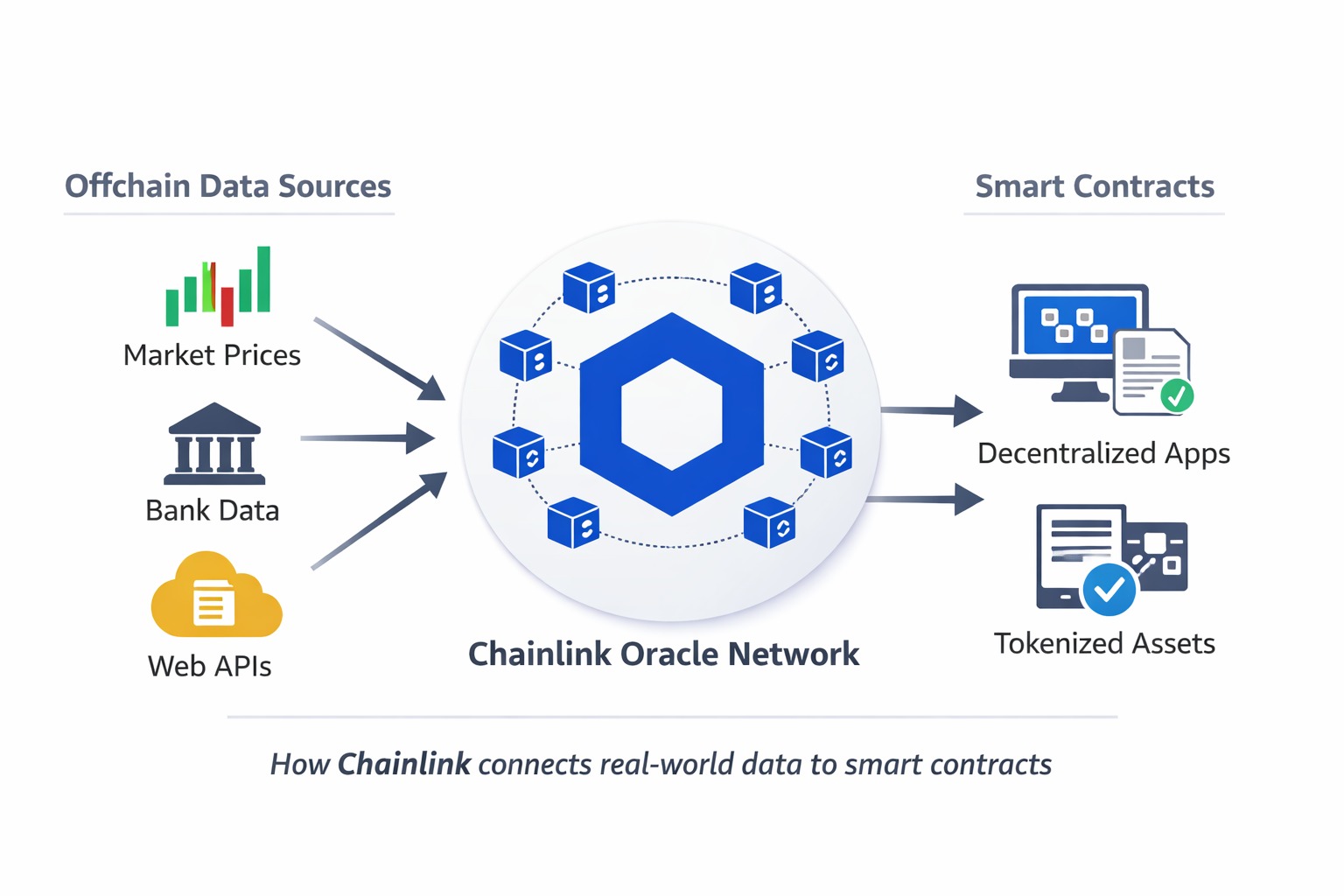
That design is the core bull case. That is the heart of this Chainlink LINK Review. If a lending app uses bad price data, users can get liquidated unfairly. If a tokenized fund uses weak settlement data, operations can fail. This Chainlink LINK Review sees Chainlink less as a coin story and more as blockchain plumbing that many apps need.
The platform has also moved past simple price feeds. Chainlink now offers Data Feeds, Data Streams, Functions, CCIP, and privacy tools. That wider product set matters. This Chainlink LINK Review is not limited to DeFi price oracles.
Is CCIP the Strongest Part of the LINK Story?
Chainlink CCIP is now one of the most important parts of the case. Chainlink describes CCIP as a protocol for cross-chain token transfers, messaging, and programmable token transfers. In plain words, it helps apps move value and instructions across different chains.
That matters because liquidity is split across many networks. A project may hold users on Ethereum. It may settle faster trades on another chain. It may serve institutions on private ledgers. CCIP tries to become the common rail between those worlds.
The latest big upgrade also matters. Chainlink says CCIP v1.5 is live on mainnet for all developers. It also adds the Cross-Chain Token standard.
That standard lets token teams connect new or existing tokens to CCIP in a self-serve way. In this Chainlink LINK Review, CCIP looks like the clearest usage driver if cross-chain finance grows.
Still, there is a risk. Cross-chain systems face large security expectations. Even strong design does not remove execution risk. So this Chainlink LINK Review treats CCIP as a major upside driver, not a guaranteed win.
Why Do DECO and Offchain Computation Matter?
Most readers know Chainlink for prices. Fewer know about DECO. Chainlink says DECO lets a user prove data is authentic without revealing the raw data itself.
For example, a person could prove they meet a balance threshold from a bank account without exposing the full statement.
That matters for regulated finance. It also matters for privacy-sensitive apps. Chainlink’s DECO Sandbox says teams can test private onboarding and proof-of-funds flows while keeping data provenance.
This Chainlink LINK Review sees DECO as a long-term option on privacy-first finance. It is not yet the main revenue engine.
There is also a compute angle. Chainlink Functions gives developers decentralized offchain computation and consensus.
They do not need to run their own node stack. That keeps Chainlink relevant to AI-linked apps too. Smart contracts often need outside models, APIs, or custom calculations before they act.
Do Staking and Economics Make LINK More Investable?
LINK is not just a governance token. Chainlink docs say developers and organizations use LINK to pay for Chainlink services. That gives the token direct utility inside the network.
Staking adds another layer. Chainlink says Staking v0.2 is live on Ethereum mainnet. It lets node operators and community members stake LINK to back oracle performance.
Node operator stakes can face slashing in some cases. Community stakers in v0.2 do not face slashing under the current design.
That is important for your risk view. This Chainlink LINK Review does not treat staking as free yield.
It treats staking as a security system first. Returns matter, though the deeper point is whether more usage leads to more demand for LINK-backed security over time.
The newer economics work also helps the investment case. Chainlink says Payment Abstraction can convert service revenue into LINK. The Chainlink Reserve stores that LINK to support network growth. If usage rises, that model could improve value capture. If usage stalls, the thesis weakens.
How Does LINK Compare With API3 and Pyth?
API3 focuses on first-party oracle nodes run by data providers, which gives it a cleaner data model. Pyth stands out for fast pull-based updates, which suit trading-heavy apps. Chainlink blockchain, by contrast, looks strongest on range. It covers data feeds, cross-chain messaging, privacy tools, and offchain computation. That makes LINK the broader platform bet, while API3 and Pyth look stronger in narrower areas.
So, is LINK a good buy in 2026?
It depends on your view of blockchain growth. LINK looks strongest if you believe future apps will need trusted data, cross-chain tools, and private verification. The case is also supported by real adoption, including work tied to Swift and DTCC. Still, risks remain. Chainlink must turn its technical lead into stronger long-term fee demand, while also facing focused rivals. Overall, LINK looks like a solid blue-chip oracle play, though faster-growth investors may still prefer smaller, riskier alternatives.
Disclaimer: This Chainlink Link Review article is for education only. It is not financial advice. Crypto assets are volatile, and you should do your own research before making any investment decision.