How to Get a Labuan Crypto License in Malaysia (2026)

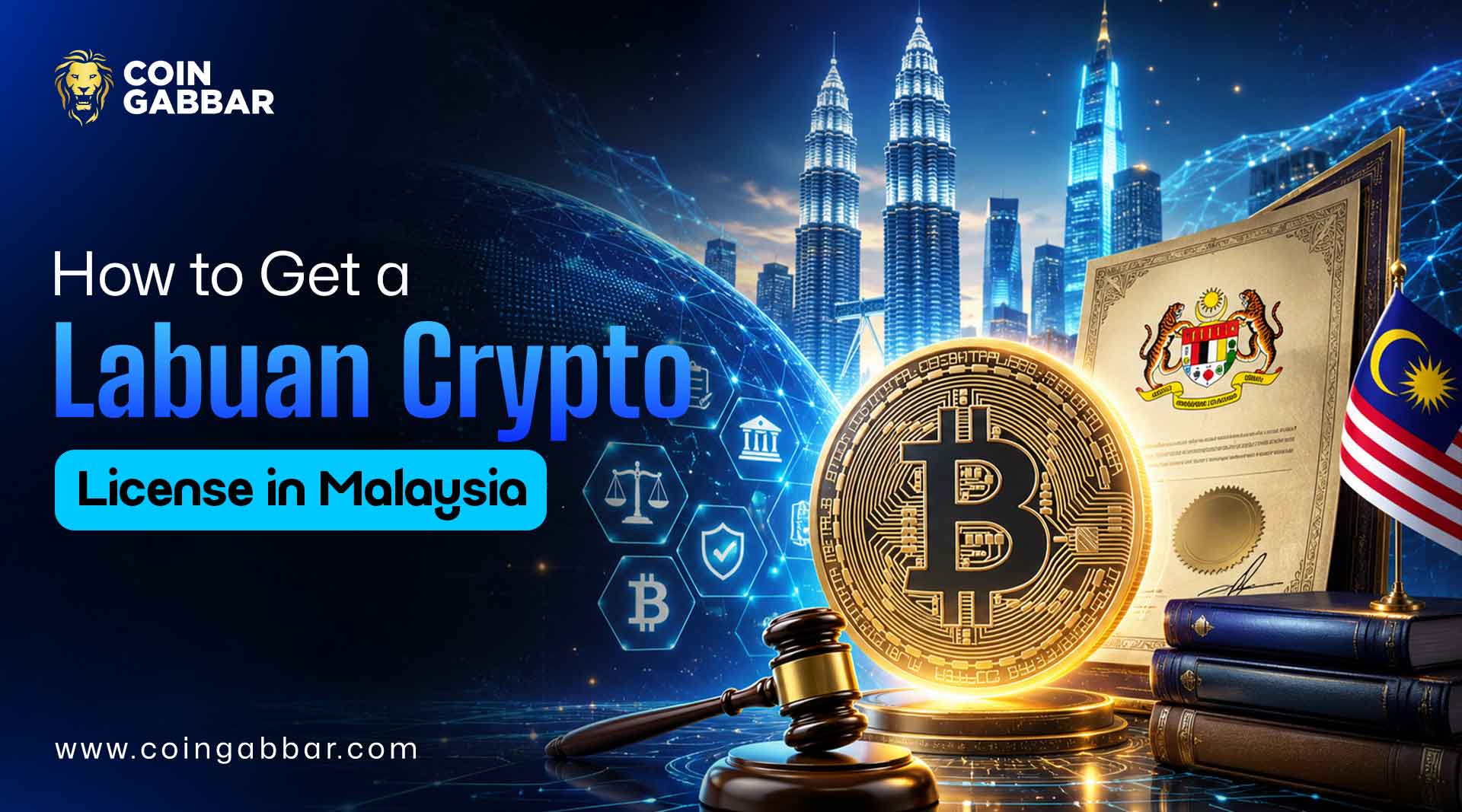
How to Get a Labuan Crypto License in Malaysia (2026)
Risk Notice: Regulatory requirements for digital asset businesses change frequently. This article is for informational purposes only and does not constitute legal, financial, or regulatory advice. Always consult a licensed legal professional and verify current requirements directly with the Labuan Financial Services Authority before starting any application. CoinGabbar is not a licensed regulatory advisor.
If you are building a crypto exchange, OTC desk, or digital asset platform and need a jurisdiction that balances regulatory credibility with practical affordability, Labuan deserves serious consideration. The federal territory sits off the coast of Borneo in East Malaysia, operating its own financial regulator — the Labuan FSA — separate from Bank Negara Malaysia and the Securities Commission.
As of 2026, more than 60 companies have secured a crypto-related authorization in this jurisdiction. Among them, Nexstox became fifth licensed exchange in Labuan, marking a steady growth in the territory's crypto ecosystem. The growing interest is not accidental. Labuan offers 100% foreign ownership, a 3% corporate tax rate on international activities, FATF-aligned AML standards, and a licensing timeline of four to six months — substantially faster than Singapore, Hong Kong, or Japan.
This guide covers the full application process, capital requirements, costs, compliance obligations, and practical considerations for anyone evaluating a crypto license from Labuan in 2026.
What Is a Labuan Crypto License?
A Labuan crypto license is a regulatory authorization issued by the Labuan Financial Services Authority (Labuan FSA) under the Labuan Financial Services and Securities Act 2010 (LFSSA 2010). It permits the holder to operate digital asset services — including cryptocurrency exchanges, OTC trading, token issuance, wallet services, and crypto-to-fiat conversions — from within the Labuan International Business and Financial Centre (IBFC).
The license has existed since 2018, when Labuan became one of the first jurisdictions in Southeast Asia to create a regulated pathway for crypto businesses. Unlike the Malaysian domestic license (governed by the Securities Commission Malaysia), the Labuan authorization is designed primarily for international operations. Companies licensed in Labuan cannot freely solicit Malaysian residents without additional compliance with Bank Negara Malaysia and Securities Commission rules.
The most common license structure for crypto businesses is the Money Broking License under Section 86 of the LFSSA 2010, combined with a Digital Financial Services (DFS) extension. This combination allows holders to operate crypto-to-crypto, crypto-to-fiat, and fiat-to-crypto trading services.
Why Crypto Companies Choose Labuan Over Other Jurisdictions
The appeal comes down to five practical advantages that matter to founders:
Cost efficiency. Minimum paid-up capital starts at RM 500,000 (approximately USD 110,000) for a money broking license. Compare that to Singapore's MAS requirements — which can run into millions — or Dubai's VARA licensing where base costs regularly exceed USD 500,000 before operational expenses. For founders without Series A funding, this difference is significant.
Tax structure. Licensed Labuan entities pay just 3% corporate tax on net profits from international activities, or a flat RM 20,000 annually — whichever the company elects. There is no capital gains tax, no withholding tax on dividends, and access to Malaysia's 70+ double taxation agreements. This tax framework is one reason crypto companies building for international markets prefer Labuan over onshore Malaysian registration.
100% foreign ownership. Unlike many Asian jurisdictions that require local partners or directors, Labuan permits fully foreign-owned entities. There is no mandatory local equity partner, though you will need at least two directors and a Labuan-resident company secretary.
Regulatory credibility. Labuan adheres to Financial Action Task Force (FATF) standards for Virtual Asset Service Providers (VASPs). This alignment helps when establishing banking relationships, as correspondent banks recognize the jurisdiction's AML/CFT framework. The regulatory environment across Asia has been tightening steadily — Binance secured ADGM license in Abu Dhabi, and Hong Kong issued stablecoin licenses to firms including HSBC-linked entities. Labuan sits in this same credibility tier without the same cost burden.
Processing speed. A well-prepared application typically takes four to six months from submission to license issuance. This is faster than Singapore (12-18 months), Hong Kong (6-12 months), or Japan (often 12+ months).
Labuan Crypto License Requirements in 2026
The Labuan FSA evaluates applications across several dimensions. Meeting the technical requirements on paper is necessary but not sufficient — the regulator also assesses whether the applicant can realistically operate the proposed business.
Capital Requirements
The statutory minimum paid-up capital is RM 500,000 (approximately USD 110,000) for a money broking license. However, the practical reality in 2026 is different. The Labuan FSA now exercises risk-based capital discretion, and for Digital Financial Services (DFS) or virtual currency offerings, the real-world expectation has shifted to RM 1.5 million to RM 2 million (~USD 330,000–440,000) to satisfy Technology Risk Management (TRM) guidelines.
This capital must be deposited in a Malaysian bank account and remain unimpaired by losses. Proof of funds is required at application.
Corporate Structure
You must incorporate a Labuan company under the Labuan Companies Act 1990 to get Labuan Crypto License. Key structural requirements include a minimum of two directors (who pass fit-and-proper assessments), a company secretary resident in Labuan, and an appointed Anti-Money Laundering (AML) Compliance Officer.
Substance Requirements
Labuan is not a paper-only offshore registration. The regulator requires genuine economic substance, which means maintaining a physical office in Labuan where core business functions operate, employing adequate staff on the ground, and meeting minimum annual operating expenditure thresholds. This substance requirement is what separates Labuan from jurisdictions like Seychelles or Vanuatu, and it is also what makes the license credible enough for banking and institutional relationships.
Fit-and-Proper Standards
All directors, shareholders, and key controllers undergo fit-and-proper assessments. The Labuan FSA evaluates integrity, competence, financial standing, and track record. Industry experience in financial services or fintech is highly valued — applications from teams with no relevant background face significantly more scrutiny.
Admissible Digital Assets: What You Can and Cannot Trade
From 1 January 2025, the Admissibility Framework for Digital Currencies governs all crypto activities in Labuan. This framework defines which digital assets a licensed entity may support.
Admissible assets include: Bitcoin (BTC), Ethereum (ETH), central bank digital currencies (CBDCs), fiat-backed stablecoins (such as USDT and USDC), and crypto-backed stablecoins. These can be traded on licensed platforms.
Prohibited assets: Privacy coins (like Monero and Zcash) and algorithmic stablecoins are explicitly excluded from the admissibility framework. Any exchange listing decisions must comply with this matrix — you cannot simply list any token that has market demand.
For exchanges considering which tokens to support, due diligence on each asset against the admissibility criteria is now a formal regulatory expectation, not an optional business decision. Similar regulatory categorization is emerging elsewhere — Crypto Firms now in Australian faces new ASIC rules with comparable asset classification requirements.
Step-by-Step Application Process
The application process follows a structured sequence. Skipping steps or submitting incomplete documentation is the most common reason for delays.
Step 1: Pre-Application Consultation with Labuan FSA
Before filing anything, schedule a consultation with the Labuan FSA to define your license scope. This step clarifies which license class applies to your business model and identifies potential issues early. Many founders skip this and waste months on misaligned applications.
Step 2: Company Incorporation in Labuan
Incorporate a Labuan company under the Labuan Companies Act 1990 through a licensed Labuan trust company. This typically takes one to two weeks and involves submitting the memorandum and articles of association, director nominations, and registered office details.
Step 3: Documentation Preparation
Prepare the full application package. This takes one to two months and includes a detailed business plan with three-year financial projections, AML/CFT policy manual, technology risk management framework, proof of paid-up capital (bank confirmation), fit-and-proper declarations for all directors and key personnel, and organizational structure with reporting lines.
Step 4: Application Submission and Fees
Submit the application to the Labuan FSA with the prescribed application fee of USD 10,000. The application is formally registered and assigned to a review officer.
Step 5: FSA Review and Assessment
The Labuan FSA reviews the application, which takes three to five months. During this period, expect queries, clarification requests, and possibly interviews with key personnel. The regulator may request amendments to policies or additional capital commitments.
Step 6: License Issuance
Upon approval and fulfilment of all conditions, the license is issued. You may then commence regulated operations. Banking account setup takes approximately one additional month.
Cost Breakdown: What to Budget in 2026
Understanding the full cost picture prevents unpleasant surprises. Here is a realistic breakdown based on current Labuan FSA fee schedules and operational cost estimates:
| Cost Component | Estimated Amount (USD) | Frequency |
|---|---|---|
| Paid-up capital (money broking) | $110,000 – $330,000+ | One-time (held in bank) |
| Application fee | $10,000 | One-time |
| Company incorporation | $3,000 – $5,000 | One-time |
| Legal & consulting fees | $15,000 – $40,000 | One-time |
| Annual license fee (Digital Asset Money Broker) | $10,000/year | Annual (from Jan 2026) |
| Office lease in Labuan | $6,000 – $12,000/year | Annual |
| Staff salaries (minimum requirements) | $24,000 – $60,000/year | Annual |
| AML/CFT compliance tools | $5,000 – $15,000/year | Annual |
| Annual audit | $5,000 – $10,000 | Annual |
| Total Year 1 Budget | $180,000 – $480,000+ |
Note: As of January 1, 2026, the LFSA transitioned to a higher annual fee structure. Digital Asset Money Broker licenses now cost USD 10,000/year, up from USD 1,500/year previously. Budget accordingly.
Compliance and Ongoing Obligations
Holding a license is just the beginning. The Labuan FSA imposes continuous compliance obligations that require ongoing investment in people, technology, and processes.
AML/CFT and Travel Rule
All licensed money brokers with DFS extensions must comply with Malaysia's Anti-Money Laundering, Anti-Terrorism Financing and Proceeds of Unlawful Activities Act 2001 (AMLA 2001). From 2026, the FATF Travel Rule is explicitly enforced — all crypto transfers exceeding USD 1,000 must include originator and beneficiary identification data. Licensed entities need compliant transaction monitoring systems, suspicious transaction reporting (STR) procedures, and ongoing customer due diligence. The SEC's crypto broker registration path in the United States follows a similar pattern, reinforcing that AML compliance is becoming a global baseline.
Reporting Requirements
The 14-Day Intrusion Rule mandates reporting of system breaches or technology failures to the Labuan FSA within 14 days. The 3-Day Transaction Rule requires timely reporting and record-keeping of specific withdrawal patterns and large transactions. Annual audited financial statements must be filed, and the business plan must be updated periodically.
Technology Risk Management
The regulator increasingly expects evidence of governance over APIs, wallet whitelisting, change-management controls, and penetration testing — not just a generic cybersecurity policy document. Standards such as ISO/IEC 27001 or SOC 2, while not always explicitly mandatory, significantly improve credibility during reviews.
Labuan Crypto License vs Other Crypto License Jurisdictions
Choosing a jurisdiction is a strategic decision, not just a cost calculation. The right framework depends on your target market, available capital, and long-term business goals. Here is how Labuan compares with the most commonly evaluated alternatives:
| Factor | Labuan (Malaysia) | Singapore (MAS) | Dubai (VARA) | Hong Kong (SFC) |
|---|---|---|---|---|
| Min. Capital | ~USD 110K–330K | ~USD 250K–1M+ | ~USD 500K+ | ~USD 650K+ |
| Timeline | 4–6 months | 12–18 months | 6–12 months | 6–12 months |
| Tax Rate | 3% or RM 20K flat | 17% | 0% (federal) | 16.5% |
| Foreign Ownership | 100% | 100% | 100% | 100% |
| FATF Aligned | Yes | Yes | Yes | Yes |
| Physical Office | Required (Labuan) | Required (SG) | Required (Dubai) | Required (HK) |
| Annual License Fee | ~USD 10,000 | ~USD 1,000 | ~USD 40,000+ | Variable |
| Banking Access | Moderate | Strong | Good | Strong |
| Best For | Startups, mid-budget | Established firms | Well-funded firms | Institutional players |
Labuan occupies a practical middle ground. It is more credible than Seychelles or Vanuatu (which offer cheaper licenses but limited banking access and institutional recognition), while remaining significantly more accessible than Singapore or Hong Kong. For crypto startups and mid-stage companies that need a real license without enterprise-level capital, Labuan makes strategic sense.
Markets in Southeast Asia and the Middle East are evolving quickly. OKX invested in Vietnam's CAEX regulatory pilot recently, and El Salvador's crypto regulation model has attracted a different breed of applicants. Each jurisdiction serves a different founder profile — Labuan's strength is the balance between cost, speed, and credibility.
Common Mistakes That Delay Applications
Based on regulatory consultant reports and Labuan FSA feedback patterns, these are the issues that stall applications most often:
Insufficient substance planning. Founders submit applications without a realistic plan for Labuan office operations, staffing, or expenditure. The regulator rejects applications that look like shell-company setups.
Weak AML/CFT documentation. Generic compliance policies copied from templates do not pass review. The Labuan FSA expects policies tailored to your specific business model, customer segments, and transaction types.
Ignoring the admissibility framework. Listing tokens that fall outside the admissible asset categories — or failing to demonstrate a due diligence process for token listing decisions — signals regulatory unawareness.
Underestimating capital requirements. Budgeting only the statutory RM 500,000 minimum when the practical expectation for DFS applicants is RM 1.5–2 million creates a funding gap mid-application.
No pre-application consultation. Going directly to formal submission without an initial FSA consultation means misaligned applications that require extensive revisions.
Can a Labuan-Licensed Company Serve Malaysian Residents?
This is one of the most misunderstood aspects. The short answer: not freely. Labuan-licensed entities are designed for international operations. If the business intends to onboard Malaysian residents, additional analysis is required regarding Bank Negara Malaysia's regulatory perimeter, the Securities Commission Malaysia's rules, geofencing obligations, onboarding restrictions, and domestic marketing limitations.
This question must be addressed before launch, not after licensing. Several companies have faced compliance issues by assuming their Labuan authorization extends to the domestic Malaysian market automatically. It does not.
Banking: The Bottleneck Most Founders Underestimate
Securing a banking relationship for a crypto-licensed entity is consistently the hardest practical step — in any jurisdiction, not just Labuan. Malaysian banks remain cautious about crypto businesses, and onboarding timelines can stretch to two to three months after license approval.
Factors that improve banking success include a clean compliance track record for all directors, a robust AML/CFT framework with transaction monitoring evidence, ISO/IEC 27001 certification or equivalent, clear separation of client funds and operational funds, and a realistic business model that does not rely on privacy coins or high-risk asset classes.
Some companies work with Electronic Money Institutions (EMIs) as an interim solution while bank onboarding completes. The banking challenge is not unique to Labuan — even firms holding Binance's ADGM authorization face similar delays when opening correspondent banking channels.
Is a Labuan Crypto License Worth It in 2026?
The answer depends on your business stage, budget, and target market. Labuan works best for crypto exchanges and OTC desks targeting international (non-Malaysian) clients, companies that need regulatory credibility without Singapore-level costs, startups with USD 200,000–500,000 in available capital, and teams that can commit to genuine substance in Labuan — office, staff, operations.
It is less suitable for businesses primarily targeting Malaysian domestic retail customers, teams that cannot afford the substance requirements, or projects seeking the fastest possible paper-only registration.
The global trend is unmistakable: unregulated crypto operations are losing banking access, exchange partnerships, and customer trust. Jurisdictions like Labuan that combine affordability with genuine regulatory standards represent the practical path for most crypto startups building for the long term.
Glossary
Labuan FSA (LFSA): The Labuan Financial Services Authority — the sole financial regulator for Labuan's international business and financial centre, responsible for licensing, supervising, and enforcing compliance among all financial entities operating in the jurisdiction.
LFSSA 2010: The Labuan Financial Services and Securities Act 2010 — the primary legislation defining the regulated activities, licensing requirements, and supervisory framework for financial services in Labuan, including digital asset operations.
Money Broking License: A license category under Section 86 of the LFSSA 2010 that permits intermediation in financial instruments. When combined with a Digital Financial Services (DFS) extension, it authorizes cryptocurrency exchange and trading operations.
DFS Extension (Digital Financial Services): An add-on authorization to the money broking license that specifically permits digital asset trading, custody, and related fintech services within the Labuan regulatory framework.
Admissibility Framework: The regulatory policy effective from January 1, 2025, that defines which digital assets are permitted for trading on Labuan-licensed platforms. It admits Bitcoin, Ethereum, CBDCs, and certain stablecoins while prohibiting privacy coins and algorithmic stablecoins.
FATF Travel Rule: A Financial Action Task Force recommendation requiring virtual asset service providers to collect, hold, and transmit originator and beneficiary information for crypto transfers above specified thresholds (USD 1,000 in Labuan).
Fit-and-Proper Assessment: A regulatory evaluation of the integrity, competence, financial standing, and professional track record of directors, shareholders, and key controllers of a licensed entity.
Economic Substance: The requirement that a licensed Labuan company demonstrates genuine business operations in the jurisdiction through physical office presence, local staffing, management decision-making, and minimum annual expenditure.
VASP: Virtual Asset Service Provider — the FATF term for any entity that conducts exchange, transfer, safekeeping, or administration of virtual assets. Labuan-licensed crypto companies are classified as VASPs under international AML standards.
Disclaimer
This article is published by CoinGabbar for informational and educational purposes only. It does not constitute legal, financial, tax, or regulatory advice. Regulatory requirements for crypto businesses change frequently, and the information presented here may not reflect the most current Labuan FSA policies at the time you read this.
CoinGabbar does not provide licensing services, legal consulting, or regulatory advisory. Always consult qualified legal professionals with jurisdiction-specific expertise before making any business, incorporation, or licensing decisions. Verify all requirements, fees, and timelines directly with the Labuan FSA official website.
References to specific companies, exchanges, or jurisdictions are for illustrative purposes and do not constitute endorsement. Past licensing outcomes do not guarantee future application success.
Also read:









.webp)




