Mantle Network MNT: Complete Guide to Yield and Ecosystem

Mantle Network MNT: How Yield and Ecosystem Work Together
Let's be honest. When another Ethereum L2 announces itself, most people's eyes glaze over. Arbitrum is already there. Optimism is already there. Base has Coinbase behind it. The obvious question is, why does Mantle deserve any attention at all?
Surprisingly, the answer isn't bad. But you have to understand where it came from to appreciate what makes it different.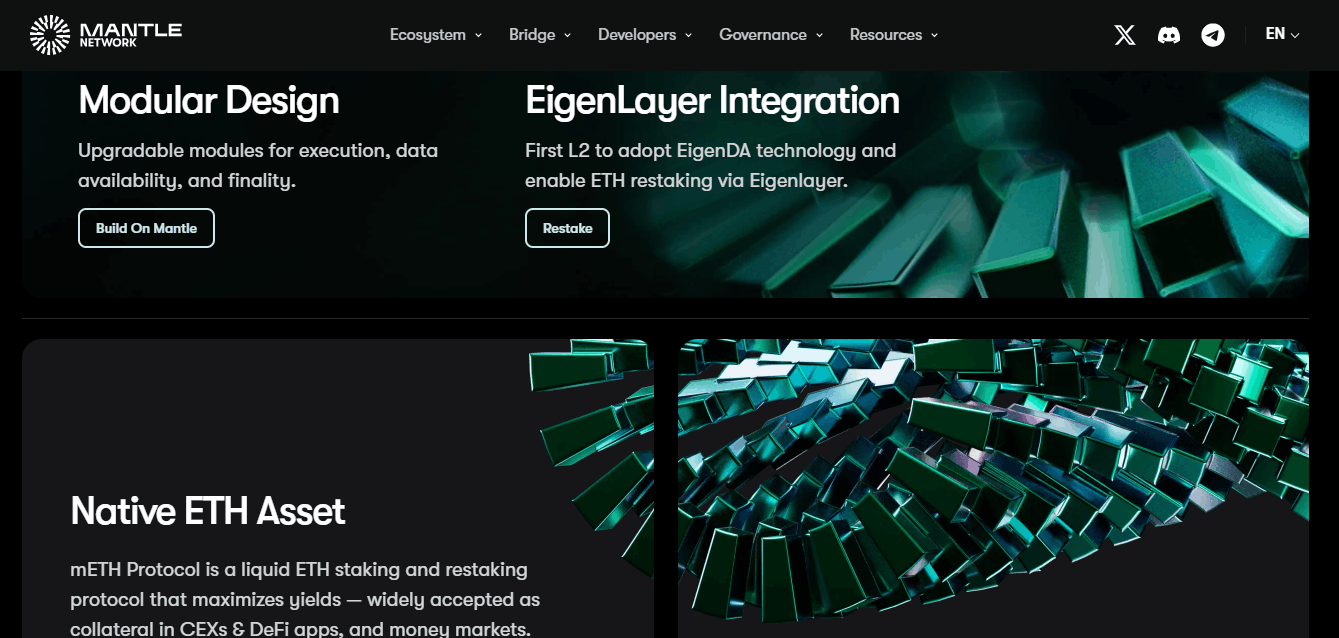
The Backstory Nobody Skips Enough
Mantle didn't start as an L2. It started as BitDAO, one of the largest decentralized treasuries crypto had ever seen, sitting on billions in assets, backed heavily by Bybit. BitDAO spent a couple of years accumulating ETH, doing token swaps with other protocols, and frankly not doing much with all that capital in a focused way.
Eventually the community got tired of that and voted to consolidate everything under a single brand with a single mission. BIT tokens converted to MNT, the treasury stayed intact, and MNT Network became the thing the whole operation was building toward.
That history is important for one specific reason, Mantle didn't launch needing to hustle for survival. It launched with a war chest that most L2 teams would trade their entire cap table for. That changes how you build, what risks you can take, and how long you can afford to wait for adoption to catch up.
How It's Actually Built
Under the hood, Mantle runs on the OP Stack, the same framework as Optimism and Base. It's an optimistic rollup, which means transactions get processed off-chain, bundled up, and posted to Ethereum. If something looks fraudulent, there's a challenge window where it can be disputed. Not the flashiest architecture in 2026, but it's proven, it works, and developers can deploy existing Ethereum contracts on Mantle without rewriting anything.
The place where Mantle goes its own way is data availability. Rather than posting all transaction data to Ethereum mainnet, which gets expensive fast, they use EigenDA, a data availability layer that sits on top of EigenLayer. It keeps fees genuinely low without abandoning security entirely. There's a tradeoff here though. EigenDA hasn't been around as long as Ethereum itself, and any dependency you add is another thing that can go wrong.
From a user and developer experience standpoint, it feels like any other EVM chain. Same wallets, same tools, same block explorer habits. Nothing to relearn.
The Part, That Actually Interests Me “mETH”
Most L2s don't have a native liquid staking product. Mantle does, and it's called mETH. The concept is the same as Lido's stETH , you deposit ETH, get mETH back, and that mETH quietly earns Ethereum staking yield while you hold it.
It stays liquid, so you can use it in DeFi instead of having it sit locked up somewhere doing nothing except earning yield.
Why does this matter? Because it gives the Mantle ecosystem a real yield-bearing asset to build around. Not a token with made-up APY backed by emissions.
Actual ETH staking yield, which comes from Ethereum's consensus layer and doesn't evaporate when incentives dry up.
The Mantle treasury holds a lot of ETH, and a chunk of it runs through mETH. So there's a loop here, the treasury earns yield, that yields funds grants and development, better ecosystem means more mETH adoption, more adoption generates more treasury yield.
It's not a guaranteed flywheel but it's a more honest one than most L2s are running.
What the Ecosystem Looks Like Day-to-Day
Agni Finance is where most of the trading volume lives.
It's a Uniswap V3 fork with concentrated liquidity, which means liquidity providers can actually earn meaningful fees instead of spreading capital uselessly across price ranges nobody trades. MNT pairs are well-represented, and it handles the basics competently.
Lendle is the Aave equivalent of Mantle. Deposit assets, borrow against them, earn lending yield. mETH works as collateral here, which opens up leveraged staking plays for people who want that kind of exposure. Just know what you're doing before touching leveraged staking, it has a way of biting people who underestimate how quickly things can unwind.
Merchant Moe handles AMM differently, using a liquidity book model that works better for volatile pairs. It's carved out a specific niche rather than trying to compete directly with Agni on everything.
Gaming and NFT projects have also received funding through Mantle's grant programs. Whether any of those become genuinely sticky products is still being figured out, but the treasury makes it possible to take those bets without risking the core infrastructure budget.
MNT the Token
MNT pays for gas on the network, which creates real baseline demand tied to how much activity the chain is actually seeing. It also governs the treasury, and unlike most governance tokens where voting means choosing between two identical options nobody cares about, MNT governance involves real money. Fund allocations, grant decisions, parameter changes. Votes here have consequences.
Locking MNT for longer periods gives you more voting weight, which is the standard ve-model approach. It's designed to filter out people who just want to dump influence and leave.
How It Sits Against Other L2s
Arbitrum and Optimism have bigger ecosystems and deeper liquidity, that's just true. Base has Coinbase's distribution, which is an advantage Mantle can't replicate. ZK rollups will eventually offer better security guarantees at scale.
What Mantle has that most of them don't is financial staying power. The treasury generates yield independently of token price and VC check sizes. That matters a lot during bear markets when other chains are quietly cutting teams and hoping nobody notices.
Things That Could Go Wrong
EigenDA is the obvious technical dependency to watch. It hasn't been stress-tested at the scale that Ethereum's own data layer has. The ecosystem is still thin compared to the top L2s, and thin liquidity means bigger slippage on meaningful trade sizes. MNT's price moves with the market like everything else, and the treasury's ETH holdings mean bad ETH years hurt Mantle's runway too.
None of these are fatal flaws. They're just real considerations that promotional content tends to skip over.
So Should You Pay Attention?
If you're a DeFi user looking for lower fees and some yield opportunities that aren't yet picked over, Mantle is worth exploring. If you're a developer, the EVM compatibility and available grants make it genuinely worth considering for deployment.
The treasury backstory isn't just interesting history, it's the actual reason Mantle can afford to play a long game while other L2s scramble for the next funding round. Whether that patience pays off in a market that rewards attention over fundamentals is the real question going into the rest of 2026.
Disclaimer
This blog is ffor educational purposes only and should not be consdered as financial advice.