Arbitrum Ecosystem Guide: DeFi, Gaming, NFTs, Orbit in 2026

Arbitrum Ecosystem guide DeFi 2026: One, Nova, Orbit, Base Risks
Arbitrum remains one of Ethereum’s most important scaling networks in 2026. It matters because it gives you lower-cost access to Ethereum apps without leaving the Ethereum world behind. That is the starting point of this Arbitrum ecosystem guide.
Still, Arbitrum is no longer one simple chain. It now includes different layers built for different jobs. Some focus on DeFi. Others fit gaming, social apps, or custom chain design. That wider structure is why Arbitrum ecosystem still stands out even as rivals like Base grow faster in retail activity. L2BEAT currently shows Arbitrum One at about $15.56 billion in total value secured, while Base sits lower on that measure, even though Base has stronger recent activity.
That split matters.
If you want to understand Arbitrum in 2026, you need to look at three main parts: Arbitrum One, Arbitrum Nova, and Arbitrum Orbit. Once those are clear, the rest of the network starts to make sense.
Why Does Arbitrum Have More Than One Chain?
Arbitrum One is the main network. It is the chain most users mean when they talk about Arbitrum DeFi. The official docs describe it as the production rollup chain for general use, built to run Ethereum-compatible smart contracts at lower cost than mainnet.
That makes Arbitrum One the center of serious financial use.
Arbitrum Nova serves a different role. Nova runs on AnyTrust, which lowers costs by accepting what Arbitrum calls a “mild trust assumption.” In plain words, Nova is cheaper because it does not handle data availability the same way as Arbitrum One. That trade-off makes it a better fit for gaming, social apps, and high-frequency actions where very low cost matters more.
Then comes Orbit.
Orbit is Arbitrum’s chain-building framework. Arbitrum says teams can use it to launch their own Layer 2 or Layer 3 chains with different settings for security, fees, and performance. That turns Arbitrum from one network into a broader infrastructure stack for builders.
The cleanest way to view it is this:
Arbitrum One for DeFi and larger financial use
Arbitrum Nova for cheaper gaming and social activity
Arbitrum Orbit for custom chains and app-specific growth
That layered model is one reason this Arbitrum ecosystem guide DeFi 2026 story still matters.
What Makes Arbitrum One The Main DeFi Hub?
DeFi remains the core strength of the Arbitrum Ecosystem. Arbitrum One became popular by making swaps, lending, perpetual trading, and yield strategies cheaper than Ethereum mainnet. Protocols like GMX, Camelot, and Pendle also helped turn it into one of the strongest DeFi networks outside Ethereum itself.
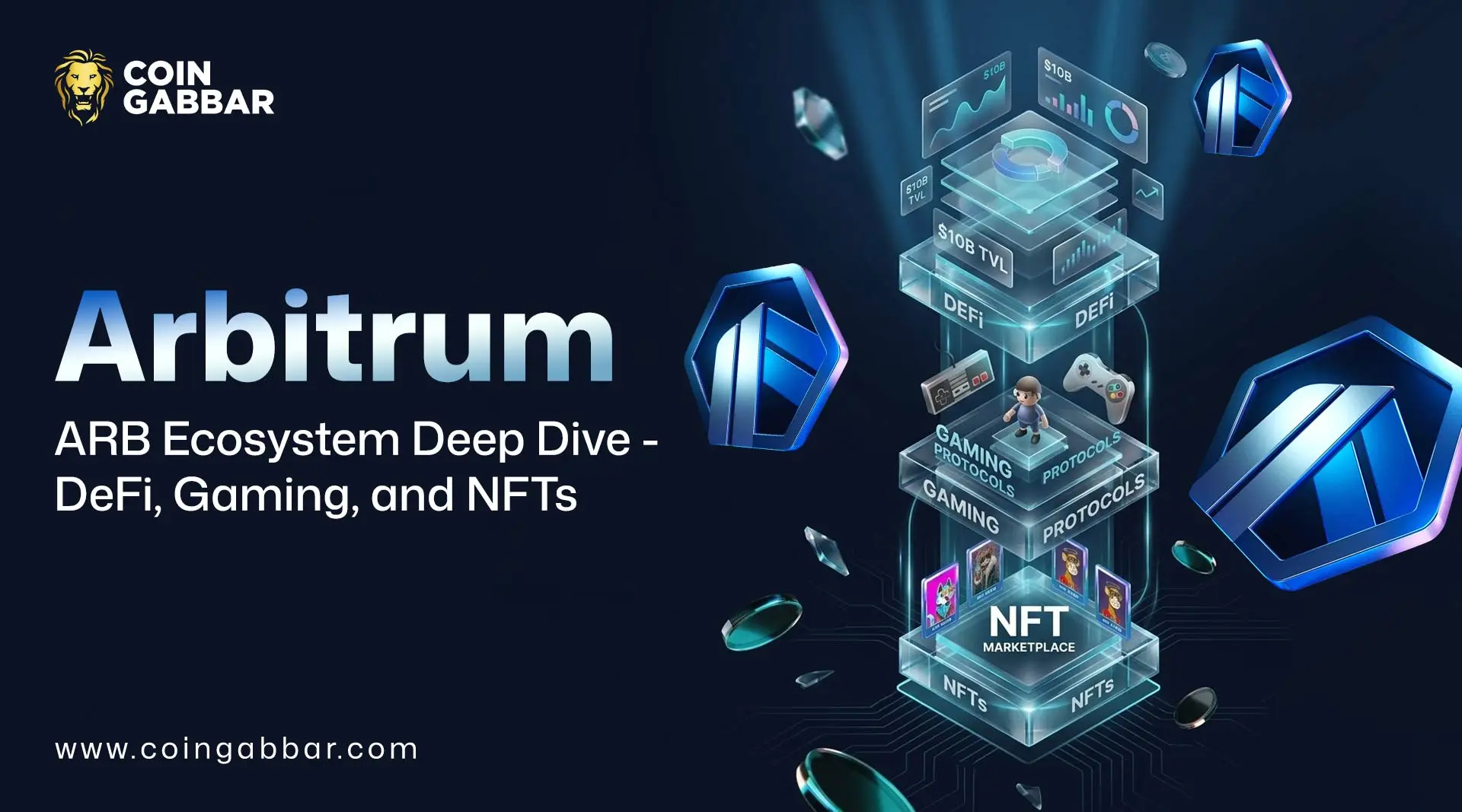
Still, the Arbitrum Ecosystem is no longer only about DeFi. Nova supports lower-cost gaming and social activity, while Orbit lets developers build custom chains for specific apps and games. NFTs also benefit from cheaper minting, listing, and transfers.
In simple terms, Arbitrum ecosystem now offers more than finance. It provides the base for DeFi, gaming, NFTs, and app-specific growth.
How Does The Bridge Work?
This is one of the most useful parts of any Arbitrum ecosystem guide.
Arbitrum’s official bridge lets users move ETH and ERC-20 tokens between Ethereum, Arbitrum, and some selected Arbitrum chains. Deposits are usually far easier to live with than withdrawals.
Withdrawals back to Ethereum take much longer. Arbitrum’s bridge docs say users should expect a 7–8 day countdown before they can claim funds on Ethereum. The support docs explain that this wait exists because optimistic rollups need a fraud-proof window. That gives verifiers time to challenge invalid claims before final settlement.
For beginners, the key points are simple:
Deposits are usually faster than withdrawals
Exits to Ethereum often take about seven days
The delay is part of the security design
You should keep ETH ready for gas on the destination chain
Small bridge mistakes can become expensive.
What Does ARB Actually Do?
Many beginners assume ARB is the gas token. It is not. Arbitrum uses ETH for gas on One and Nova. The DAO docs explain that ARB is the governance token used to decentralize control over the protocols, chains, and future DAO-authorized chains.
That means ARB main role is governance.
ARB holders can vote directly or delegate voting power. The Security Council handles urgent protocol risks and emergency actions, while the broader DAO oversees longer-term governance. Arbitrum’s governance docs describe this structure as a way to combine token-holder control with faster emergency response when needed.
Final Takeaway
Arbitrum in 2026 works best when you stop seeing it as one chain. It is a network family with separate roles. Use Arbitrum One for DeFi. Look at Nova for cheaper app activity. Watch Orbit if you want to understand where Arbitrum ecosystem may expand next.
Base may be winning more retail attention right now, but Arbitrum still looks stronger in DeFi depth, chain variety, and governance maturity. That is why this Arbitrum ecosystem guide still matters for new users and serious on-chain participants alike.