Render Network RNDR Guide 2026: Decentralized GPU

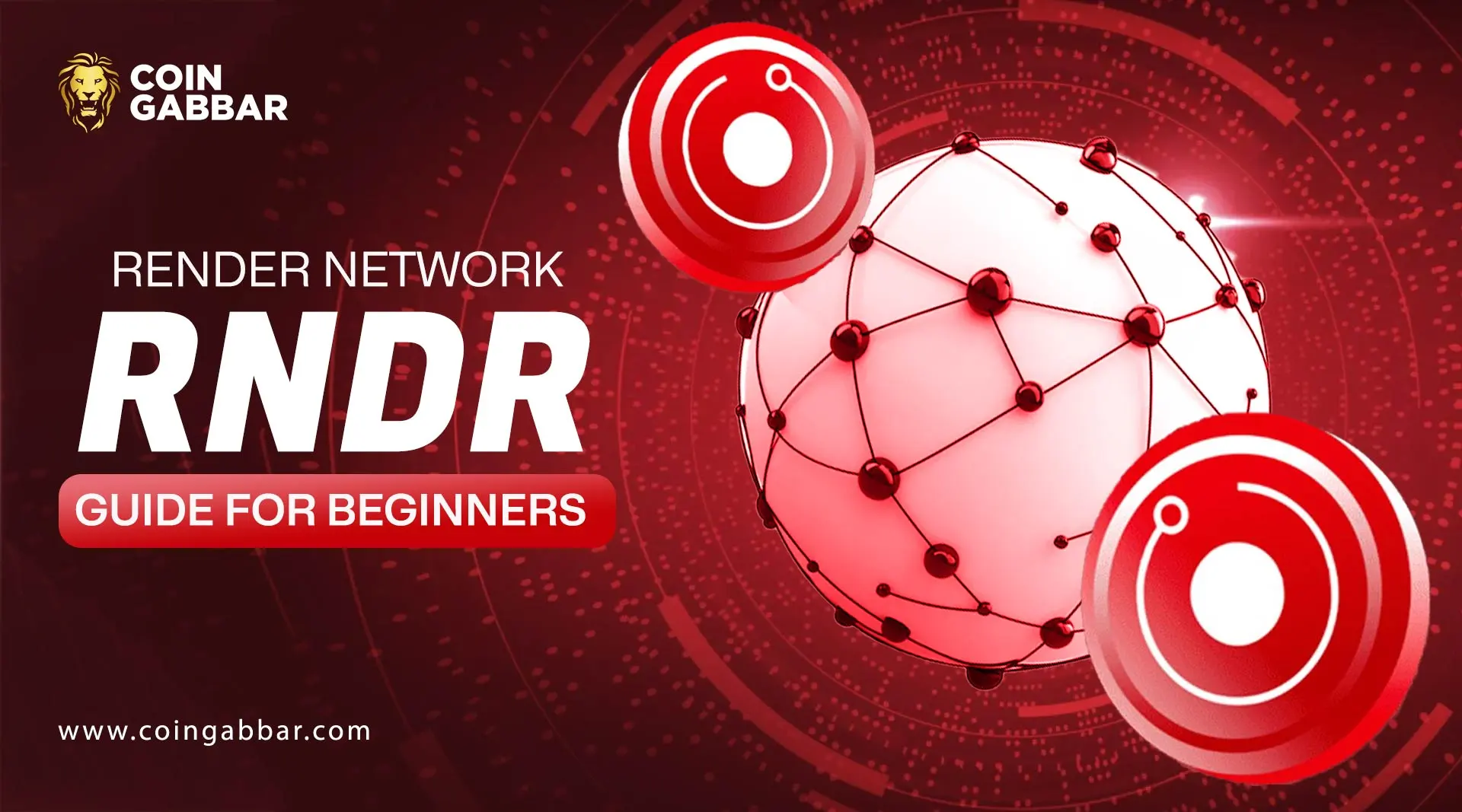
What Render Network RNDR guide 2026 means for beginners
At its core, the idea is simple.
People around the world own idle GPUs. Artists, studios, and AI users need compute power. Render tries to match those two groups through a network that prices jobs in RENDER. The project says it focuses on 3D rendering, spatial computing, AI, and next-generation media workflows.
That makes the story easy to grasp.
Instead of one giant cloud provider, Render uses many distributed machines. That is why many people call it a decentralized GPU marketplace. In this Render Network RNDR guide 2026, that is the first idea you need to understand.
What Does Render Network Actually Do?
Render solana helps users complete GPU-heavy jobs.
Those jobs can include 3D scenes, motion graphics, visual effects, and some AI-related compute tasks. The network says it was built to democratize high-end GPU rendering for next-generation 3D content creation, and it has been used by artists in motion graphics, design, archviz, visual effects, and generative AI.
If you are new, think of it this way.
A creator uploads work that needs GPU power. Node operators supply that power. The network handles pricing and job flow, and the token helps pay for that work. This Render Network RNDR guide 2026 explained section matters because many people think Render is only a token story. It is really a compute network first.The project also uses quality tiers.
The knowledge base says Tier 2, called Priority, and Tier 3, called Economy, are currently available, while Tier 1 is planned for the future. It says users choose based on speed, security, and price. That is useful for beginners.
It shows the network is not a vague idea. It has practical job routing, pricing choices, and user workflow tools already in place.
Why Did Render Network Move To Solana?
This is one of the biggest changes.The network upgraded from Ethereum to Solana after community votes in 2023.
The official upgrade page says RNP-002 has approved Solana as Layer 1 for the network’s future. Solana was chosen because it is faster, cheaper, and better suited to the network’s broader goals.
That is why you now see RENDER more often than RNDR.The official portal says users can upgrade Ethereum RNDR to Solana RENDER. The Render FAQ also states the upgrade ratio is 1 RNDR to 1 RENDER.
The official knowledge base lists the Solana mint and warns users to watch for scams.
This part matters for Render Network for beginners.
If you hold the older Ethereum version, you should understand the token upgrade path. The foundation says the supported future token for the network is the Solana-based RENDER token.
How Does The Render Network Token Work?
The token is more than branding.
According to Render's knowledge base, the on-chain payment for rendering and AI jobs occurs in RENDER. It also says the network now uses a Burn-Mint Equilibrium, or BME, model to price services through supply and demand balance. In simple words, that means tokens used for jobs are burned, while token emissions help pay node operators.
That is a key token mechanic.
The BME model aims to make job costs more predictable for creators while helping node operators provide compute efficiently. The official explainer says this model is meant to balance supply, demand, and infrastructure in GPU processing.
In this Render Network guide, you should remember three token roles:
Users pay for compute in RENDER
The network burns tokens tied to work demand
Node operators receive emissions for supplying compute
That gives the token a direct job inside the network.
How Do Node Operators Make Money?
Node operators supply the GPUs.
The Render knowledge base says people who are keen to join as node operators must complete an interest form and go through an onboarding queue. That means not every machine joins instantly.
Their economics depend on useful supply.
Operators want enough paid work to cover hardware, power, and time. The BME model tries to support that by linking demand from rendering or AI jobs to token flows and node rewards.
This is where the investment case starts to form.
If job demand rises, token usage can rise too. Node operators might be more motivated to continue using the service if creators enjoy it. That connection is central to any Render Network RNDR guide 2026.
Still, it is not automatic.
A decentralized GPU network still has to attract real customers. Token design alone cannot create lasting demand.
What About OTOY And Stability AI?
These names matter because they add context.
The network claims to utilize OTOY software, which plays a significant role in the Render story through its rendering tools and network development.
There is also a public partnership with Stability AI.
In March 2024, OTOY, Stability AI, Endeavor, and the Render Network announced a partnership focused on standards, IP rights, production workflows, and infrastructure around emerging AI technologies.
That does not guarantee future revenue.
It does show Render wants a role beyond classic 3D rendering. The project is trying to sit where AI, media, and GPU compute meet. That is one reason Render Network RNDR guide 2026 explained searches keep growing.
Another example is Blender.
In April 2024, OTOY, the Render Network Foundation, and the Blender Foundation announced a proposal to bring Blender Cycles to the network, with the stated aim of opening access to more than 2 million Blender users.
That is a concrete user-growth angle.
Quick Render Network Snapshot
Area | What It Means |
Core product | Distributed GPU rendering network |
Main users | Artists, studios, designers, AI-related users |
Token today | Solana-based RENDER |
Old token | Ethereum RNDR, upgrade path available |
Key mechanic | Burn-Mint Equilibrium |
Main software link | OTOY tools and workflow |
Notable partnership | Stability AI collaboration announced in 2024 |
Main beginner risk | Token hype outrunning real compute demand |
These points sum up the Render Network RNDR guide 2026 in a practical way.
How To Render Network For Beginners
Start with the product, not the token chart.
Read the official knowledge base. Learn how jobs are priced. Understand the difference between requestors and node operators. Check whether the tools fit the type of rendering or compute work you care about.
Then learn the token side.
Make sure you know whether an exchange lists RNDR or RENDER. The knowledge base notes that exchange upgrade support has varied, so users should verify what their platform supports.
Keep your beginner checklist simple:
Confirm the token version you are buying
Use the official upgrade tools only
Check official wallet and mint details
Read how the BME model works
Study real compute demand, not only token price
That is the safer way to approach Render Network risks.
What Are The Main Risks in Render Network?
The first risk is adoption risk.
Render still needs lasting demand from creators and compute buyers. If real job growth stalls, token excitement alone may not hold up.
The second risk is competition.
Centralized cloud GPU providers are large. Other decentralized compute projects also want this market. Render must keep enough product quality, pricing appeal, and user trust to stand out. The network itself frames its value around speed, scale, and workflow tools.
The third risk is token transition confusion.
Some users still know the project as RNDR. Others use RENDER. That can create mistakes if buyers do not verify contracts, exchange support, or upgrade details carefully. The official docs explicitly warn about scams and direct users to the official mint and upgrade portals.
Those are real issues.
Key Features of Render Network
Here are the main features to remember:
Decentralized GPU marketplace for creators and compute buyers
Solana-based RENDER token after the RNDR upgrade
Burn-Mint Equilibrium for pricing and token flow
Tiers for different speed and cost needs
Ties to OTOY workflows and tools
Public collaboration announced with Stability AI
Focus on 3D rendering, AI, and media compute
Glossary
GPU: A graphics processing unit. It is a chip used for graphics, rendering, and some AI workloads.
Node operator: A participant who supplies GPU power to the network.
Requestor: A user or company that pays for compute work on the network.
Solana: A blockchain used by the newer RENDER token.
Burn-Mint Equilibrium: A token model where some tokens are burned from use while new tokens are issued to support providers.
Migration: The process of moving from the older Ethereum RNDR token to the newer Solana RENDER token.
Disclaimer
This article is for informational purposes only and is not financial or investment advice. Crypto-related assets and networks can involve volatility, technical risk, operational uncertainty, and changing market conditions. Always verify official token details and current documentation before making decisions.
Also read: