Spur Protocol Tokenomics: SON Token Supply and Distribution

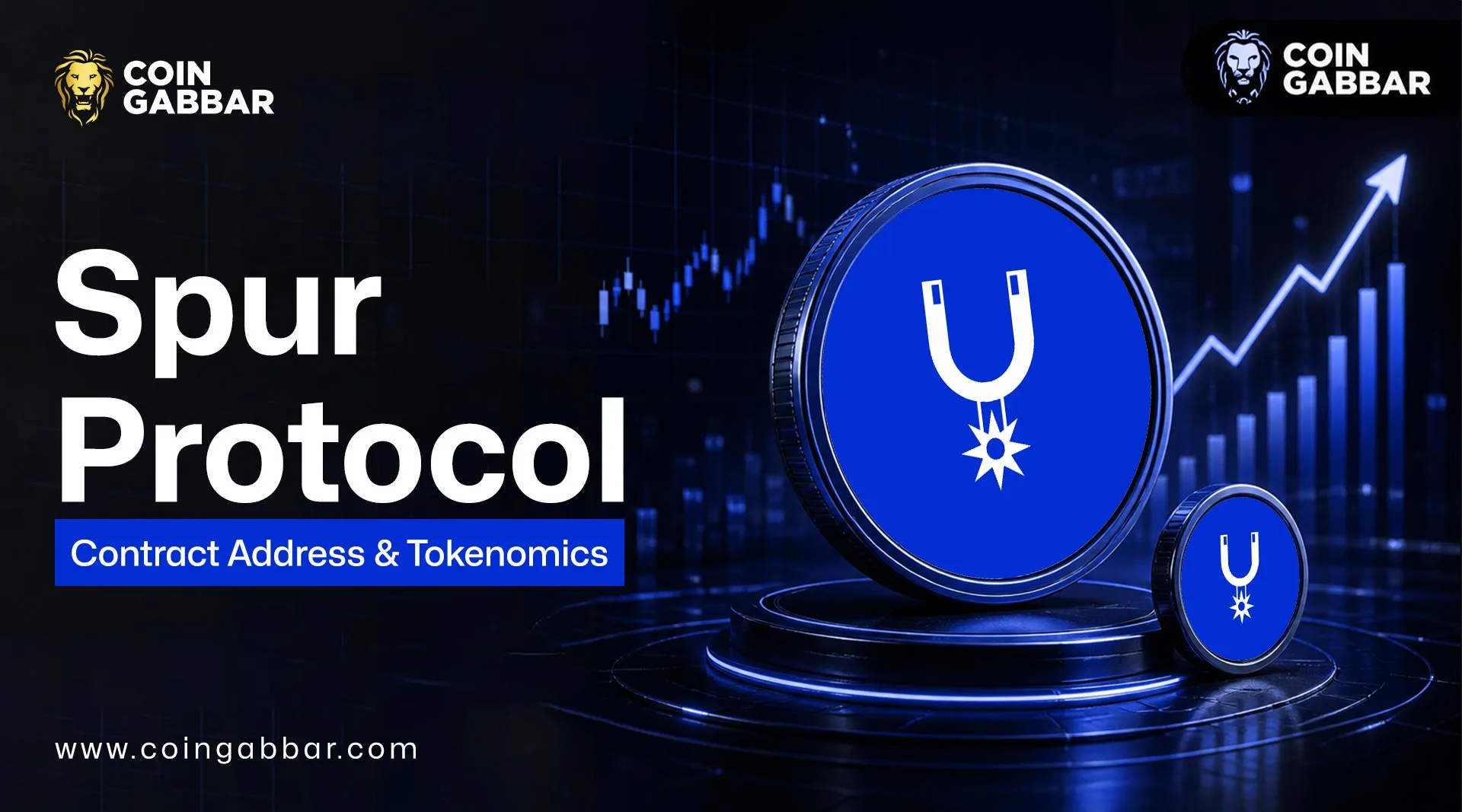
Spur Protocol Tokenomics: Is 40% Community Allocation Fair
When was the last time you saw a crypto project give 40 percent of its total token supply directly to the community — not to investors, not to the team, not to advisors — but to the actual users who showed up every day? That is exactly what Spur Protocol did with its SON token. And in a market where most projects quietly hand 60 to 70 percent of supply to insiders, that number deserves a proper examination.
Is the Spur Protocol tokenomics structure genuinely fair — or does the fine print tell a different story? Here is the complete breakdown.
TL;DR
Spur Protocol has a total supply of 1 billion SON tokens. Community gets 40 percent — the largest single allocation. Team and investors combined get 35 percent with vesting. TGE unlocked 10 percent of airdrop tokens with 10 percent monthly releases after. SON listed at $0.035 on CoinStore. Sell pressure risk is real from investor unlocks but community allocation reduces concentration risk significantly.
What Are Tokenomics and Why Do They Matter
Tokenomics is simply how a project distributes its tokens. It determines who gets paid first, how much sell pressure hits the market, and whether early users or insiders benefit most.
Bad tokenomics is the number one silent killer of crypto projects. A token can have the best technology, the strongest community, and the most compelling roadmap—and still fail because insiders dump their allocations the moment vesting unlocks.
Good tokenomics creates aligned incentives. When users hold the largest allocation, they have the most to gain from the project's success—and the most to lose from abandoning it.
Spur Protocol's tokenomics page breaks allocation into 40 percent community, 20 percent project future reserve, 10 percent investors, 10 percent DEX liquidity, 5 percent marketing, 5 percent fundraise, and 5 percent POG holder rewards.
That structure puts users first in a way most projects do not.
Spur Protocol Tokenomics: Full SON Token Allocation Breakdown
Here is every allocation category explained simply:
Category | Allocation | Purpose |
Community | 40% — 400M SON | Airdrops rewards daily quiz earn features |
Project Reserve | 20% — 200M SON | Future development and ecosystem growth |
Investors | 10% — 100M SON | Early backers and private sale participants |
DEX Liquidity | 10% — 100M SON | SpurSwap and on-chain trading liquidity |
Marketing | 5% — 50M SON | Partnerships exchange campaigns growth |
Fundraise | 5% — 50M SON | Public presale and community sale |
POG Rewards | 5% — 50M SON | Proof of Governance participants |
Total Supply: 1 billion SON tokens
The TGE was completed on January 30, 2026, at 13:00 UTC. The presale price was $0.03 per SON token.
SON began trading on CoinStore on February 2, 2026, at 9:00 AM UTC. The token listed at $0.035 surged near $0.050 and then consolidated around $0.03979.
The 40 percent community allocation is the standout number. Most comparable play-to-earn projects allocate 15 to 25 percent to the community. Spur Protocol more than doubles the industry average.
Spur Protocol Tokenomics: Vesting Schedule and Sell Pressure Risk
Allocation percentages tell half the story. Vesting schedules tell the other half.
Under the airdrop distribution plan 10 percent of allocated tokens unlock at TGE with no cliff period. The remaining allocation releases in equal monthly installments of 10 percent over 9 months until full vesting is complete.
Here is what that looks like in practice:
Month | Airdrop Release | Cumulative Released |
TGE January 30 | 10% | 10% |
Month 1 | 10% | 20% |
Month 2 | 10% | 30% |
Month 3 | 10% | 40% |
Month 4 | 10% | 50% |
Month 5 | 10% | 60% |
Month 6 | 10% | 70% |
Month 7 | 10% | 80% |
Month 8 | 10% | 90% |
Month 9 | 10% | 100% |
No cliff means tokens flow into the market from month one. That creates consistent but predictable sell pressure — which is actually healthier than a cliff unlock that dumps everything at once.
The 10 percent investor allocation — 100 million SON tokens — represents early backers who purchased at prices significantly below the public presale. Their vesting terms have not been publicly disclosed in detail. The SON token listing date on additional exchanges remains speculative, and no confirmed market value exists on major platforms yet—meaning investor selling on a single low-liquidity exchange like CoinStore creates outsized price impact.
Watch the CoinStore order book. If large sell walls appear consistently at $0.035 to $0.040, it likely signals investor distribution—not community selling.
Spur Protocol Tokenomics: Is SON Token Supply Fair for Holders
Let us compare Spur Protocol tokenomics against three comparable projects:
Project | Community % | Team % | Investor % | DEX Liquidity % |
Spur Protocol SON | 40% | 0% direct | 10% | 10% |
Typical Play-to-Earn | 15-25% | 20-30% | 15-25% | 5-10% |
Pi Network | 65% | 20% | 15% | N/A |
Notcoin NOT | 78% | 22% | 0% | Built-in |
Spur Protocol sits between the typical play-to-earn project and the more community-generous models like Pi and Notcoin. The 40 percent community allocation is genuinely above average — but Pi Network and Notcoin both went higher.
The 20 percent project reserve is the category that needs watching. Project reserves are legitimate for development funding — but they also represent tokens the team controls without community oversight. If Spur Protocol's governance model matures as planned, the reserve should eventually fall under community voting control through the POG system.
The Proof of Governance system includes on-chain governance where all proposals and votes are transparently recorded on the blockchain—ensuring stakeholder alignment and fast non-disruptive upgrades.
If POG delivers genuine on-chain governance, the 20 percent reserve becomes less of a concern. If governance remains centralized, the reserve represents a significant power concentration risk.
What You Must Do Before Evaluating SON Token
Before making any decision based on Spur Protocol tokenomics:
Check current circulating supply on CoinStore—compare against total 1 billion cap
Watch monthly airdrop unlock dates—each month 10 percent more tokens become liquid
Monitor CoinStore order book for consistent large sell walls—signals investor distribution
Wait for official investor vesting schedule disclosure before assuming sell-pressure timeline
Track SpurSwap DEX liquidity after launch — higher DEX TVL absorbs sell pressure better
Follow POG governance proposals—community control of reserve is the key long-term signal
Never assume tokenomics alone determines price—exchange listings and real usage matter more
Fair tokenomics is necessary but not sufficient. Execution is what converts a good distribution into a good investment.
Scenario Framework
Scenario 1 — Bull Case — Community Holds and DEX Launches: Monthly airdrop unlocks are absorbed by new buyers entering through additional exchange listings. SpurSwap launches with real liquidity in Q2, reducing dependence on CoinStore. POG governance activates, giving community control over the reserve. SON's price recovers above $0.05 as circulating supply grows, but demand grows faster.
Scenario 2 — Base Case — Slow Unlock Absorption: Monthly unlocks create consistent but manageable sell pressure. One new exchange listing — likely MEXC — provides additional liquidity by mid-2026. Price trades sideways between $0.025 and $0.045 as community holders and sellers reach equilibrium. Tokenomics hold, but no explosive catalyst arrives in H1 2026.
Scenario 3 — Bear Case — Investor Dumping on Thin Liquidity: Investor allocation unlocks Bitcoin. Store order book simultaneously without new exchange access. Thin liquidity means even moderate sell pressure causes sharp price drops. Community holders panic-sell, breaking the 40 percent community advantage. SON's price falls below $0.015—below presale for late public buyers.
Data is based on market trends and official sources. No guaranteed outcomes.
Conclusion
Spur Protocol tokenomics gives 40 percent of total supply to the community that actually earned it—through quizzes, tasks, and daily participation. That is genuinely above average in the play-to-earn space. The vesting schedule is predictable with no cliff. The POG governance system adds accountability. But the investor vesting terms need public disclosure and the project reserve needs governance oversight before the tokenomics picture is completely clean. Watch the monthly unlock dates. Monitor the order book. And wait for SpurSwap to launch before drawing conclusions about long-term sell pressure dynamics.
Disclaimer: Not financial advice. SON token investments carry significant risk. Always verify through official Spur Protocol channels. DYOR before making any financial decisions.