What Is Aligned Layer? Full Guide to ZK Scaling Innovation

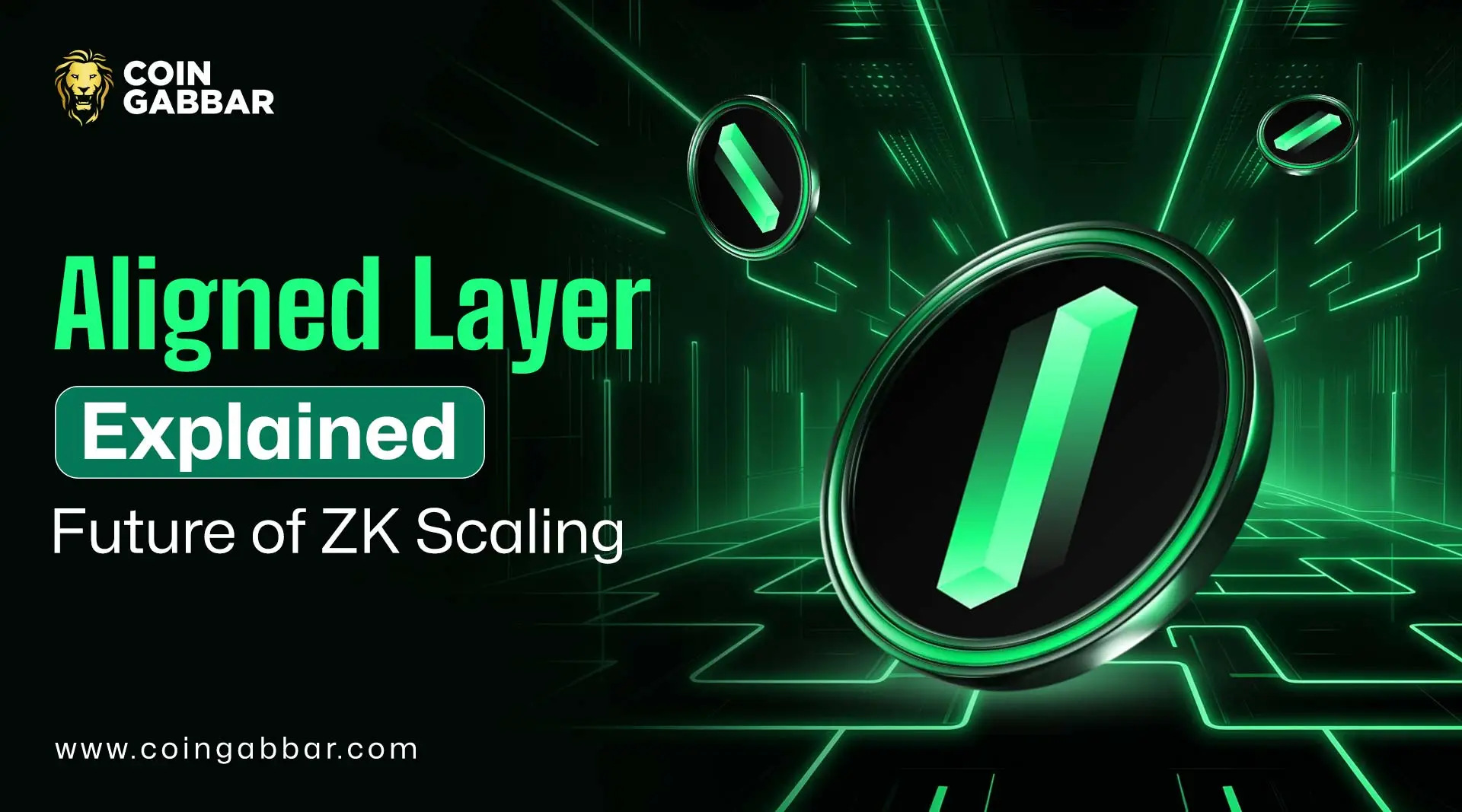
What Is Aligned Layer? A Complete Guide to ZK Scaling Innovation
Aligned Layer Explained: What Is It and Why Does It Matter for Ethereum?
Aligned Layer is one of the most talked-about infrastructure projects building on Ethereum right now. It's not a meme coin. It's not a trading platform. It's the kind of project that makes everything else on Ethereum work better, faster, and cheaper. If you're new to crypto, this blog explains exactly what it does and why it matters.
What Is Aligned Layer?
AlignedLayer is a ZK verification layer built on top of Ethereum. ZK stands for zero-knowledge, a way to prove something is true without revealing the details behind it. Think of it like proving you're over 18 without showing your ID. That same principle, applied to blockchain, lets developers confirm that a piece of code ran correctly, without re-running it on every single node.
The problem? Verifying these ZK proofs on Ethereum is expensive and slow. Each proof costs hundreds of thousands of gas, Ethereum's unit of processing power. Ethereum can process just 120 ZK proofs per block. That's a hard ceiling. Aligned crypto breaks through that ceiling entirely.
How Does It Actually Work?
Aligned Layer operates using two modes. The first is the Proof Verification Layer, its flagship product, already live on mainnet. It cuts verification costs by over 90% compared to doing it directly on Ethereum. It can process 1,000 proofs per second with very low fees per proof.
The second mode is the Proof Aggregation Service. This bundles many proofs into one. Instead of verifying 100 separate proofs, you verify just one proof that covers all 100. It's slower than the first mode but even cheaper for large-scale operations.
Both modes connect to Ethereum through EigenLayer, a protocol that lets existing Ethereum stakers provide security to new projects without staking separate capital. Its EigenLayer integration means the network inherits Ethereum's trust from day one. No need to build security from scratch.
Who Built This and How Is It Funded?
The team behind what is Aligned Layer is based in Buenos Aires, Argentina. They shipped their first product to mainnet in under 10 months, a fast timeline for infrastructure of this complexity. The project is fully open-source. No proprietary code, no hidden licenses.
In April 2024, Aligned Layer raised $20 million in a Series A round. Hack VC led the round. Other participants included DAO5, L2Iterative, Nomad Capital, Finality Capital, Symbolic VC, and Theta Capital. That's serious institutional backing for an infrastructure project at this stage.
The network is currently secured by 52 operators across 23 countries. It has already reached over 2.5 million ETH in restaked security through EigenLayer. These aren't small numbers for a project this early.
Aligned Layer Tokenomics: The $ALIGN Token
The native token is called $ALIGN. The Aligned Layer token has three core uses:
Pay-per-proof: Apps pay $ALIGN each time they need a proof verified
Subscription model: Apps stake $ALIGN to get unlimited verification access for one month
Governance: Token holders can vote on protocol decisions
The Aligned Layer tokenomics are structured to reward actual usage. The token isn't just for speculation, it's tied directly to how much the network gets used. More developers building on Aligned means more demand for $ALIGN.
At listing, 10% of tokens unlock immediately. After a short cliff period, the rest releases gradually. This vesting structure limits early sell pressure and gives the project room to grow before large token quantities hit the market.
Use Cases: What Can You Build With It?
The use cases go far beyond just verifying proofs. The project is building a full stack for Ethereum development. Here's what that includes:
Rollup-as-a-Service (RaaS): Teams can launch their own ZK-rollup a faster, cheaper version of Ethereum without needing deep blockchain expertise
Wallet-as-a-Service: Developers can build embedded wallets for their users, supporting mobile apps and rollups
Interoperability Protocol: A bridge system that lets liquidity move across chains with minimal trust assumptions
A real-world example is already live. Buenos Aires used Aligned's infrastructure to put 700,000+ citizens on-chain choosing Ethereum over every private blockchain alternative. That's not a demo. That's production-scale adoption.
Is Aligned Layer Legit?
Is it legit? That's a fair question to ask about any early-stage crypto project. Here's what the facts show. The team is properly documented and active on X. The code is fully open-source. The project completed security audits. It raised $20M from respected crypto VCs. It's live on mainnet — not just on testnet. And it's already processing real proofs from real developers.
The Aligned Layer blog section publishes regular technical updates, weekly ZK news, and transparent progress reports. That level of communication is a strong signal for a project's legitimacy.
Aligned Layer Roadmap: What’s Coming Next?
Phase 1: Foundation (2025)
Launch of Proof Verification Layer
Release of ZK Arcade (verifiable gaming app)
Initial global expansion and ecosystem growth
Phase 2: Expansion (2026)
Focus on enterprise adoption
Development of post-quantum security research
Enable based ZK-rollups for wider developer access
Phase 3: Vision
Make ZK technology affordable and accessible
Support developers of all sizes building on Ethereum
Aligned Layer aims to become the go-to infrastructure that brings scalable ZK tech to everyone.
Final Thoughts
Aligned Layer sits at the crossroads of three major trends, ZK technology, EigenLayer restaking, and modular blockchain design. Each of these sectors is attracting significant developer and investor interest in 2026. The project has real technology, real backers, and real users already on mainnet.
If Ethereum's ZK roadmap continues to develop, Aligned is positioned to be a foundational piece of that infrastructure. It's worth watching closely.
Disclaimer: This article is for informational purposes only. It is not financial advice. Crypto assets are highly volatile and past performance does not guarantee future results. Always do your own research before making any investment decisions.




.jpg)




