Dormant Ethereum Wallet Mystery: Who Drains 500 Old Wallets Overnight?


Dormant Ethereum Wallet After 4-Year: 500 Accounts Drained, $800K Gone
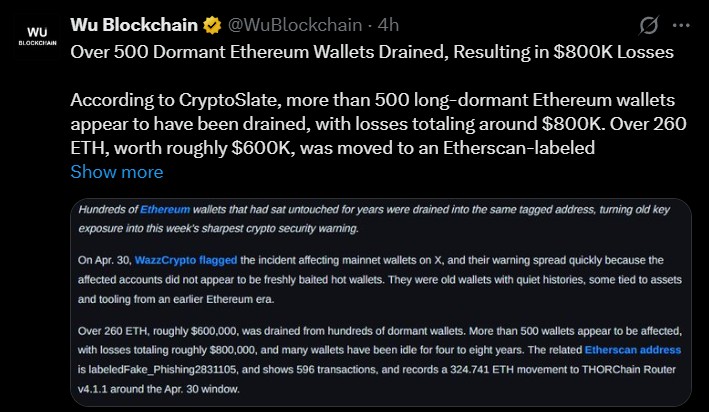
More than 500 long-dormant Ethereum wallets were drained, resulting in losses of nearly $800K. Around 260 ETH was moved to a tagged phishing address before being bridged through THORChain. The incident raises concerns about old key exposure and self-custody risks globally across the sector today's market.
What Happened in the Ethereum Wallet Drain?
Investigators report that more than 500 dormant Ethereum wallets drained in a coordinated sweep. Losses total around $800K. Over 260 ETH moved into an Etherscan-labeled address called Fake_Phishing2831105.
It later recorded a 324.741 ETH transfer to THORChain Router v4.1.1. The wallets stayed inactive for four to eight years, suggesting old keys or seed phrases may be involved.
Source: Wu Blockchain
Security researchers say the compromise path remains unclear across wallets. Possible causes include legacy wallet tools, exposed private keys, or leaked seed storage from older systems. The phishing-labeled address has received hundreds of transactions over time, suggesting repeated consolidation activity. Investigators continue mapping potential links to older wallet generation tools and compromised storage environments.
Why were these Ethereum Wallets Were Exposed?
The affected wallets had been inactive for four to eight years. Analysts link the pattern to early self-custody habits and weak key storage methods. The same address cluster is part of the incident.
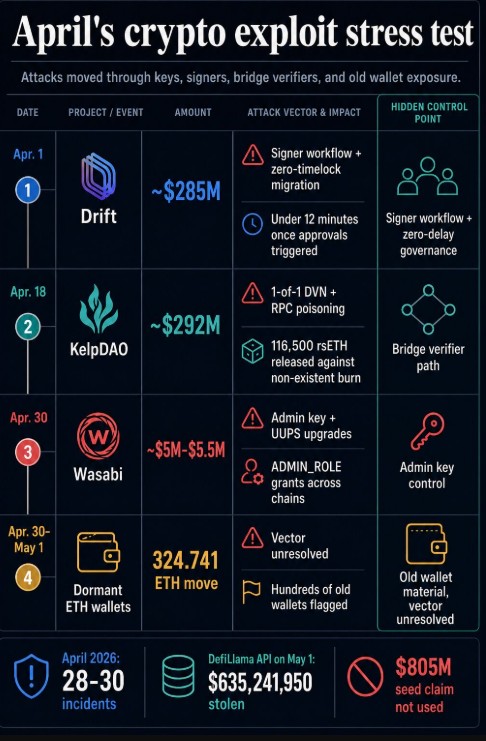
Broader Dormant Ethereum wallet security concerns rose in April, with 28 incidents and over $635 million in losses reported by DefiLlama data. Other April events included Wasabi Protocol admin exploits, Drift signer issues, and KelpDAO bridge verification failures affecting systems.
These incidents show how multiple control failures across DeFi can overlap with wallet-level risks. Analysts note that older infrastructure decisions still affect current security exposure.
Source: CryptoSlate X
Market Reaction and Security Concerns
Market reaction around Ethereum remained cautious after the report. No major price spike or crash was directly linked to the drain event. Traders focused on long-term self-custody risks rather than short-term price moves. Attention stayed on key safety practices and dormant wallet exposure. Community discussion emphasized caution around storing long-term funds. Traders also watched bridging activity closely due to past cross-chain incidents. Overall sentiment remained watchful rather than reactive.
Cross-Chain Movement Raises Fresh Questions
The movement of drained Ethereum through THORChain adds another layer of concern for investigators. Cross-chain bridges often make tracing funds more complex due to asset swapping across networks. Security analysts say such routing patterns are sometimes used to obscure fund origins. However, no confirmed link has been established between THORChain itself and the wallet compromise, and tracing remains ongoing across multiple blockchain explorers today.
Source: CryptoSlate
Old Wallet Hygiene Comes Back Into Focus
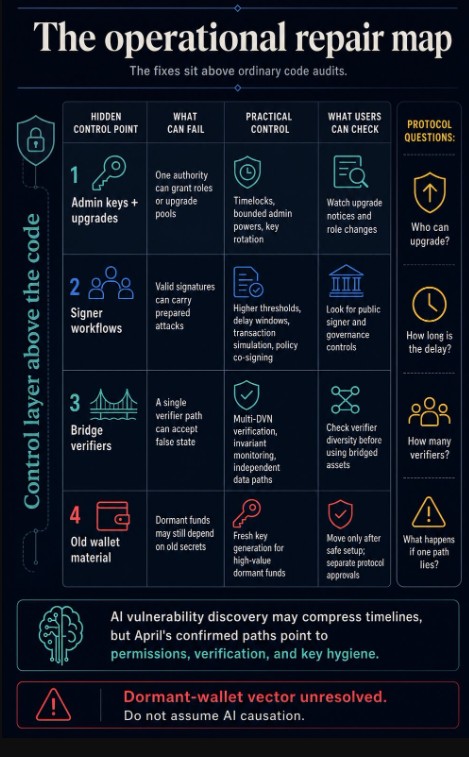
The incident has also renewed attention on long-term hygiene in the Ethereum ecosystem. Many early users stored seed phrases in unsecured digital formats or legacy browser extensions. Security experts suggest that even inactive wallets remain exposed if backups were ever leaked. This event reinforces the need for periodic wallet audits and migration of old funds into modern hardware-based storage systems for improved protection against silent, delayed attacks.
Final Outlook
Security incidents continue to highlight risks tied to old wallets and weak key storage. Experts say long-term holders must review dormant accounts and improve custody methods. The latest crypto hack of 2026 adds to ongoing concerns about infrastructure safety, even without a clear, confirmed compromise path identified globally today.
Disclaimer: This article is for informational purposes only. It does not provide financial advice, investment recommendations, or trading guidance. Cryptocurrency investments involve risk, and readers should research independently before making decisions. All data is based on publicly available reports from CryptoSlate and WuBlockchain. Figures may change as investigations continue. Readers should verify updates from official sources.


2 months ago
Mighty Hacker Recovery offers professional services in cybersecurity and digital recovery for individuals and businesses. Their services include data recovery, digital forensics, cybersecurity consulting, malware detection, and incident response. They promise experienced, confidential, and fast support while following ethical practices. Clients can contact them via their website https://mightyhackarrecovery.com/ or WhatSapp Canada +1 (343) 947-3496 for assistance. Additionally, the text poses various questions related to crypto recovery, including inquiries about stolen cryptocurrency, recovery experts, and their effectiveness. BITCOIN RECOVERY EXPERT AT MIGHTY HACKER RECOVERY USDT RECOVERY EXPERT AT MIGHTY HACKER RECOVERY ETH RECOVERY EXPERT AT MIGHTY HACKER RECOVERY CRYPTOCURRENCY FRAUD RECOVERY HACKER FOR HIRE AT MIGHTY HACKER RECOVERY WhatSapp Canada +1 (343) 947-3496

2 months ago
HOW TO GET BACK LOST CRYPTOCURRENCY AND BITCOIN BACK FROM SCAMMED BY CHAINDIGGER RETRIEVERS I just wanted to give a shoutout to ChainDigger Retriever for their incredible work in recovering my stolen cryptocurrency earlier this year. They were able to track down the scammers and get most of my funds back . If you're dealing with a crypto scam, don't hesitate to reach out to them. They're the real deal! I was scammed out of a significant amount of cryptocurrency, and I thought it was gone forever. But ChainDigger Retriever's team of experts worked tirelessly to track down the scammers and recover my funds. They kept me updated every step of the way, and their transparency and communication were top-notch. Their fees were reasonable, and they worked on a contingency basis, so I didn't have to pay unless they recovered my funds. They even provided me with advice on how to secure my accounts and prevent future scams. Fast forward to my move, and Elite Moving Solutions took care of everything, from packing to transportation, and even helped me set up my new place . Their team was punctual, efficient, and incredibly friendly. They handled my fragile items with care, and everything arrived safely. The pricing was transparent, and there were no hidden fees. I appreciated their upfront quote, which matched the final bill exactly. They even offered storage solutions when my new place wasn't ready on time. I'm blown away by both ChainDigger Retriever and Elite Moving Solutions' services. They're both the best in the business, and I highly recommend them to anyone dealing with crypto scams or needing moving services. Here's what I liked about ChainDigger Retriever: - Professional and empathetic team - Transparent and communicative throughout the process - Expert tracking and recovery skills - Reasonable fees and contingency basis - Additional advice on security and prevention And here's what I liked about Elite Moving Solutions: - Professional and friendly team - Transparent pricing and communication - Expert handling of fragile items - Flexible storage solutions - Excellent customer service If you're planning a move or dealing with a crypto scam, don't hesitate to contact Elite Moving Solutions and ChainDigger Retriever, respectively. Email:tracetech-recovery@dr.com
3 months ago
Recovering Lost Cryptocurrency with Professional Assistance from ChainDigger Retrievers When I first realized that my Bitcoin wallet had been compromised, I felt completely overwhelmed. Years of savings and investments seemed to disappear overnight, and I honestly believed there was no chance of getting any of it back. I spent weeks researching online, contacting exchanges, and trying different recovery suggestions, but nothing seemed to work. That was when I came across ChainDigger Retrievers. From the beginning, their team treated my situation with professionalism and patience. I was nervous about trusting another service after already dealing with a difficult experience, but they took the time to explain the recovery process in detail and answered all my questions clearly. Unlike many companies that make unrealistic promises, they were honest about the challenges involved and gave me realistic expectations. What impressed me most was their communication. Throughout the process, I received regular updates about the progress of the investigation and recovery efforts. Their team demonstrated strong technical knowledge about cryptocurrency transactions, blockchain tracing, and wallet security. Even though I did not fully understand all the technical details, they explained everything in a way that made me feel informed and reassured. The process was not instant, but their persistence and dedication gave me confidence that my case was being handled seriously. They carefully reviewed transaction records, identified suspicious wallet activity, and provided guidance on securing my remaining digital assets to prevent future incidents. That level of support made a huge difference during an extremely stressful time. After several weeks of work, I finally received the news I had been hoping for: a substantial portion of my lost cryptocurrency had been successfully recovered. I cannot describe the relief and gratitude I felt at that moment. It was more than just recovering funds — it was regaining peace of mind after a very difficult experience. Based on my experience, I would recommend ChainDigger Retrievers to anyone dealing with cryptocurrency loss, hacking incidents, or wallet access problems. Their professionalism, transparency, and commitment to helping clients truly stood out to me. While no recovery service can guarantee results in every case, I appreciated that they approached my situation with honesty and genuine effort instead of false promises. The world of cryptocurrency can be complicated and risky, especially when scams and cybercrime are involved. Having a knowledgeable and supportive recovery team can make a significant difference. I am thankful for the assistance I received and for the guidance they provided throughout the process. For anyone feeling hopeless after losing access to digital assets, this experience reminded me that there are still dedicated professionals willing to help people navigate these difficult situations.” WhatsApp +14042772042 Email:tracetech-recovery@dr.com Telegram u/-Chaindigger Retrievers