$8B Bitcoin Holdings at Risk as BTC Miners Shift to AI

BTC Miners Shift to AI as $8B Bitcoin Reserves Face Selling
The crypto market is closely watching a new development as the BTC miners shift narrative gains momentum. After reaching nearly $126,000 in October, Bitcoin has fallen more than 40%, prompting major mining firms to reconsider their strategies.
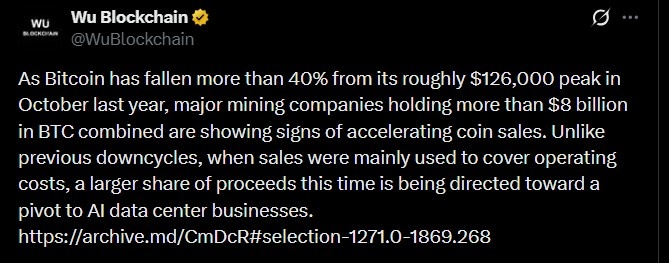
Recent data suggests that large mining companies collectively holding over $8 billion worth of BTC are accelerating coin sales. Historically, mining groups sold digital assets mainly to cover operational expenses such as electricity and equipment. However, the latest trend shows that a growing portion of these proceeds is now being redirected toward building AI-focused data center infrastructure.
Source: X Official
This strategic pivot highlights how mining companies are diversifying revenue sources beyond traditional blockchain operations.
Why Miners Are Redirecting Capital to AI
The BTC miners shift toward artificial intelligence infrastructure is largely driven by economics and long-term stability.
Mining profitability depends heavily on market prices and network difficulty. Currently, the average hash cost is about $62,000, meaning profitability begins when Bitcoin trades above this level.
At around $72,000, operations remain margin-positive but limited.
Many firms, therefore, prefer converting part of their BTC reserves into capital for AI computing facilities.
AI data centers require massive power supply, cooling systems, and physical infrastructure—resources mining companies already possess. By hosting AI computing workloads, Mining groups can generate a steady income independent of crypto industry cycles.
Potential Impact on Bitcoin Market Dynamics
The BTC miners shift could influence market supply patterns in several ways.
First, accelerated selling from mining firms may introduce temporary selling pressure. If billions worth of coins gradually enter exchanges, price movements could face short-term resistance.
Second, if some miners reduce their focus on operations, new Bitcoin production could slow over time.
Short-term effect: increased selling pressure from reserves
Long-term effect: potentially slower supply growth
This structural change could eventually influence Bitcoin’s broader industry capitalization.
Institutional Investors Watching the Trend
Large institutional holders—including Strategy and Marathon Digital Holdings—are carefully observing these developments.
Recently, Michael Saylor drew industry attention with the statement that buyers can purchase more coins than sellers are able to sell.
If the BTC miners shift reduces long-term activity, institutional buyers could benefit from slower supply growth combined with rising adoption.
For treasury-focused companies holding Bitcoin as a reserve asset, such dynamics may strengthen the long-term scarcity narrative.
Could Supply Tightening Push Bitcoin Toward $100K?
A possible scenario could unfold if several factors align.
If miners sell reserves now to fund AI projects but later reduce ongoing production, market supply entering exchanges may gradually slow. At the same time, institutional demand from ETFs and corporate treasuries could continue growing.
Under such conditions:
circulating availability may tighten
Investor demand may increase
If these trends combine, analysts suggest BTC could potentially revisit six-figure territory near $100,000 over the next market cycle.
Conclusion:
The BTC miners shift toward AI infrastructure reflects a major strategic transition within the industry. While short-term selling could pressure prices, slower future supply combined with institutional demand may strengthen Bitcoin’s scarcity narrative and support long-term market growth.
This article is for informational purposes only and does not constitute financial, investment, or trading advice. Cryptocurrency markets are highly volatile, and prices can change rapidly due to market conditions and global events. Readers should conduct their own research and consult a qualified financial advisor before making any investment decisions. The author and publisher are not responsible for any financial losses resulting from the use of this information.
Also read:








