Circle Nanopayments System Go Live on Mainnet Across 33 Blockchains

Circle Nanopayments Expands USDC Reach to 33 Blockchains on Mainnet
Circle has launched its nanopayments system on the mainnet, powered by Circle Gateway. The update enables gas-free USDC transfers for developers and AI-driven platforms. The announcement came via Circle’s official blog. It arrives as demand grows for faster, low-cost digital payments.
Nanopayments Go Live: What Changed?
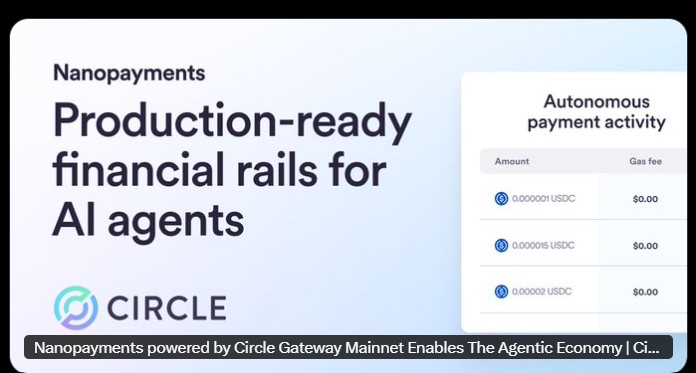
Circle Nanopayments confirmed the launch through an official blog release. The system now supports real-time USDC transfers without gas fees. Transactions can go as low as $0.000001. That’s a fraction of a cent.
The platform uses batch settlement. It groups thousands of transactions before final on-chain processing. This reduces costs and improves speed. Payments also get instant verification within milliseconds.
Why does this matter? Traditional payment rails charge fixed fees. These fees often exceed small transaction values. Circle’s system removes that barrier. It makes high-frequency, low-value payments viable.
This builds on earlier payment experiments like the x402 protocol. That system processed over $100 million in a few months. The demand for micro-payments is clearly growing.

Source: Official Circle X
How Circle Built This Payment Rail
Circle Gateway powers the system using a unified balance model. Users deposit USDC into a smart contract. This contract is non-custodial, meaning users keep control of funds. The system then allows payments across multiple chains instantly. It currently supports 11 networks, including Ethereum, Polygon, and Arbitrum. Settlement happens later in batches. The payment flow is simple:
An agent requests a paid resource
The system sends payment instructions
The user signs a transaction
The network verifies and confirms instantly
This setup separates speed from settlement. Merchants can deliver services immediately after verification. They don’t need to wait for block confirmation.
Circle Nanopayments also highlighted broader adoption. USDC on 33 blockchains. At a recent industry summit, executive Dante Disparte stressed open standards. He linked this approach to long-term growth.
Source: Official Post
Why AI Agents Need New Payment Rails?
AI agents now handle tasks like data fetch, content scan, and API calls. These actions often need tiny payments per request. Old systems cannot support this model due to high fees. Circle’s nanopayments solve that gap with near-zero cost transfers.
This creates new business models. Developers can charge per second, per call, or per dataset. You don’t need subscriptions anymore. This shift could change how software gets priced. It also supports machine-to-machine payments without human input. That’s key for the growing AI economy.
Expanding Use Cases Across Digital Industries
Nanopayments open doors beyond AI tools and APIs. Content creators can charge per article or asset. Gaming platforms can reward players with micro-incentives. Data providers can sell access in small units.
Even machine networks can benefit. Devices can pay each other for services in real time. This includes bandwidth, storage, or compute power. These use cases were not practical before due to fees. Now, low-cost transfers make them viable at scale.
Market Reaction: Quiet but Strategic Interest
There is no sharp price reaction tied to this launch. That’s expected. USDC is a stablecoin, so its value remains fixed. However, developer interest appears strong. Several platforms have already integrated the system. Early adopters include infrastructure and AI-focused projects.
The move may influence sentiment in the stablecoin sector. It shows a push toward real-world utility. Traders and builders will likely watch adoption metrics closely. Institutional interest could grow if usage scales. Payment infrastructure remains a key focus area in crypto.
Conclusion
Circle’s nanopayments launch signals a shift toward machine-driven commerce. The ability to send tiny payments instantly changes how digital services charge users. If adoption grows, it could reshape API pricing, AI usage, and online transactions. Market participants will monitor how quickly developers adopt this system.
Disclaimer: This article is for informational purposes only. It does not offer financial advice. Cryptocurrency markets carry risk. Readers should conduct their own research before making any investment decisions.