Why is Crypto Market Down After 3% Rebound Amid War Tensions?


Crypto Market Faces $400M Liquidations in 24 Hours
The Crypto Market is under pressure again after a brief 3% rebound earlier this week. Bitcoin dropped sharply over the weekend, falling to nearly $63,000 before bouncing back toward $67,000. But the recovery looks fragile.
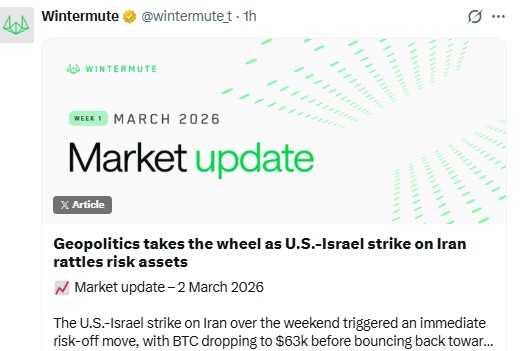
The latest weakness comes as geopolitical tensions rise as reported by the Wintermute report. The U.S.-Israel strike on Iran has entered Day 3, and there is no clear path to de-escalation. The Strait of Hormuz is effectively closed, oil prices are rising for a third straight day, and global markets are reacting.
Source: X (formerly Twitter)
Geopolitical Shock Hits the Crypto Market
Oil surged nearly 9%, briefly crossing $80. Some analysts now expect Brent crude to reach $100 if the conflict continues. Gold also jumped sharply, while U.S. equities opened lower. The VIX, which measures fear in traditional markets, hit its highest level of 2026.
This risk-off environment directly impacts the Crypto Market. Bitcoin, often seen as a high-beta asset, reacts strongly to global stress. The first wave of fear pushed BTC down to $63,000. The bounce to $67,000 followed as traders believed much of the bad news was priced in.
However, energy disruption may create a second wave of pressure. Higher oil prices can keep inflation elevated. If inflation stays high, the Federal Reserve may delay rate cuts. That scenario hurts growth assets like crypto.
Liquidations Add Volatility
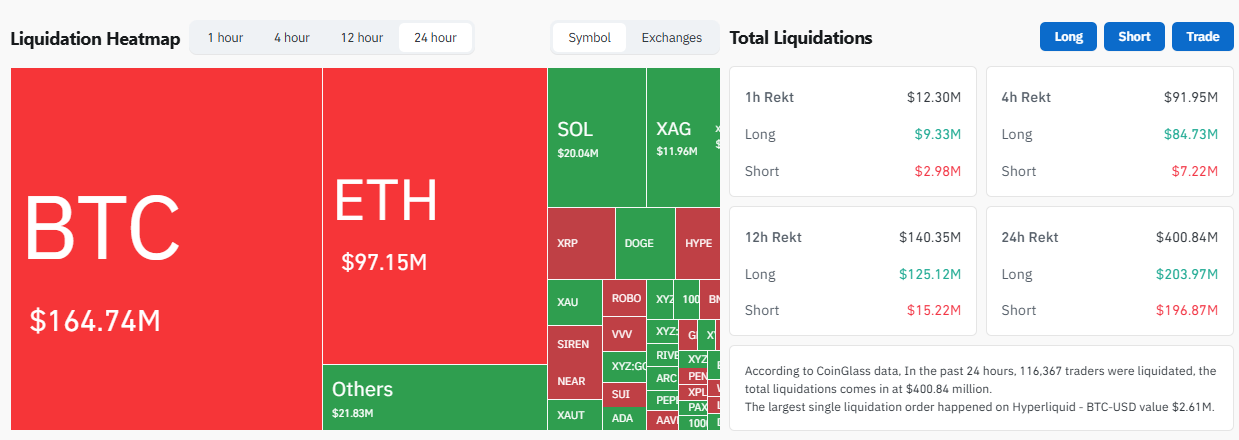
Looking at the liquidation heatmap, over $400 million in total liquidations occurred in the past 24 hours. Bitcoin alone saw more than $164 million in liquidations, while Ethereum recorded over $97 million.
Source: Coinglass
Short-term traders were squeezed during the rebound, but the Crypto Market still shows signs of fragility. Open interest remains elevated, and options markets are pricing daily swings of 2.5% to 3%.
ETF Flows Provide Mixed Signals
There was a positive sign late last week when over $1 billion in ETF inflows broke a five-week outflow streak. But year-to-date flows remain negative by around $4.5 billion.
Institutional OTC activity remains quiet compared to the $85,000–$95,000 trading range seen months ago. At current levels near $67,000, the strong institutional bid is missing. That makes the space vulnerable to sharp moves.
Altcoins Continue Weak Pattern
Altcoins are following a typical bear market structure. Short rallies are not sustained. The Altcoin Season Index remains low at 36/100, showing limited risk appetite outside Bitcoin.
Meanwhile, regulatory uncertainty adds another layer. The Clarity Act bill remains stalled in the Senate, creating uncertainty around digital asset oversight. Political friction is keeping investors cautious.
Near-Term Outlook
The Crypto Market now sits at a key decision point. If Bitcoin holds above $64,000–$65,000, stability may return. But if energy prices continue climbing and geopolitical headlines worsen, further downside cannot be ruled out.
For now, caution dominates. It is reacting more to macro events than crypto-specific news. Until the conflict shows signs of cooling or oil prices stabilize, volatility is likely to remain elevated.
The next major driver will be headlines around Hormuz reopening and inflation expectations. Until then, the market remains fragile despite the short-term rebound.
YMYL Disclaimer: This article is for informational purposes only and does not constitute financial or investment advice. It is highly volatile and influenced by macroeconomic and geopolitical events. Always conduct your own research and consult a licensed financial advisor before making investment decisions.








