North Korean Hackers Target Crypto Ecosystem with Malicious npm Tools


Technical Breakdown of How North Korean Hackers Target Crypto Assets
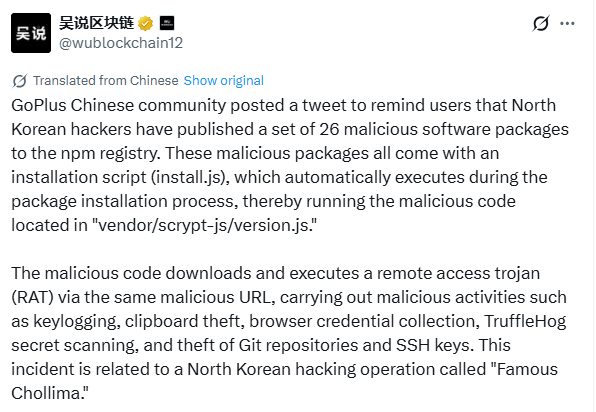
The software supply chain is the newest battleground for decentralized finance (DeFi) security. Recent reports show that North Korean Hackers Target Crypto engineers by placing 26 malicious packages in the npm (Node Package Manager) registry. These packages are built to break into the computers of people who build blockchain tools and trading platforms. Their goal is to steal private keys, seed phrases, and secret code.
 Source: X(formerly Twitter)
The hackers use a trick called "typosquatting". They give their tools names that look like real ones, such as ether-lint or expressjs-lint. When a developer installs one of these by mistake, a hidden script runs automatically. This script installs a "Remote Access Trojan" (RAT) that can strip a system of its most valuable digital assets.
How North Korean Hackers Target Crypto with the StegaBin Attack
This operation is known as "StegaBin". It uses very clever ways to stay hidden from security tools. Instead of having a fixed web address for cyber attackers to send commands, the malware uses "steganography". This means it hides data in plain sight within normal-looking text.
Steganography and Dead Drop Resolvers
The malware visits Pastebin pages that look like harmless essays about computer science. However, the software is programmed to pick out specific characters from the essay at set intervals. It uses these characters to rebuild the secret web addresses used by the cyber attackers. This method lets the attackers skip past normal security scanners that look for suspicious web addresses in the code.
Stealing Crypto Wallets and SSH Keys
Once the malware is fully set up, the hackers use special modules to take over the computer:
Wallet Theft: A module called "j" specifically looks for crypto wallet extensions in browsers, such as MetaMask, Phantom, Coinbase Wallet, and Binance.
Secret Scanning: The malware uses a tool called TruffleHog to scan your files for API keys and blockchain secrets.
Git and SSH Theft: A "git" module steals files from .ssh folders and scans Git repositories for login details. This lets the hackers move from one computer to a company's main servers.
Future Outlook: Expert Analysis
The StegaBin campaign is a sign that the digital asset world must move toward a "zero-trust" model for software tools. Since North Korean Hackers Target Crypto systems more often now, checking third-party code by hand is a must. We expect future attacks to use even more complex ways to hide, such as using blockchain transactions to send commands. Companies should use monitoring tools that flag when a simple coding tool starts scanning files or sending data to unknown servers.
Your Money Your Life Disclaimer: Dealing with crypto involves high security risks. This report is for education only. Always keep your private keys on hardware wallets and never share your seed phrase with anyone.
Also read:









