Deepsnitch AI Presale Launch Exposes Anti Dump Gap

How Deepsnitch AI Presale Shaped Early Sentiment
What happens when a token launch is designed to slow dumping, yet holders still struggle to exit? That question now sits at the center of the deepsnitch ai presale story after DSNT moved from fundraising to Uniswap on March 31. The project used its official X account to map the end date, listing date, and claim window in one tight sequence. In a market still quick to reward AI narratives, the real test came not from marketing, but from launch mechanics.
Why Deepsnitch AI Presale Guardrails Failed at Launch
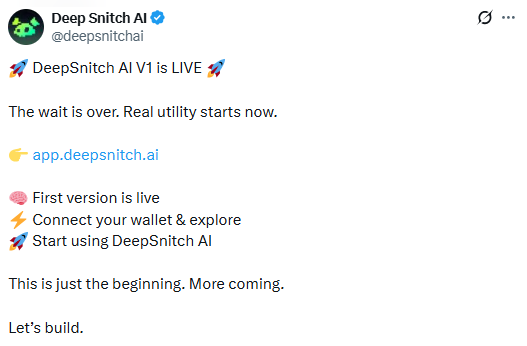
The first surprise was structural. DeepSnitch said liquidity was being prepared as the presale closed, and then posted that DSNT was live on the DEX with anti dump rules meant to protect the chart. But reports that followed focused on failed transactions, wallet issues, and very thin tradable depth rather than orderly price discovery.
 Source: X(formerly Twitter)
That matters because a sell tax and a cooldown can slow fast exits, but they cannot create real liquidity or solve token access problems. If holders cannot claim smoothly, or if the pool is too thin for normal trading, anti dump rules become secondary. The deeper story is not only that DSNT fell hard. It is that launch friction appears to have overwhelmed the very controls that were supposed to steady the market.
What Deepsnitch AI Presale Documents Still Show
The accessible whitepaper identifies the issuer as SignalPlex Labs Ltd in the British Virgin Islands, classifies DSNT as a utility token, and sets total supply at 1 billion tokens. It allocates 35% to deepsnitch ai presale buyers and 10% to liquidity, while also warning that DSNT may not be liquid and carries no promise of value, listing, or exchangeability.
The document also creates an important timeline clue. The whitepaper version reviewed here still pointed to a January 31 target for the presale and TGE, with room for extension, while the official X schedule later fixed March 31 as the live launch day. That shift is not proof of wrongdoing, but it does show that the launch path changed over time and required close monitoring by buyers.
DeepSnitch ai Presale had also promoted a working product layer before the token debut. Its official app described an intelligence network that processes sentiment and on chain data, and an earlier dev update said Product V1 was live. That makes the launch issues more important, because the project was selling not only a token, but access to an already visible platform narrative.
How Deepsnitch AI Presale Shaped Early Sentiment
Early sentiment turned on execution, not branding. Outside prelaunch articles had cited late stage Deepsnitch ai presale pricing near $0.04669, but the whitepaper itself only fixed the starting price at $0.0151 and said later pricing could change with demand. That left the market with soft expectations, but not a firm official listing price.
The claim rules also mattered. Official X posts said non staked tokens were 100% claimable at launch, while the whitepaper set a seven day vesting period for staked tokens and rewards. With community complaints appearing almost immediately, traders began watching supply access, wallet balances, and usable liquidity more than any short term price prediction.
Future Outlook
The next chapter depends less on slogans and more on visible market plumbing. Traders will likely watch whether liquidity depth improves, whether claim issues fully clear, and whether the team explains how launch day matched its token design. For the wider market, this case shows that AI utility claims and anti dump taxes mean little if day one trading cannot absorb real supply.
YMYL Disclaimer: This article is for informational purposes only and is not financial, investment, legal, or tax advice. Crypto assets are volatile, and readers should verify primary sources and assess risk independently.






