Harvard Triples BTC Investment, Sets 2:1 Bet Over Gold in Q3 2025


Harvard $53B Fund Boosts Bitcoin ETF Holding to $443M, Overtakes Gold
Harvard University has become much more exposed to Bitcoin and gold, which is an indication of a bold institutional bet on currency debasement trends and an ever-increasing preference for digital assets over traditional safe havens.
Harvard Placed a Big Wager on Bitcoin.
The endowment University, with a value of $53 billion, has already made one of its biggest changes in asset allocation ever, increasing its Bitcoin ETF holdings by three times within the third quarter of 2025.
As per the recent 13F regulatory filings, the Harvard Management Company (HMC) has expanded its Bitcoin holdings by $443 million to $117 million, which is its most active investment in digital assets to date.
The result of this influx of allocation is now among the largest publicly disclosed holdings, a position that is not typical of a more conservative long-horizon investment university endowment.
Bitwise CIO Matt Hougan, who publicized the filing, called the action a blatant debasement trade, representing a position that BTC is becoming more and more a necessity as a hedge against the debasement of long-term fiat.
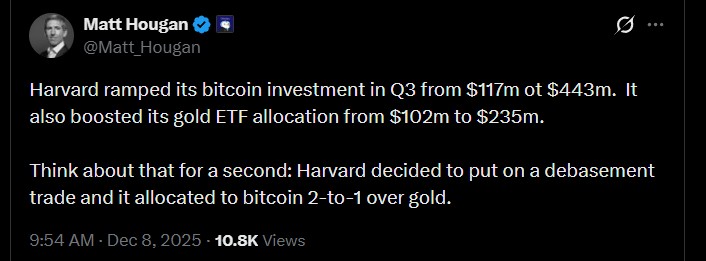
Source: Matt X
Gold Allocation Also Increases, but Bitcoin wins 2:1.
Although BTC was in the limelight, gold was not left behind. The university had almost doubled its gold ETF investment up to $235 million, as compared to $102 million in the same quarter.
What is notable, however, is the proportion of the two investments: Harvard invested twice in Bitcoin as it does in gold, a ratio that represents a more extreme turn towards digital investments than any other major endowment fund has done to date.
This 2:1 tilt indicates a developing consensus among institutional investors that BTC can be a better store of value and a better hedge against monetary debasement than gold over the long run- a notion that was viewed as a fringe idea a few years ago but is now gaining mainstream acceptance.
Bitcoin ETFs Institutional Trust Deepens.
The filing is also a critical time for the Crypto markets.
The institutional players are seemingly going the other way despite the volatility that has initiated retail selling periods.
The holdings of Bitcoin ETFs by Harvard have become some of its biggest single positions publicly.
This further contributes to the story that big financial institutions, such as universities, pension funds, insurance companies, and sovereign funds, are becoming increasingly comfortable with the idea of BTC ETFs as a secure, regulated, and liquid way to enter the crypto market.
Hougan stressed that the action is indicative of a larger trend in traditional finance: digital assets are becoming not a speculative investment but a necessary part of diversified portfolios.
A Signal to Wall Street?
Analysts reckon that the allocation of the university can act as a point of reference to other institutional investors. Just like pension funds had an impact on the early history of index investing, endowment investing in BTC ETFs may hasten institutional adoption.
As BTC is traded above $126,000 in 2025 and the world is in a tightening of its liquidity, there is a growing belief among analysts that the digital currency is a new institutional hedge against inflation, debt growth, and fiat erosion.
Conclusion
The fact made a decisive allocation of 2:1 is an indicator of a significant institutional change to digital assets. Its radical position can affect other endowments and hasten the adoption of cryptocurrency as a store of value.
Disclaimer: This article is for informational purposes only and does not constitute financial advice.









