What is the Little Pepe Launch Date and its Market Impact?


Decoding the Little Pepe Launch Date for Early Investors
What should readers trust when little pepe launch date searches now bring up different supply figures before the token is fully live? That is the real story. The project’s official X account points to April 30, 2026 as the go-live date, but its own site also says the token is still in presale and not available on Uniswap, PancakeSwap, or other DEXs. That leaves users trying to match a little pepe launch date timeline with tracker pages that do not yet tell one clear token story.Little Pepe Launch Date Story Runs Into Supply Gaps
According to the official X account, the project is set to go live on April 30, 2026. On the official presale page, Stage 13 is priced at $0.0022, the next stage is $0.0023, and the stated listing price is $0.003. The same page says the token has a total supply of 100 billion, with 26.5 billion assigned to presale and a full raise target of $52.425 million across 19 stages.
 Source: X(formerly Twitter)
That is where the story gets more detailed. The official vesting page says presale buyers get 0% unlocked at TGE, then face a three month cliff, followed by 5% monthly releases. It also says initial circulating amount at TGE is planned at 20 billion tokens, or 20% of total supply, while liquidity and CEX reserves are fully unlocked at TGE. In simple terms, the project’s own documents describe a controlled release model, not a full token float on day one.
Official Pages Point to One Go-Live Setup
The supply picture becomes harder to read when third-party tracker pages enter the search results. CoinMarketCap labels its page as a preview page, yet the visible snippet shows a self-reported circulating supply of 100 billion, which matches full supply rather than the 20 billion day-one circulation described on the official vesting page. Binance’s price page, by contrast, shows the project with a circulating amount of 0 and a market cap of $0.
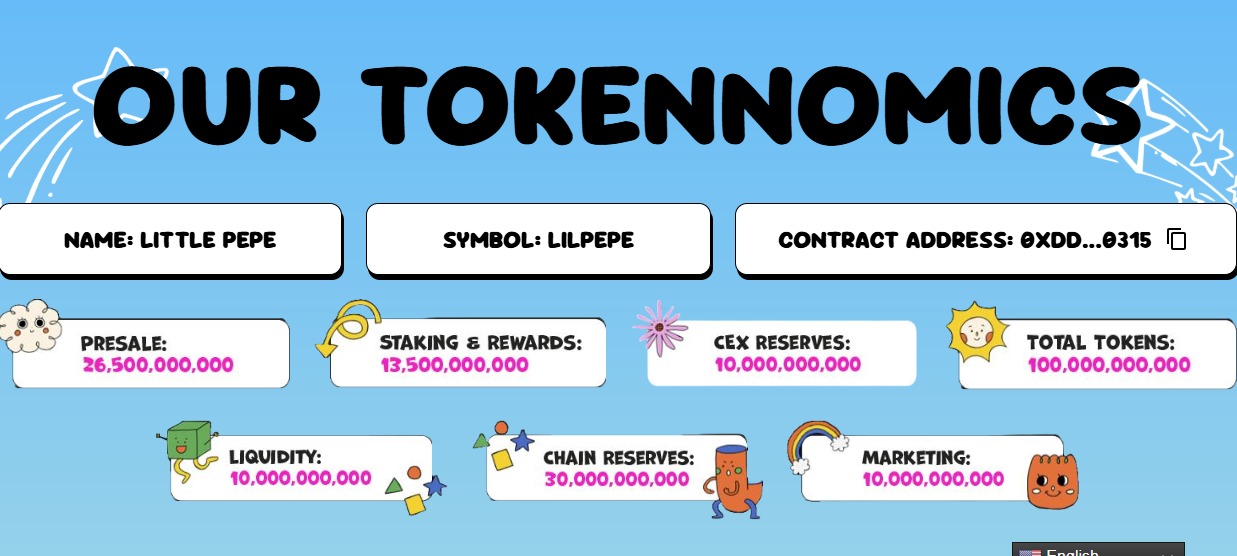 Source: Tokennomics of project
That mismatch does not prove anything improper on its own, but it does show why little pepe launch date searches are now more about data clarity than pure hype. If the token is still not available on DEXs, as the official how-to-buy page says, then any early market pages should be read with caution until the team publishes final claim instructions, exchange names, or a live trading confirmation tied to little pepe launch date.
Why Tracker Gaps Matter Before Live Trading
Right now, there is no clean open-market reaction to measure because the project’s own materials still place the token in presale. That means traders looking up little pepe launch date, listing date, price, listing price, and end date are really dealing with two layers at once: the project go-live plan and the unofficial way data is already being displayed across trackers. Until those two layers line up, supply figures may remain one of the most watched parts of the little pepe launch date story.
Expert Analysis
The strongest takeaway is simple. This is no longer just a calendar topic. It is also a verification story. The project documents outline one go-live structure, but search-facing tracker pages still show mixed signals. For cautious readers, the next key update is not another countdown post. It is a clear notice on circulation, claim timing, and where live trading actually begins for little pepe launch date watchers.
Your Money Your Life Disclaimer: This article is for informational purposes only and does not constitute financial, investment, or trading advice. Crypto assets are volatile, and readers should verify official disclosures, review risks carefully, and do their own research before making financial decisions.






