New Fed Chair Kevin Warsh Wins 54-45 Senate vote: Is CLARITY Act Next?

Fed Chair Kevin Warsh 4-Year Term Begin: First Fed Meeting on June 16
The U.S. Senate has confirmed Kevin Warsh as the next Federal Reserve Chair. The 54-45 vote marked the narrowest approval margin in Fed history. He will replace Jerome Powell on May 15. Markets now watch closely for signals on interest rates, inflation, and Fed independence.
A Tight Vote Signals Deep Political Divide
The Senate confirmed Kevin Warsh late Wednesday after weeks of intense debate. The final vote stood at 54 in favor and 45 against. According to reports, this became the closest Federal Reserve chair confirmation since the modern process began in 1977.
Most Republicans backed Kevin. Only one Democrat, John Fetterman, supported the nomination. Several Democrats argued the White House could pressure him to cut rates quickly.
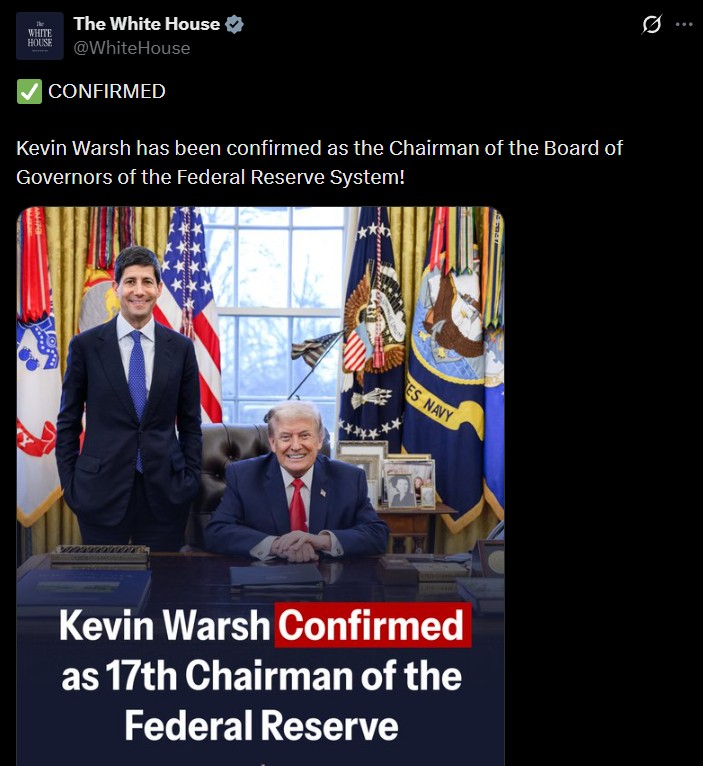
Source: White House X
The White House celebrated the result immediately. President Donald Trump Posted images from the Oval Office alongside Kevin after the confirmation. He will serve:
A four-year term as Fed Chair
A 14-year role on the Fed’s Board of Governors
Leadership during rising inflation concerns
Jerome Powell will step down as Federal Reserve Chair on May 15 after the Senate confirmed Kevin Warsh in a historic 54-45 vote. Powell is expected to remain on the Board of Governors despite leaving the chairmanship.
Will Warsh Keep the Fed Independent?
That question now dominates financial markets.
During his Senate hearing, he promised the Federal Reserve would remain “strictly independent.” He also said politics should stay outside monetary policy decisions. Still, critics remain unconvinced.
Elizabeth Warren accused Trump of trying to control interest rate policy through the appointment. She called the new federal chair a possible “sock puppet” for the administration.
Trump has repeatedly pushed for lower interest rates. Lower rates make borrowing cheaper and can boost economic growth. However, they can also increase inflation if prices already rise too fast.
Fresh inflation data added pressure before the confirmation vote. U.S. Producer Price Index data showed April inflation rose 6% year-over-year. Rising energy prices continue to drive costs higher across industries. That creates a difficult challenge for him before his first Fed meeting in June.
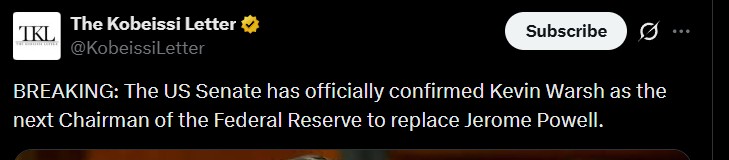
Source: The Kobeissi Letter
From Wall Street to the Fed’s Top Job
Kevin brings deep experience from finance and government. He joined the Federal Reserve Board in 2006 at age 35. That made him the youngest Fed governor in history. During the 2008 financial crisis, he worked closely with former Chair Ben Bernanke on emergency rescue plans.
Before joining the board, he worked at Morgan Stanley in mergers and acquisitions. After leaving the Fed in 2011, he joined Stanford University’s Hoover Institution and later taught business students at Stanford. He also has strong Wall Street connections as worked with billionaire investor Stanley Druckenmiller at the Duquesne Family Office.
Family Wealth and Public Scrutiny Follow Kevin
His personal ties have also drawn attention. He is married to Jane Lauder, the daughter of billionaire businessman Ronald Lauder. The Lauder family holds major interests in The Estée Lauder Companies.
Reports also noted Warsh’s name appeared in guest lists connected to convicted financier Jeffrey Epstein. He has denied any personal or financial relationship with Epstein.
Supporters describe him as calm and market-friendly. Critics fear political influence could weaken the government's independence during a fragile economic period.
What Happens Next?
He officially takes office on May 15. His first Federal Reserve meeting is on June 16 and 17. Investors expect a heated debate over interest rates. The stakes remain high.
If rates stay elevated, borrowing costs may hurt growth. If rates fall too quickly, inflation could worsen. That balance will define the first months as Fed Chair. Financial markets, crypto traders, and global investors now wait for his next move.
After Kevin Warsh secured Senate approval, attention now shifts toward crypto regulation. Many industry watchers expect renewed momentum around the CLARITY Act, which could finally define how U.S. agencies regulate digital assets, exchanges, and crypto tokens.
Conclusion
Kevin now steps into one of America’s most powerful economic roles. His confirmation exposed sharp political divisions over inflation and federal independence. Markets expect major policy debates ahead. Whether he follows Trump’s rate-cut push or protects the independence could shape the U.S. economy, stock market, and crypto sector for years.
Disclaimer: This article is for informational and educational purposes only. It does not provide financial, investment, or legal advice. Readers should conduct thorough research and consult qualified experts before making financial decisions based on economic developments.







