Tether Launches Scudo to Make Onchain Gold Payments Easier

Tether Launches Scudo: Does It Challenge New York Approved Pax Gold?
As gold value hit record highs and global interest in safe-haven assets surges, Tether has introduced a new way to use the precious metal on the blockchain. On January 6, 2025, Tether launches Scudo, a simpler unit of account for its gold-backed token – TetherGold (XAU₮), to make its on-chain payment easier.

Source: TetherOfficial Release
With the launch the goal is clear to make gold easier to price, send, and use in everyday digital transactions. But can this really bring the precious metal as a practical payment method in the modern economy, if yes then how?
What is Scudo? How Does It Work?
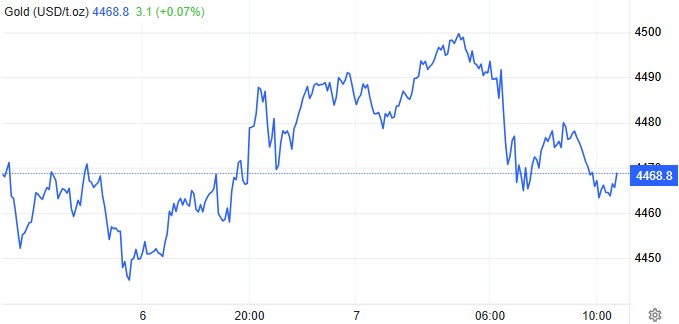
When Tether launches Scudo, it is not generating a new token. Instead, it is a new unit of measurement for Tether Gold. One Scudo equals one-thousandth of a troy ounce of gold, or 0.001 XAU₮. At current prices, that equals roughly $4.50 worth of gold.
This change solves a common problem. As the physical asset gains more value, using small decimal rates like 0.023456 feels confusing and improper. The newly launched G-unit changes long decimals with easy to read or understand numbers, much like how Bitcoin uses “satoshis” instead of tiny fractions of BTC.
This design keeps the system simple while making the asset more usable as a medium of exchange.
Does It Change the Original TetherGold’s Working?
Even after Tether launches Scudo, nothing changes about XAU₮’s backing. Each XAU₮ token remains fully backed 1:1 by physical gold stored in secure Swiss vaults. Ownership is verifiable on-chain using in-platform asset-tracking tools.
The new launch is purely a unit of account. All blockchain transactions still settle in XAU₮, but wallets will eventually display balances in Scudo-value. For example, instead of seeing 0.500000 XAU₮, users may see 500 Scudo.
Why Tether Launches Scudo Amid Record Gold-Prices
The metal surged throughout the year, around 67.75%, mainly due to inflation, interest-rate uncertainties, and central bank’s record buying. Investors increasingly see the asset as a way to protect purchasing power as fiat currencies losing value by continued printing and rising debt.
Source: Trading Economics
This environment creates the perfect moment to restore gold’s historical role as money. While XAU₮ already digitized physical-gold, Scudo's launch removes the final usability barrier: difficult fractional pricing.
According to the CEO Paolo Ardoino, improving user experience is critical for mass adoption.
Tether-Scudo vs PaxGold: A Competition for State-Backed Token?
Pax Gold (PAXG) is a gold-backed token issued by Paxos Trust Company, a regulated U.S. entity overseen by the New York Department of Financial Services. Each PAXG token represents one troy ounce of physical-gold stored in regulated vaults.
When Tether launches Scudo, it does not compete directly with PaxGold (PAXG). Both tokens represent ownership of physical-gold. The difference states in their usability.
Scudo-unit makes small transactions easier by changing long decimal numbers with easy units, which helps in micro-payments. However, PAXG already supports fractional transfers, but without a fixed smaller unit.
PAXG is widely utilized by institutions and DeFi users due to its strong regulatory oversight. Meanwhile, XAU₮, supported by TetherGold's global reach and liquidity, could accelerate adoption for payments and micro-transactions.
Tether Launches Scudo: What’s For Next?
Right now, no major wallet shows balances in Scudos. Users must still enter fractional XAU₮ amounts manually. However, the network's open-source Wallet Development Kit (WDK) is expected to speed up adoption.
Early WDK-based wallets may support new G-unit displays as soon as January or February 2026. Larger wallets like MetaMask and Trust Wallet are expected to add support in Q1 or Q2 2026.
The decision to introduce fixed G-unit reflects Tether’s broader strategy of modernizing access to traditional assets through blockchain technology. As for community, it suggests that the new launch could play a key role in making on-chain gold a part of everyday financial activity, without changing the trusted foundation of TetherGold itself.
Also read:









