TON Mainnet Upgrade Begin, Full Activation Set April 7, 2026

TON Mainnet Upgrade Enter April 2 Voting Phase Ahead of April 7 Launch
TON Mainnet has started the deployment of its Sub-Second upgrade, a consensus-layer update designed to reduce confirmation times and improve how quickly on-chain applications respond.
The TON Mainnet Upgrade plan was announced through the official X account on April 2, 2026, alongside a phased activation schedule for validators. At publication time, the upgrade was in progress rather than fully completed, with full fast-consensus activation scheduled for April 7.
TON Mainnet Upgrade Begins
According to the TON mainnet official announcemnet the rollout started after the completion of a bug bounty phase and moved into a three-step activation plan.
Validator nodes were first required to upgrade by March 31, followed by an April 2 vote to activate the new consensus on the basechain and moderately raise block production frequency.
A second vote on April 7 is set to fully enable fast consensus on both the basechain and masterchain. It also advised validators to stay on heightened operational readiness through April 12 in case any issues emerge during deployment.
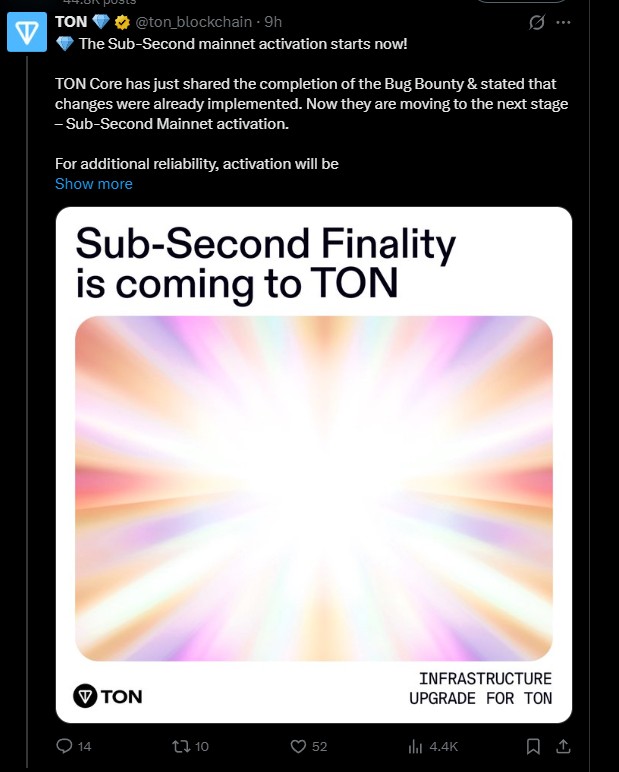
Source: Official X
The practical goal is clear: Make it feel more responsive for end users and developers. It previously described its blockchain block time as about five seconds, while also positioning the network for low-fee payments and high-throughput use cases.
The Sub-Second upgrade is meant to narrow that latency further at the consensus level, which could improve user experience for wallets, payments, games, DeFi products, and Telegram-linked applications built on the network.
Why Builders and Users May Feel the Difference?
Official materials describe the network as infrastructure for scalable smart contracts, applications, and payments at the consumer scale. The project also markets as a blockchain that can help builders reach Telegram’s massive user base with instant onboarding and open on-chain infrastructure.
In that context, faster confirmations matter less as a headline metric and more as a product feature: users of mini apps and payment tools tend to expect app-like speed, not multi-second waiting periods.
That is also the clearest answer to what problem the upgrade is trying to solve. For consumer-facing crypto products, slow finality can hurt usability, especially in payments, gaming, and interactive services. TON mainnet phased rollout suggests the team is trying to improve performance without compromising validator coordination or network stability.
Market Stays Measured as Traders Watch Execution
So far, the market response appears cautious rather than euphoric. Toncoin was trading near $1.21, down about 0.32% over 24 hours, with daily trading volume around $80.34 million and a market capitalization near $3 billion.
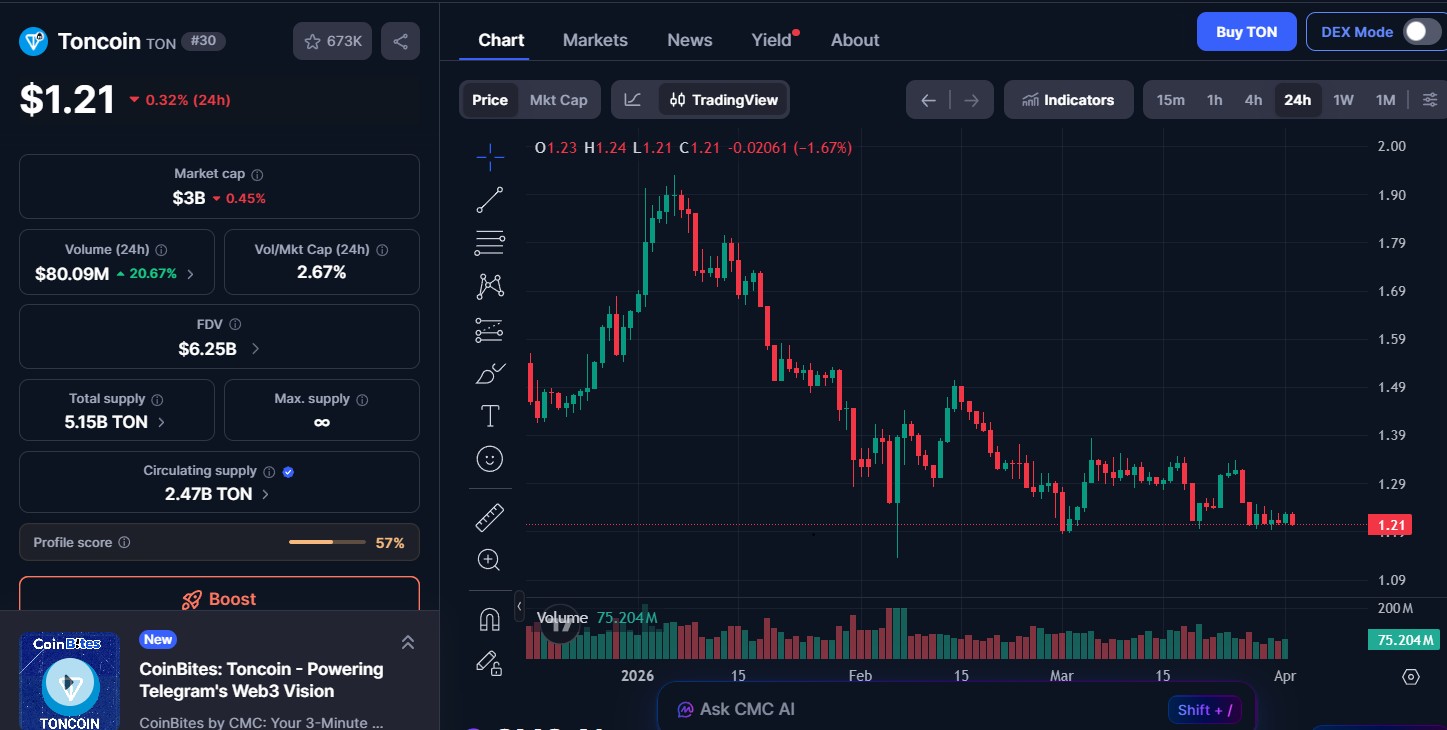
Source: CoinMarketCap
From a crypto market perspective, that restraint makes sense. Consensus upgrades are important, but traders usually wait for execution, network stability, and real usage gains before repricing a Layer 1 story.
For investors, the next watch point is April 7, when Toncoin plans to complete the final activation step. If the rollout is smooth, it could strengthen TON Mainnet pitch as a consumer-scale chain for payments and Telegram-native apps, though broader demand and adoption trends will still matter more than a single technical milestone.
Disclaimer: This article is for informational purposes only and does not constitute financial advice. Crypto assets remain volatile, and readers should evaluate official announcements, market conditions, and risk factors before making investment decisions.






