Vietnam Crypto Exchange Debate: Is Binance Facing a Ban?


Vietnam Crypto Exchange Shift Sparks Binance Ban Concerns
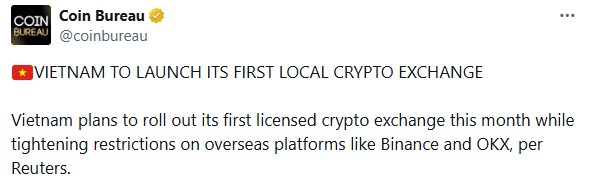
Vietnam is moving toward a regulated digital asset market with its latest Vietnam Crypto Exchange pilot. However, the plan, even before rolling out, has sparked debate across the industry due to inclusion of its restrictive stance on foreign crypto trading platforms, including Binance–the one which aided the country previously.
Source: X Official
From the government's perspective, the update marks an advancement in Vietnam crypto regulation, aiming to bring trading activity under regulatory oversight rather than banning cryptocurrencies entirely. After that, users trading on unlicensed foreign platforms could face penalties.
What Exactly The Local Crypto Exchange Plan Is?
Under the proposed framework, first mentioned in September-2025, authorities are preparing a five-year program that could launch as early as March 2026. The initiative will allow only licensed, locally operated platforms to function legally.
So far, five companies have been shortlisted for a Vietnam crypto exchange license, including firms linked to major banks and financial groups. These include affiliates of Techcombank, VPBank, LPBank, VIX Securities, and Sun Group.
To ensure compliance, strict requirements have been mentioned, such as:
Minimum capital of around $38 million
Foreign ownership capped at 49%
Trading pairs must be in Vietnamese dong (VND)
Mandatory reporting for compliance and taxation
At the same time, regulators are drafting rules that could enforce bans and similar restrictions on offshore exchanges, including Binance and OKX. The goal is to reduce capital outflows, and improve native infrastructure as the country now holds one of the largest cryptocurrency-trading communities.
Exchange Rules vs Binance’s Role: Why BNB-Based Exchange Matters
While the Vietnam Crypto Exchange initiative aims to reduce risks and improve transparency,
This shift that threatens the Binance operations in the country comes despite its visible involvement in the nation. In late 2025, Binance signed a cooperation agreement with Ho Chi Minh City’s Department of Finance to support regulatory development and fintech growth.
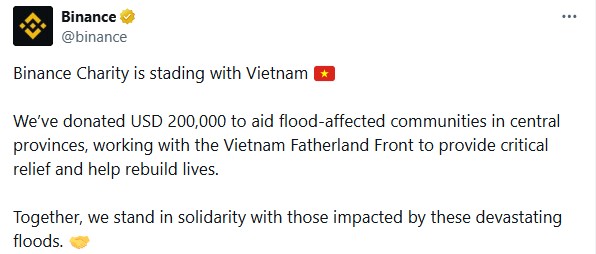
The exchange has also contributed to humanitarian efforts during November 2025 flood disruption, including a $200,000 flood relief donation.
These developments have widely raised questions: why restrict a platform that has actively supported the ecosystem?
Need of Strict Rules: Growth Demands Development
According to industry data, Vietnam crypto adoption is one of the world’s fastest-growing markets, with over 17 million users and trading volumes exceeding $200 billion annually.
Most of this activity currently happens on offshore platforms, limiting the government’s ability to monitor transactions, enforce taxes, and manage capital flows.
Through the digital asset trading framework, authorities aim to:
Bring trading under regulatory supervision
Reduce capital outflows
Improve tax compliance
Strengthen investor protection
Strict requirements, including high capital thresholds and limits on foreign ownership, highlight the government’s intent to build a tightly regulated system.
What Comes Next–Concerns and Hopes: Can Binance Ditch These Rules?
The move is expected to reshape the market by pushing liquidity into regulated domestic platforms. However, it could potentially push some traders toward decentralized platforms as an alternative.
While the initiative aims to reduce risks and improve transparency, concerns remain about whether newly launched local platforms can match the security and liquidity of top global players.
From this point, the hopes are also generated on whether the nation will give Binance special relief from these rules as the November 2025 signing with Ho Chi Minh city states, the BNB-based exchanges’s assistance build cryptocurrency framework and train regulators.
In essence, the Vietnam Crypto Exchange pilot reflects a broader strategy: not rejecting cryptocurrencies, but reshaping the market under state supervision—even if it means sidelining global players like Binance.