White House Issues Trump Digital Asset Report 2025: What’s Inside


White House Releases Trump Digital Asset Report 2025: Key Crypto Moves
On Wednesday, the Trump administration published a 168-page report called the Digital Assets Policy. The document presents various suggestions that would promote cryptocurrency development and enhance compliance. The report represents a new initiative to position the U.S. as the global crypto capital, with the backing of the highest-ranking White House officials.
Let’s discuss some core aspects of the Trump Digital Asset Policy 2025:
Foreign Crypto Accounts Must Be Reported
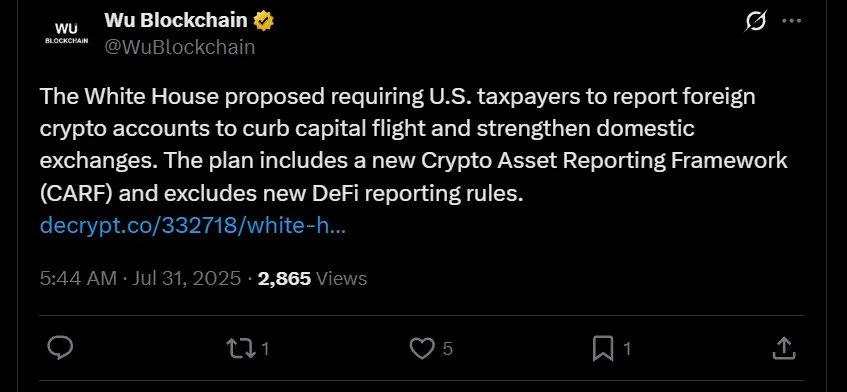
One of the most discussed proposals is a law that will compel U.S. taxpayers to inform about their foreign digital asset accounts to the IRS. This regulation can be compared to the law that already exists regarding foreign bank accounts (FBAR). The idea is to stop shifting users' crypto holdings offshore to avoid U.S. taxes. The goal is to protect U.S.-based exchanges from losing business to foreign platforms. This makes the holdings of international crypto more transparent.
Source: X
A New Crypto-Asset Reporting Framework
In the report, the Crypto-Asset Reporting Framework (CARF) is a new system that is suggested to ensure that the activity remains in the country. This framework is designed to increase oversight of crypto transactions and discourage U.S. citizens from using overseas platforms to avoid taxes. The report explains that the ease of transferring assets across borders has made it easy for people to avoid paying taxes.
However, according to the Trump White House digital asset policy no new reporting rules should apply to DeFi (decentralised finance). Since DeFi operates without intermediaries or identity checks, the set of rules recommends that the IRS and Treasury Department avoid imposing reporting requirements that would be difficult or impossible to enforce.
Supporting Crypto-Focused Banks
The report also talks about the need to support crypto banks. It asks banking regulators to stop delaying approvals for banks involved in cryptocurrency. If a regulator doesn’t respond on time, the application should be approved by default. The Federal Reserve has been slow in giving master accounts (which allow banks to use Fed services) to firms. This part of the report is seen as a direct message to U.S. banking authorities to support cryptocurrency integration into the mainstream financial system.
Source: X
Combating Illicit Finance/Reforming Anti-Money Laundering (AML) Guidance
In its section on financial crime, the report asks FinCEN, the Treasury’s financial crime unit, to review the Bank Secrecy Act to see if it needs updates for crypto-related money laundering. Some in the crypto world say this law doesn’t fit the anonymous nature of crypto, but the government wants to prevent illegal use of crypto.
No to Central Bank Digital Currency (CBDC)
The report reiterates the Trump administration’s firm opposition to a U.S. CBDC. To draw a clear line between innovation and centralised state control in digital finance. It argues that a CBDC would threaten financial privacy, centralise control, and compete with the dollar-backed private stablecoin market.
Clear Regulatory Framework for Digital Assets
This long-demanded regulatory clarity could unlock new token offerings and safer trading environments. It also clarifies SEC vs. CFTC jurisdiction. It provides definitions for tokens, securities, and commodities. It also facilitates non-security digital asset spot trading.
Self-Custody and P2P Transactions Recognition
This safeguards key ideals such as ownership and permissionless usage. It is a request to enact legislation that will assert the right of Americans to self-custody digital assets in order to conduct legal peer-to-peer cryptocurrency transactions.
Promotion of Stablecoin Innovation
Faster, cheaper international transfers can be made possible with stablecoins, as per Trump's released reports. It supports dollar-backed, privately issued stablecoins to facilitate the international use of the U.S. dollar. The federal agencies are encouraged to promote legal stablecoin innovation, particularly in cross-border payments.
Final thoughts
The Trump digital assets policy sets a bold direction that the U.S. should take to be at the forefront of the economy. It wants to provide the American people with crypto tax reforms to blockchain-based bank support, and entrepreneurs the transparency they require to develop this industry in a responsible way. You can also go through the Trump tariff plan to learn more about the regulation in the US.








