Latest Blockchain News, ICOs, Presales, Airdrops, Listings 2026 & More
Explore blockchain technology, current blockchain news, ICOs, crypto presales, airdrops, and token listings. Learn how blockchain networks work and discover the projects shaping the crypto and Web3 ecosystem.
Blockchain Crypto Airdrops
View All
Blockchain Crypto Presale / ICO / IDO / IEO
View All


Blockchain Listing
View All














What Is Blockchain Technology?
Blockchain technology is a system that records and shares information across a network of computers. It supports cryptocurrencies and many other digital tools. The shared record is often called a distributed ledger.
Think of a blockchain as a digital notebook shared by many computers. New transaction records are grouped into sections called blocks. Each new block is linked to the block before it.
Many computers may keep a copy of the same record. When the network approves a new block, these copies are updated. This makes hidden changes easier to detect.
Blockchain records are designed to resist tampering. However, the safety of a network depends on its code, rules, permissions, consensus method, and governance.
Blockchain technology can support:
- Cryptocurrency payments
- Smart contracts
- Decentralized applications, also called dApps
- Decentralized finance, or DeFi
- Digital identity tools
- Supply chain tracking
- Blockchain tokens and other digital assets
For a deeper understanding, read more about how blockchain technology works and where it is used today.
How Blockchain Networks Work
A blockchain network helps its members share and check records. Some networks let people send digital assets without using a bank. Other networks are built for companies that need approved users and controlled access.
Each blockchain uses a process to check transactions and approve new blocks. This process is called a consensus mechanism. The exact process differs from one blockchain network to another.
Distributed Records
Copies of the ledger may be stored on many computers called nodes. This reduces the need for one central database. However, the number of nodes and their roles differ across networks.
Shared Control
Many public blockchains do not have one company that approves every transaction. Miners, validators, developers, token holders, or other network members may take part.
This does not mean that every blockchain has no leaders or control. Some networks are managed by companies, foundations, or small groups of approved users.
Transparency
Transactions on many public blockchains can be viewed through a blockchain explorer. However, not every network is fully open. Private and permissioned blockchains may limit who can see their records.
A visible wallet address also does not always show the real name of the person who controls it.
Tamper-Resistant Records
Confirmed blockchain records are usually hard to change. A change may need support from the network or control over a large part of it.
The level of protection depends on the blockchain design, network size, consensus method, and security rules.
Cryptographic Security
Blockchain networks use cryptography to protect information and prove ownership. A crypto wallet normally uses a public address and a private key.
- Public address: You can share it so other people can send you digital assets.
- Private key: It proves control of the assets linked to your wallet. You must keep it secret.
A private key works like a very powerful password. Anyone who gets it may be able to control the connected crypto assets. Never share your private key or recovery phrase.
How Blockchain Technology Is Used
Blockchain technology is not limited to cryptocurrency. Its shared records and smart contract tools may also help businesses, public services, and online platforms.
Supply Chain Tracking
A blockchain system can record how a product moves from its source to a shop or customer. Approved users may add information at each step.
This can help a business check where an item came from, when it moved, and whether records match. However, blockchain cannot confirm that false information entered by a user is true.
Banking and Finance
Blockchain networks can support payments, asset transfers, settlement systems, and DeFi services. Some systems may reduce the number of middlemen needed for a transaction.
Speed, cost, and security vary by network. Users should check transaction fees, processing times, local laws, and platform risks before using a blockchain payment service.
Healthcare
Permissioned blockchain systems may help approved hospitals, doctors, and researchers share records. Access controls can help protect private information.
Blockchain alone does not make health data safe. A healthcare system must also follow privacy laws, use secure software, and give access only to trusted users.
Learn more about how Blockchain is improving the healthcare sector through secure data systems.
Voting Systems
Blockchain can be tested as one part of a digital voting system. It may help create records that are easier to check.
Safe voting also needs private ballots, secure devices, strong identity checks, clear rules, and protection from attacks. Blockchain alone cannot stop every type of voting fraud.
Digital Identity
Some blockchain projects help users store or prove identity details. These tools may let a person confirm selected information without sharing every private detail.
Smart Contracts
A smart contract is a computer program stored on a blockchain. It runs when its coded conditions are met.
Smart contracts can support token swaps, payments, voting tools, blockchain games, and DeFi applications. They can also contain bugs, so projects should test and audit the code.
What Are the Different Types of Blockchains?
Blockchains can be built in different ways. Some are open to everyone, while others allow only approved members. The right type depends on the purpose of the network.
1. Public Blockchains
Public blockchains are normally open to anyone. People may be able to view transactions, create a wallet, use applications, or help check network activity without asking a company for permission.
Bitcoin and Ethereum are common examples. No single user controls the full network, but developers, miners, validators, companies, and communities may have different levels of influence.
Possible benefits:
- Open access
- Publicly checkable records
- Wide network participation
- Less reliance on one central operator
Possible limits:
- Fees may rise when the network is busy
- Some networks process transactions more slowly
- Public records may create privacy concerns
- Energy use depends on the consensus method
2. Private Blockchains
A private blockchain is managed by one organization or a small group of approved operators. Only selected users may be able to view data, send records, or approve transactions.
Businesses may use private blockchain technology for audits, supply chains, record keeping, or data sharing.
A private blockchain is not always less secure than a public blockchain. Its safety depends on its software, access controls, governance, and system design.
Possible benefits:
- Controlled access
- Faster processing in some systems
- More privacy for business records
- Clear management rules
Possible limits:
- Greater reliance on one organization
- Less public transparency
- Approved operators may have wide control
- Users must trust the network manager
3. Consortium Blockchains
A consortium blockchain is managed by several organizations. Instead of one company controlling the network, a group of approved members shares control.
For example, several banks, hospitals, or shipping companies may use one shared ledger. Each member follows agreed rules for adding records and checking transactions.
Possible benefits:
- Control is shared by several members
- Useful for business partnerships
- Access can be limited to approved users
- Members can share one common record
Possible limits:
- Governance can be complex
- Members must agree on common rules
- The network is less open than a public blockchain
- Updates may take longer when members disagree
4. Hybrid Blockchains
A hybrid blockchain uses both public and private features. Some information may be open for anyone to check, while sensitive records remain limited to approved users.
For example, a company may keep customer data private while publishing proof that a transaction took place.
Possible benefits:
- Flexible access rules
- Private storage for sensitive data
- Public proof for selected records
- Useful for businesses and public services
Possible limits:
- More complex to build and manage
- Users may not know which information is public
- Security depends on both parts of the system
- Clear governance rules are needed
Popular Blockchain Networks
Many blockchain networks support cryptocurrencies, dApps, smart contracts, and digital assets. Each network has different goals, fees, speeds, and security methods.
Bitcoin (BTC)
Bitcoin is the first widely used blockchain for decentralized digital money. It launched in 2009 and lets users send value without a traditional bank approving each payment.
Bitcoin uses Proof of Work. Miners check transactions, protect the network, and compete to add new blocks.
Key features:
- Peer-to-peer digital payments
- A large decentralized network
- Proof-of-Work security
- Wide support from wallets and exchanges
Ethereum (ETH)
Ethereum is a widely used blockchain platform that supports smart contracts. Developers use it to build DeFi platforms, NFT tools, games, and many other Web3 applications.
Ethereum uses Proof of Stake. Validators help check transactions and keep the network running.
Key features:
- Supports smart contracts
- Large developer community
- Used by many DeFi and NFT projects
- Wide ecosystem of blockchain applications
BNB Smart Chain (BSC)
BNB Smart Chain, formerly called Binance Smart Chain, supports smart contracts and Ethereum-compatible applications. It is used by DeFi platforms, blockchain games, NFT projects, and token launches.
Its network fees are often lower than fees on some other popular networks. However, cost and speed can change as network use changes.
Key features:
- Fast transaction processing
- Lower fees in many cases
- Ethereum Virtual Machine compatibility
- Support for many Web3 projects
Solana (SOL)
Solana is designed to process many transactions quickly and at a low cost. Developers use it for payments, DeFi, NFTs, games, and other blockchain applications.
Key features:
- High transaction capacity
- Low network fees in many cases
- Growing developer ecosystem
- Support for smart contracts and dApps
Cardano (ADA)
Cardano is a Proof-of-Stake blockchain platform. Its development follows a research-based method and focuses on security, scaling, and long-term network growth.
Key features:
- Research-led development
- Proof-of-Stake design
- Support for smart contracts
- Growing blockchain ecosystem
Polkadot (DOT)
Polkadot is designed to help different blockchain networks connect and share information. This ability is called blockchain interoperability.
Key features:
- Cross-chain communication
- Shared security tools
- Support for connected blockchain networks
- Focus on scalability and interoperability
Blockchain Airdrops
Blockchain airdrops are campaigns in which crypto projects give tokens, points, or other digital rewards to eligible users. Projects may use airdrops to introduce a platform, reward community members, or invite users to test a new product.
Common airdrop tasks may include:
- Creating a compatible wallet
- Joining an official community
- Following verified social accounts
- Testing a blockchain application
- Using a decentralized platform
Every campaign has different rules. Rewards are not guaranteed, and some campaigns may change or end without notice.
Why Explore Blockchain Airdrops?
Airdrops can help users learn how a new platform works. They may also give eligible users access to new tokens without requiring an early token purchase.
- Learn about new projects: Explore new blockchain platforms and Web3 tools.
- Test new products: Use an application before its wider launch.
- Understand new ecosystems: Learn how a blockchain community and its apps work.
- Receive possible rewards: Eligible users may receive blockchain airdrop tokens or points.
Some projects now reward users for real product activity instead of simple social tasks. Eligibility may depend on wallet activity, platform use, points, location, or other rules.
Projects such as HyperGPT may use their own tasks and eligibility terms. Always read the current official rules before joining.
Blockchain Airdrop Safety Tips
Airdrop scams may copy real projects, websites, and social accounts. Follow these safety steps:
- Check the official project website.
- Never share a private key or recovery phrase.
- Check wallet permissions before approving them.
- Do not send money to claim an unknown reward.
- Watch for copied websites and fake social profiles.
- Use a separate wallet for testing unfamiliar dApps when suitable.
Blockchain ICOs, IDOs, IEOs and Presales
Blockchain projects may raise funds before a token begins public trading. Common methods include ICOs, IDOs, IEOs, and presales.
These methods give projects a way to fund development and distribute tokens. They also carry major risks for participants.
What Is an ICO?
An Initial Coin Offering, or ICO, lets a project sell tokens before public exchange trading begins. The project normally manages the sale through its own website or platform.
What Is an IDO?
An Initial DEX Offering, or IDO, launches a token through a decentralized exchange or launch platform. Trading may begin after the sale, based on the project’s launch plan.
What Is an IEO?
An Initial Exchange Offering, or IEO, is managed through a centralized crypto exchange. The exchange may review some project details and handle user access or token distribution.
An exchange review does not remove all risk. Users still need to research the project and understand the sale terms.
What Is a Crypto Presale?
A crypto presale lets eligible users buy tokens before the wider public launch. A project may run one presale stage or several rounds with different prices and token limits.
A lower early price does not guarantee profit. The token may lose value, face low liquidity, or never reach a planned exchange.
Why Do Projects Hold Token Sales?
A blockchain team may hold a token sale to:
- Raise money for product development
- Build an early user community
- Distribute tokens before public trading
- Support network or ecosystem growth
- Fund marketing, audits, liquidity, or operations
Risks and Potential Benefits of Blockchain Token Sales
A token sale may give eligible users early access to a blockchain project. However, early access also comes with higher risk.
Possible risks include:
- Project failure
- Token-price volatility
- Low or missing liquidity
- Delayed or cancelled listings
- Smart contract bugs
- False team or partnership claims
- Fraud, phishing, and wallet theft
- Changes to token supply or vesting terms
- Legal or regulatory limits
What to Check Before Joining a Token Sale
Review the project carefully before connecting a wallet or sending funds.
- Official website and verified social accounts
- Whitepaper and project purpose
- Token utility
- Total supply and token distribution
- Vesting and unlock schedules
- Smart contract address
- Security audit, if available
- Team background and public profiles
- Roadmap and working product
- Sale dates, payment methods, and refund terms
A security audit can help find code problems, but it cannot guarantee that a project or smart contract is completely safe.
Why Blockchain Matters for Investors and Traders
Blockchain has created new ways to transfer assets, build online products, and manage digital communities. Investors and traders may follow blockchain projects to understand new technology and market activity.
Crypto prices can change very quickly. A useful product or strong blockchain network does not guarantee that its token price will rise.
What Investors May Review
Careful research should look beyond marketing claims and token prices.
- Project purpose and real use case
- Blockchain network and technical design
- Product development progress
- Token supply and utility
- Team background
- Security audits
- Governance structure
- Roadmap progress
- Community activity
- Liquidity and exchange access
Blockchain technology is used in areas such as finance, games, healthcare, supply chains, identity tools, and digital ownership. Adoption can grow or slow based on the project, market, laws, and user demand.
What Traders May Monitor
Traders often follow events that may affect token supply, demand, or market access.
- Exchange listings
- Token unlocks
- Network upgrades
- Mainnet launches
- Security incidents
- Trading volume
- Market liquidity
- Project announcements
Important Trading Risks
Before trading blockchain tokens, remember:
- Crypto markets are highly volatile.
- Past results do not guarantee future returns.
- A token may be hard to sell when liquidity is low.
- Exchange listings can be delayed or cancelled.
- Fake news and false partnership claims may move prices.
- Risk controls cannot remove every possible loss.
The Role of Blockchain for Crypto Projects
Blockchain technology helps projects build digital platforms, issue tokens, and create decentralized applications. The right network depends on the project’s users, costs, security needs, and technical goals.
Why Do Crypto Projects Use Blockchain?
Blockchain projects may use the technology to:
- Create decentralized applications
- Launch utility or governance tokens
- Run smart contracts
- Support DeFi services
- Create digital ownership records
- Build NFT platforms or blockchain games
- Give users voting or staking features
How to Build a Blockchain Project
Launching a blockchain project involves more than creating a token. A project also needs a clear purpose, safe code, useful products, and honest communication.
Common steps may include:
- Choose a suitable blockchain network.
- Define the project’s purpose.
- Create the token and smart contracts.
- Test the product and code.
- Complete an independent security review.
- Publish clear technical documents.
- Explain token supply and vesting.
- Launch the product in planned stages.
Smart Contract Security
Smart contracts can control funds, tokens, and important platform actions. Developers should test the code before launch and fix known weaknesses.
An independent audit may help find coding errors. However, even audited smart contracts can face new bugs, attacks, or unsafe upgrades.
Project Updates and Community Information
Blockchain teams can share product launches, partnerships, audits, roadmap changes, and other announcements with their communities.
Projects can also submit crypto press releases or sponsored updates to reach a wider audience. Paid or sponsored placements should be clearly disclosed.
Blockchain Wallets
A blockchain wallet helps users manage the keys needed to access digital assets. It can also connect users to DeFi apps, NFT platforms, games, and other Web3 services.
Most crypto wallets do not store tokens inside the wallet application. The assets remain recorded on the blockchain, while the wallet stores or controls the keys used to access them.
Hot Wallets
A hot wallet is connected to the internet. It is often easy to use for regular payments and Web3 applications.
Possible benefits:
- Quick access
- Easy connection to dApps
- Useful for regular transactions
Possible risks:
- Online attacks
- Malware or fake wallet apps
- Phishing links
- Unsafe smart contract approvals
Cold Wallets
A cold wallet keeps private keys offline for most of the time. Hardware wallets and securely created paper backups are common examples.
Possible benefits:
- Less exposure to online attacks
- Useful for long-term storage
- Private keys remain offline
Possible risks:
- The device or backup can be lost.
- A recovery phrase can be damaged or stolen.
- Fake hardware wallets may steal funds.
Blockchain Wallet Safety Tips
Use these basic steps to protect a crypto wallet:
- Download wallet apps from official sources.
- Never share a recovery phrase or private key.
- Use a strong and unique password.
- Check the website address before connecting.
- Review each transaction before approval.
- Remove old or unsafe wallet permissions.
- Keep secure offline backups where suitable.
Exploring Blockchain Mining
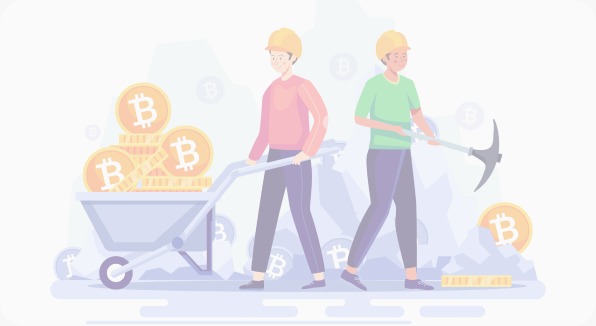
Blockchain mining helps check transactions and add new blocks on Proof-of-Work networks. Bitcoin is the best-known example.
Not every blockchain uses mining. Proof-of-Stake networks use validators instead of miners to approve transactions and protect the network.
Why Is Blockchain Mining Important?
Mining can help a Proof-of-Work blockchain:
- Check valid transactions
- Reject some forms of false activity
- Add new blocks
- Support decentralized network operation
- Reward miners under the network rules
Mining does not make a blockchain safe from every attack. Security also depends on mining power, software quality, network rules, and user behavior.
Readers can explore more information about cryptocurrency mining, mining tokens, and network updates.
Blockchain Exchanges and Token Listings
A crypto exchange is a platform where users may buy, sell, or trade digital assets. Different exchanges support different tokens, payment methods, networks, and trading pairs.
Exchange listings can make a token easier to access. However, a listing does not prove that a project is safe, useful, or likely to grow in value.
Users can follow current blockchain token listings and review the stated exchange, pair, and listing date.
How to Choose a Crypto Exchange
Compare these points before creating an account or depositing funds:
- Security: Review account protection, withdrawal controls, and security history.
- Supported assets: Check whether the needed token and network are available.
- Liquidity: Higher liquidity may make trading easier, but it does not remove price risk.
- Fees: Check trading, deposit, withdrawal, and network fees.
- User support: Look for clear help pages and working support channels.
- Local access: Check whether the service is available in your region.
- Rules: Review identity checks, withdrawal limits, and account terms.
Crypto Exchange Safety Tips
Before using an exchange:
- Enable two-factor authentication.
- Use a unique password.
- Check emails and website addresses carefully.
- Do not trust private messages offering account help.
- Verify listing announcements through official channels.
- Consider a personal wallet for long-term holdings where suitable.
Stay Updated with Blockchain News and Projects
The blockchain sector continues to change as networks launch upgrades, projects introduce tokens, and developers create new Web3 tools.
CoinGabbar brings together blockchain news, crypto presales, ICOs, IDOs, IEOs, airdrops, token listings, and educational information in one hub.
On this page, readers can explore:
- Blockchain network and technology updates
- Crypto presales and token sales
- Blockchain airdrop campaigns
- Token launches and exchange listings
- Smart contract and DeFi developments
- Blockchain wallet and mining information
- Beginner-friendly blockchain articles
Project timelines, token details, prices, and roadmap plans can change quickly. Verify each update through the project’s official website, documents, contract address, and verified social accounts.
Check the latest blockchain news to follow network developments, project announcements, security events, and other changes across the blockchain ecosystem.
Disclaimer
This page is for educational and informational purposes only. It does not provide financial, investment, legal, or tax advice.
Information about blockchain projects, cryptocurrencies, ICOs, IDOs, IEOs, presales, airdrops, and exchange listings may change without notice. CoinGabbar does not guarantee the accuracy of third-party claims, token rewards, listing dates, prices, or project results.
Crypto participation involves risk. Token prices may change quickly, projects may fail, listings may be cancelled, and smart contracts may contain bugs. Scams, phishing websites, low liquidity, and wallet theft may also cause losses.
Always conduct your own research, use official sources, and understand the risks before making a decision. Only use funds you can afford to lose. Never share your wallet’s private key or recovery phrase with anyone.
Frequently Asked Questions (FAQ)





Owned by:-
DCG Tech FZCO, UAE
Delivery Partner:-
Gabbar MediaTech Pvt Ltd.
Copyright © 2026 Coin Gabbar. All Rights Reserved