Best Layer 2 Blockchain: Arbitrum zkSync Starknet Lead 2026

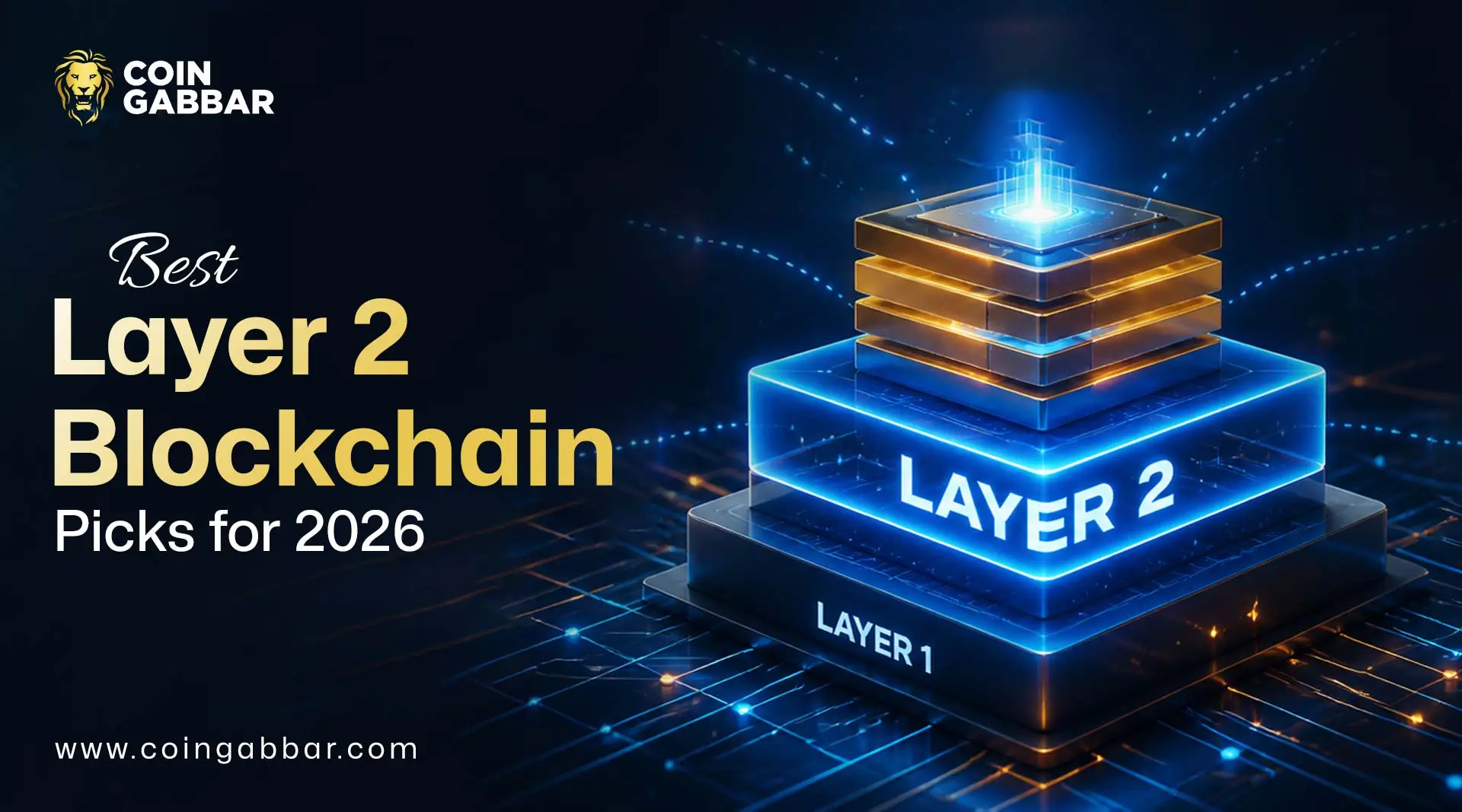
Best Layer 2 Blockchain in 2026: Top 10 L2 Networks by TVL Growth
Ethereum changed the world — but it was never built to handle millions of transactions at low cost. That's where layer 2 blockchain networks come in. These protocols sit on top of Ethereum, processing transactions faster and cheaper while inheriting Ethereum's security. The result? A thriving ecosystem where real money moves every second.
TVL Total Value Locked is the clearest signal of where that money is going. It tells you which networks users actually trust with real assets. This guide ranks the best layer 2 blockchain networks in 2026 based on live TVL data from DeFiLlama, ecosystem depth, and real growth drivers — not hype.
If you're trying to figure out which layer 2 network is worth your attention in 2026, you're in the right place.
What Is a Layer 2 Blockchain?
A layer 2 blockchain is a secondary protocol built on top of a base blockchain (Layer 1), most commonly Ethereum. It handles transaction execution off-chain or in batches, then posts a summary of those transactions back to Ethereum for final settlement.
The result: dramatically lower fees (often under $0.01), faster confirmations, and the same underlying security as Ethereum mainnet.
Layer 2 crypto networks fall into two main categories:
Optimistic Rollups — Assume transactions are valid by default and use fraud proofs to catch bad actors. Arbitrum and Optimism are the largest examples.
ZK Rollups (Validity Rollups) — Use cryptographic proofs to verify every transaction batch. zkSync Era, Starknet, Scroll, and Linea fall here.
Think of L2s as express lanes built alongside a highway. The highway (Ethereum) handles security and final settlement. The express lanes (L2s) handle the traffic — fast, cheap, and without congestion.
How We Ranked the Best Layer 2 Blockchains?
This layer 2 blockchain list is not based on marketing claims. Here's what we actually measured:
TVL Growth — Primary metric, sourced directly from DeFiLlama. TVL shows where real capital is being deployed.
Daily Active Addresses — Volume of real users, not just bots.
Ecosystem Depth — Quality and number of DeFi protocols, apps, and developer activity.
Security Stage — Whether the network has live, permissionless fraud or validity proofs.
Real Use Cases — What users are actually doing on the chain.
Not all TVL is created equal. Some is organic (real DeFi usage); some is incentive-driven (liquidity mining programs that vanish when rewards end). We flag both where relevant.
Top 10 Layer 2 Blockchain List (Q2 2026 TVL Rankings)
Here's your quick-scan overview before we go deep:
Arbitrum — DeFi king, $16.8B+ TVL
Base — Consumer leader, $10B+ TVL, highest daily users
Optimism — Superchain architect, $6B+ TVL
Starknet — Leading ZK rollup by TVL
zkSync Era — Native account abstraction, ZK-native
Linea — ConsenSys-backed zkEVM
Mantle — DAO-governed, treasury-backed L2
Scroll — Maximum EVM compatibility, rising TVL
Blast — Yield-native L2, unique liquidity model
Mode / Emerging Chains — Early-stage, high upside
1. Arbitrum: Best Layer 2 Blockchain for DeFi
TVL: ~$16.84 billion
Arbitrum is the undisputed heavyweight of the best layer 2 blockchain category in 2026. Built by Offchain Labs using optimistic rollup technology, it commands the largest TVL of any L2 — and that lead is built on something real: the deepest DeFi ecosystem in the entire rollup landscape.
GMX (perpetuals), Camelot (native DEX), Aave, Uniswap — the financial infrastructure on Arbitrum is not just complete, it's composable. You can lend, borrow, trade perps, provide liquidity, and hedge — all without leaving the chain. That composability is why nearly three-quarters of Arbitrum's daily active users are repeat visitors.
Arbitrum reached Stage 1 fraud proofs in 2025, meaning it now has a live, permissionless challenge system — a significant security milestone. With Arbitrum Orbit allowing developers to launch custom app-specific chains that settle to Arbitrum, the ecosystem is expanding outward while keeping liquidity anchored inside the same stack.
Best for: DeFi power users, institutional-grade applications, deep liquidity needs.
2. Base: Fastest Growing Layer 2 Blockchain
TVL: ~$10 billion
Base L2 is the breakout story of the layer 2 crypto world. Launched by Coinbase in mid-2023 and built on the OP Stack, it rapidly scaled from zero to leading all L2s in daily active users and transaction count. With over 110 million Coinbase users as a potential funnel, Base has a distribution advantage that no other L2 can match.
The numbers back it up. Base regularly processes over 11 million transactions per day with more than 660,000 active addresses in a 24-hour window — consumer-scale activity that eclipses most competitors. It has become the default home for social apps, NFTs, memecoins, and crypto-native consumer products.
Unlike Arbitrum and Optimism, Base has no native token. Revenue flows to Coinbase and the OP Stack ecosystem through a revenue-sharing arrangement. This means no speculative noise — but also no decentralized governance yet.
Best for: Consumer apps, newcomers to crypto, high-frequency low-value transactions.
3. Optimism: Best Layer 2 Network Powering the Superchain
TVL: ~$6 billion
Optimism's direct TVL places it third, but that number dramatically understates its actual influence. Optimism created the OP Stack — an open-source rollup framework — and that framework now powers Base, Mantle, Zora, Mode, Frax, Worldchain, and dozens of other chains forming the "Superchain." If the Superchain vision succeeds, Optimism becomes the Android of the top layer 2 blockchain world: the infrastructure powering ecosystems even when individual chains get the user-facing credit.
Optimism reached Stage 1 fraud proofs in 2025, and its retroactive public goods funding model has built genuine developer loyalty that goes beyond token incentives. The OP token governs both the Token House and Citizens' House — a dual governance model unlike anything else in the L2 space.
Best for: Developers building within the Superchain ecosystem, governance-focused users.
4. Starknet: Advanced Layer 2 Blockchain for Scaling
TVL: ~$617 million
Among layer 2 blockchains, Starknet holds a unique position: it's the leading ZK rollup by TVL that uses STARK proofs — a post-quantum cryptographic standard that requires no trusted setup. That's a meaningful technical distinction. While other ZK rollups use SNARKs (which rely on elliptic curve cryptography), Starknet's STARK-based system is more future-proof against potential quantum threats.
The tradeoff is that Starknet uses Cairo, its own smart contract language, rather than Solidity. This means developers need to learn new tooling — but it also means Starknet attracts builders who treat advanced computation and proof efficiency as product-level advantages. Throughput improvements via Volition and Cairo optimizations have made it production-ready for complex DeFi and gaming applications.
Best for: Advanced builders, ZK-native applications, long-term infrastructure plays.
5. zkSync Era: Fastest ZK Layer 2 Blockchain for Developers
TVL: ~$404 million
zkSync Era, developed by Matter Labs, takes the ZK approach but maintains full EVM compatibility — meaning existing Solidity contracts can deploy with minimal modifications. This makes it far more accessible to the existing Ethereum developer base than Starknet. It's also pioneering native account abstraction from day one, enabling smart-contract wallets with features like FaceID or email-based transaction signing without extra middleware.
zkSync's broader vision is an interconnected ecosystem of ZK-based "Hyperchains" — essentially a ZK version of the Superchain model. The network has been experimenting with distributed provers, which would make it one of the most decentralized ZK rollups in production. The fastest layer 2 blockchain title on the ZK side belongs here when it comes to developer onboarding speed.
Best for: Solidity developers transitioning to ZK, account abstraction use cases.
6. Linea: zkEVM Layer 2 Blockchain With Institutional Backing
TVL: Growing
Linea is ConsenSys's zkEVM — and ConsenSys is the company behind MetaMask, the most widely used Ethereum wallet in the world. That means Linea is accessible directly through MetaMask's interface, giving it an integration advantage that few other layer 2 blockchains can claim. It targets maximum Solidity compatibility, making it attractive to teams porting existing Ethereum codebases.
The institutional backing (ConsenSys has worked with major banks and enterprises) positions Linea as a bridge between the traditional financial world and L2 infrastructure. Watch this one closely as real-world asset (RWA) tokenization picks up pace.
Best for: Enterprise deployments, MetaMask-native users, institutional DeFi.
7. Mantle: Treasury-Backed Layer 2 Network With Unique Governance
TVL: Significant
Mantle is one of the most unusual entries on this layer 2 blockchain list — it's the first DAO-governed Layer 2, with its development and treasury controlled by token holders rather than a centralized company. Originally backed by the BitDAO community, Mantle uses a modular design with EigenDA as its data availability layer, significantly cutting rollup costs.
Its treasury-backed model means it can sustain long-term incentive programs without relying purely on speculation. Over 820,000 addresses have transacted on Mantle network, and its EVM compatibility makes developer onboarding straightforward. If you're evaluating layer 2 news around governance innovation, Mantle is the chain to watch.
Best for: DAO participants, modular blockchain enthusiasts, incentive-driven liquidity.
8. Scroll: Emerging Layer 2 Blockchain With Maximum EVM Compatibility
TVL: Rising
Scroll is a Type 2 zkEVM — meaning it achieves near-perfect EVM equivalence. Existing Ethereum contracts can be deployed with minimal code changes, making it the smoothest migration path for teams moving from mainnet to a ZK rollup. Unlike zkSync or Starknet, Scroll doesn't require developers to learn new languages or restructure their contracts.
While Scroll's TVL is smaller than the top three, it has strong developer mindshare among teams that prioritize compatibility and correctness over cutting-edge features. It's production-ready, audited, and quietly growing. For teams who want ZK security without the migration pain, Scroll may be the most underappreciated chain on this list.
Best for: Teams migrating from Ethereum mainnet, ZK security without learning curve.
9. Blast: High-Yield Layer 2 Crypto Attracting Capital
TVL: Notable
Blast entered the layer 2 crypto space with a differentiated model: native yield. ETH and stablecoins deposited on Blast automatically earn yield (from staking and T-bill exposure respectively), making it the only L2 where your idle assets work by default. This yield-native model attracted significant attention and capital, particularly from users looking for passive income alongside their L2 activity.
The flip side: Blast's TVL has historically included a strong incentive-driven component. As with any yield-narrative chain, it's important to distinguish between sticky, organic liquidity and capital that may rotate out when incentive cycles end. That said, its unique positioning keeps it in the conversation.
Best for: Yield-seeking users, passive income strategies alongside DeFi.
10. Mode / Emerging Layer 2 Blockchains to Watch
TVL: Early-stage
The layer 2 blockchains list doesn't end with the established players. Mode (built on OP Stack), Ink (Kraken's L2), UniChain (Uniswap's own chain), Soneium (Sony), and World Chain (Worldcoin) represent the next wave of specialized L2s entering production. These chains reflect a key 2026 trend: major platforms embedding their own L2 infrastructure rather than building on top of a shared one.
The risk is fragmentation. The opportunity is specialization. Early movers in these emerging ecosystems can access incentives, liquidity mining, and airdrop opportunities before the mainstream arrives.
Best for: Early adopters, airdrop hunters, ecosystem explorers.
Key Trends in Layer 2 Blockchain Growth (2026)
Understanding the layer 2 network landscape means understanding what's driving growth — and what's artificial.
Capital is concentrating, not spreading. Despite dozens of L2 launches, the data from DeFiLlama shows that Base and Arbitrum alone represent over 75% of L2 DeFi TVL. Most new chains see usage collapse after their airdrop farming cycles end. Meaningful, sticky activity is concentrated in a small number of ecosystems.
ZK rollups are maturing fast. In 2026, ZK rollups collectively settle more stablecoin volume than all optimistic rollups combined. The question is no longer "will ZK work?" but "which ZK flavor fits your workload?"
Real-world assets are entering L2s. Tokenized treasuries, bonds, and institutional capital are starting to flow onto L2 infrastructure — especially chains with institutional backing like Linea and Mantle. This RWA trend is early but significant.
Enterprise L2 adoption is real. Kraken (Ink), Sony (Soneium), Uniswap (UniChain), and Robinhood (Arbitrum integration) all moved in 2025. Distribution partnerships — not technical differentiation — are increasingly what separates winning L2s from ghost chains.
Not all TVL signals health. Some chains show large TVL numbers that are almost entirely incentive-driven — capital parked to earn rewards, not organic DeFi activity. Always check if the TVL story has depth underneath it.
Which Is the Best Layer 2 Blockchain Right Now?
Here's a direct answer because that's what the best layer 2 blockchain question actually deserves:
Use Case | Best L2 |
DeFi Power User | Arbitrum |
Consumer App / Newcomer | Base |
Ecosystem Infrastructure | Optimism (Superchain) |
Best ZK Tech (Advanced) | Starknet |
Best ZK for Solidity Devs | zkSync Era |
Institutional / Enterprise | Linea |
Yield + Passive Income | Blast |
Layer 2 vs Layer 1: Where Should You Focus?
Factor | Layer 1 (Ethereum) | Layer 2 |
Security | Maximum | Inherits L1 security |
Transaction Cost | $0.10–$0.20+ | $0.001–$0.05 |
Speed | ~15 TPS | Thousands of TPS |
Growth Potential | Stable | High |
Use Case | Settlement, large value | DeFi, apps, gaming, NFTs |
For most users in 2026: Layer 2 is the default. Unless you're moving very large amounts or interacting with L1-only contracts, Arbitrum, Base, or Optimism will serve you better on cost and speed.
Risks of Investing in Layer 2 Blockchains
No ranking would be complete without this. The layer 2 blockchain space carries real risks:
Incentive-Driven TVL. Many chains inflate TVL through liquidity mining rewards. When rewards end, capital leaves. Look for organic usage metrics (daily active users, fee revenue) alongside raw TVL.
Bridge Risk. Moving assets between L1 and L2 requires bridge contracts. These have historically been targets for exploits. Use only well-audited, high-TVL bridges.
Withdrawal Delays. Optimistic rollups (Arbitrum, Base, Optimism) have a 7-day challenge period for withdrawals to mainnet. Plan liquidity accordingly. ZK rollups are much faster (minutes to hours).
Smart Contract Risk. Even the best L2s run on code that can have bugs. Diversify across protocols and don't keep more than you can afford to lose in any single smart contract.
Sequencer Centralization. Most L2s still rely on a single sequencer — a centralized component. Decentralized sequencers are in progress across the industry but not yet standard.
Future of Layer 2 Blockchain Networks
The trajectory is clear: layer 2 blockchains are not a temporary fix — they are Ethereum's permanent scaling layer. Ethereum's upcoming Glamsterdam upgrade targets parallel transaction execution and over 100M gas per block, further reducing costs for L2s posting data to mainnet.
VanEck has projected a $1 trillion L2 market cap by 2031. Whether that number proves accurate, the direction is undeniable. Institutional adoption is accelerating. RWAs are flowing on-chain. Consumer products are reaching mainstream audiences through Base. Developer tooling is maturing.
The L2 race is entering a phase where distribution, partnerships, and ecosystem depth matter more than raw technical specs. The winners will be the chains that get their infrastructure embedded in the most products, platforms, and protocols.
Final Verdict: Best Layer 2 Blockchain in 2026
TVL is where real money signals real conviction. And the data from DeFiLlama is unambiguous: the best layer 2 blockchain ecosystem in 2026 is led by Arbitrum and Base, with Optimism's Superchain framework shaping the broader infrastructure direction.
For DeFi depth, Arbitrum remains unmatched. For consumer adoption, Base is in a category of its own. For the ZK future, Starknet and zkSync Era are the ones to watch. And for builders who want the full spectrum of options, this layer 2 blockchain list gives you a data-backed starting point — not guesswork.
The capital is moving to L2. The builders are moving to L2. The institutions are moving to L2. The question in 2026 isn't whether layer 2 matters. It's which ones you're paying attention to.
Disclaimer: Data sourced from DeFiLlama Chain Rankings. TVL figures reflect Q2 2026 estimates. Always do your own research before making any investment decisions.