Polkadot Crypto Guide: Parachains, JAM & Ecosystem Explained


Polkadot Crypto Guide: Strengths, Risk & Long-Term Ecosystem Potential
Polkadot crypto guide: Complete breakdown of ecosystem, staking, and governance
Many people know DOT by name. Fewer understand how the network actually works. That gap matters in 2026 because Polkadot is not just another coin story.
This Polkadot crypto guide breaks down the relay chain, parachains, XCM, Kusama, auctions, coretime, and JAM in plain language. If you were looking for a Polkadot crypto guide 2026, this deep dive explains what changed and why it matters now.
You’ll learn what Polkadot crypto is, how DOT supports the network, and why Polkadot still stands out in blockchain infrastructure.
What Is Polkadot, Really?
At a basic level, Polkadot is a network built to connect many blockchains under one shared security model. That is the simplest answer to what is Polkadot crypto.
Instead of forcing every app onto one chain, Polkadot lets different chains specialize. The relay chain secures the network. Parachains handle app activity. XCM helps those chains communicate.
That is why this Polkadot crypto guide matters. It is not only about Polkadot cryptocurrency as a token. It is also about how a multi-chain network works.
Why Polkadot Was Built?
Blockchains often live in silos. One chain may be good for payments. Another may fit gaming or identity. Yet moving value across chains can still be slow, risky, or expensive.
Polkadot was built to solve that problem. It gives many chains one security layer, then lets them work in parallel. That design aims to reduce fragmentation without forcing every project into one mold.
For anyone reading a Polkadot guide, that is the big idea. One base layer secures many connected chains.
Relay Chain vs Parachains: The Core Architecture
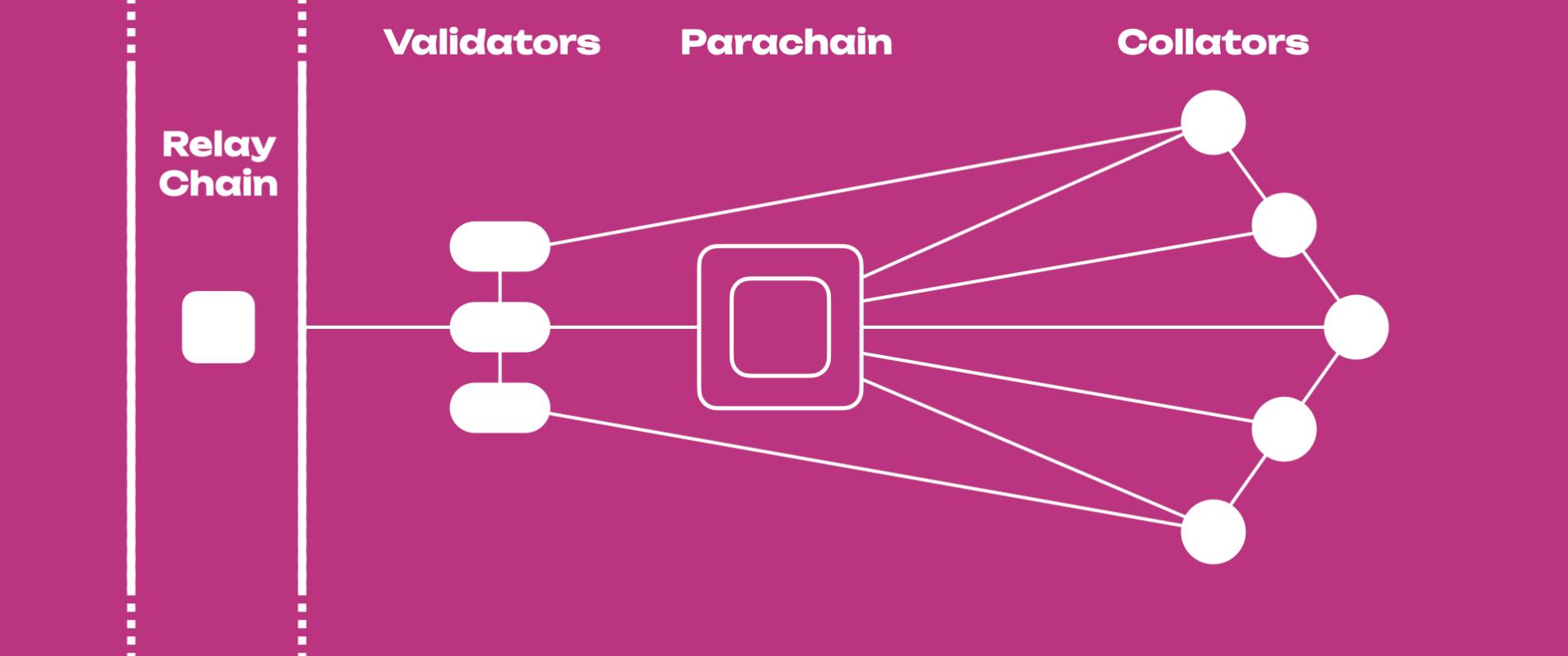
The relay chain is the center of Polkadot. It handles shared security, consensus, and coordination. It does not try to do everything itself.
Parachains are separate chains connected to that base layer. Each one can focus on a specific use case, such as DeFi, identity, gaming, or smart contracts. Because parachains run in parallel, they avoid the long queue that single-chain systems often face.
That is a core reason this Polkadot crypto guide matters for Polkadot for beginners. You are not learning one blockchain. You are learning a network of connected chains.
Source: Polkadot Docs
How NPoS Works in Polkadot?
Polkadot uses NPoS, which means Nominated Proof of Stake. It is the system that helps choose who secures the network.
Validators run nodes and help confirm blocks. Nominators stake DOT behind validators they trust. If validators perform well, both sides can earn rewards. If they act badly, slashing can cut funds.
This Polkadot crypto guide matters here because staking is not just passive income. It is part of how the network stays secure.
BABE, GRANDPA, and Finality in Plain English
Polkadot splits block work into two parts. BABE helps produce blocks. GRANDPA helps finalize them.
Why does that matter? One part keeps block production moving. The other gives strong finality, which means confirmed blocks become very hard to reverse. This hybrid design helps Polkadot balance speed with security.
That is another key point in this Polkadot crypto guide. Polkadot’s architecture is layered by design.
What XCM Actually Does?
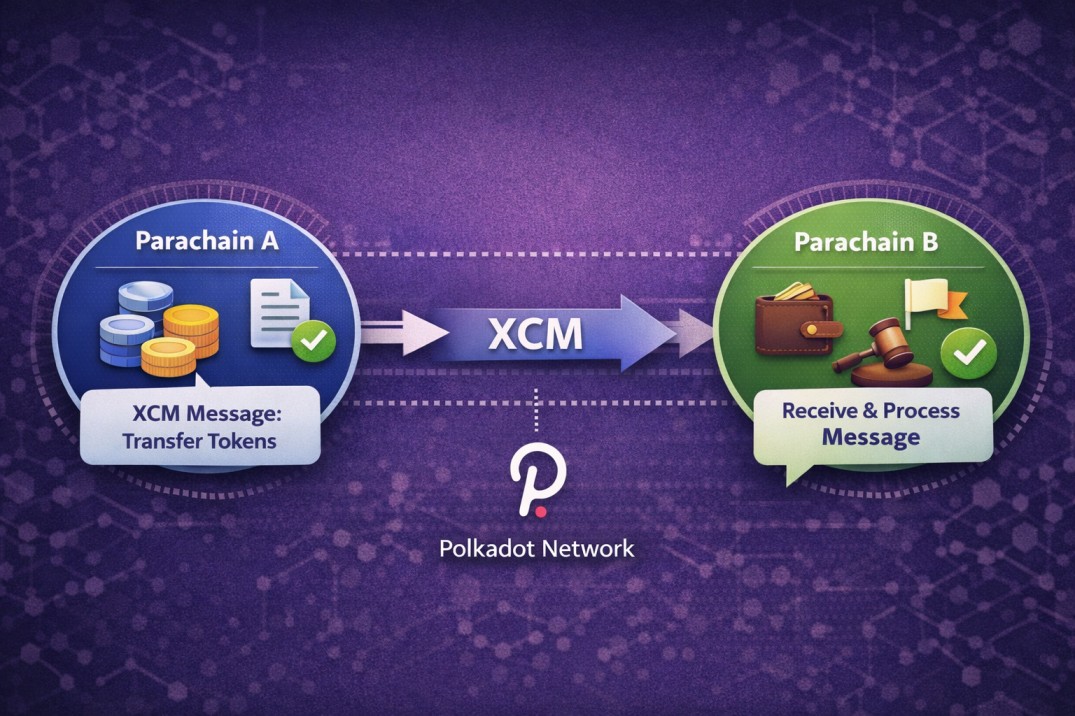
XCM stands for Cross-Consensus Messaging. It is the common language chains used to send instructions to each other.
That means one chain can send assets, governance actions, or other messages to another connected chain. XCM is not the road itself. It is the message format that makes communication possible.
A good Polkadot crypto guide must explain this well. XCM is one of the clearest reasons Polkadot is more than a single-chain project.
Parachain Auctions: Why They Mattered?
Early Polkadot growth was shaped by parachain auctions. Projects competed for parachain slots, often using crowdloans where supporters locked DOT.
That model created strong attention around the Polkadot coin and helped define the first stage of network growth. It also made access harder for smaller teams that could not raise enough support.
This Polkadot crypto guide includes auctions because they are still an important part of history, even if they are no longer the main access model.
From Auctions to Coretime: What Changed?
Polkadot later moved toward coretime. Coretime is the system that allocates validation resources in a more flexible way.
Teams no longer need to rely only on long lease auctions. They can access blockspace in a more practical model. That lowers entry barriers and changes how the network sells its resources.
This update is vital in a modern Polkadot crypto guide. It also changes how people view Polkadot dot crypto as infrastructure, not just hype.
Kusama: Polkadot’s Canary Network
Kusama is often called Polkadot’s canary network. That means it is a live network where teams test ideas faster and with more risk.
It is not just a testnet. It has real economic value, real users, and real consequences. Teams often launch their first before moving ideas toward Polkadot itself.
That is why this Polkadot crypto guide includes Kusama. It helps you see how Polkadot experiments in public.
JAM Protocol: Why It Could Be a Big Upgrade?
JAM stands for Join Accumulate Machine. It is one of the most important future-facing ideas in Polkadot today.
In simple terms, JAM could expand Polkadot beyond its current relay chain model. It aims to support broader computation while still keeping shared security at the center. That could change what developers build and how the network is valued.
If you want a Polkadot dot complete guide 2026, you cannot skip JAM. It may shape Polkadot’s next phase more than any other upgrade.
What JAM Could Mean for DOT and the Ecosystem?
JAM is not a promise of instant success. It is a roadmap idea with big implications.
If it works well, Polkadot could support more flexible compute models, broader app design, and new developer paths. If progress slows, the network could face doubt, delays, or weaker adoption.
That is where Polkadot risks enter the story. Big upgrades can lift a network, though they can also test execution.
Polkadot Ecosystem Map
A strong Polkadot crypto guide should show how the pieces fit together. The network is easier to understand when you group it by function.
You can think of the Polkadot ecosystem in these parts:
relay chain security
parachains and system chains
XCM cross-chain messaging
staking and governance tools
Kusama as the canary network
JAM as the future direction
That helps explain Polkadot as infrastructure first, not only as a tradable asset.
Strengths and Weaknesses of Polkadot in 2026
Strengths
Shared security helps connected chains avoid building validator sets alone.
Parallel chain design lets multiple parachains process activity at the same time.
Native interoperability gives chains a built-in way to communicate through XCM.
Long-term technical vision keeps Polkadot focused on infrastructure, not just DOT token hype.
Weaknesses
The design can feel complex for first-time crypto readers.
The shift from auctions to coretime changed how many people understand Polkadot.
JAM is promising, though it still depends on strong execution and adoption.
Competition from other blockchain networks can limit attention and developer growth.
So, is Polkadot crypto a good investment? That depends on whether you believe Polkadot can turn strong architecture into wider real-world use.
Is DOT Just a Token, or Infrastructure Exposure?
DOT is more than a ticker symbol. It supports staking, governance, and network resource access.
That means Polkadot DOT is tied to network function, not only market speculation. If Polkadot grows as infrastructure, DOT may benefit because it plays a role inside the system itself.
This part matters in any Polkadot crypto guide. DOT is not only a trade. It is also a network utility.
Conclusion
Polkadot matters because it tries to connect many chains under one secure design. The relay chain secures. Parachains specialize. XCM connects. Kusama experiments. JAM points toward the future.
That does not guarantee success. It does explain why Polkadot still gets attention in infrastructure debates. For readers comparing networks, this Polkadot crypto guide shows why Polkadot remains one of crypto’s most ambitious multi-chain designs.
Disclaimer: This content is for informational purposes only and not financial advice. Always do your own research before making any investment decisions in cryptocurrencies.
Also read: