Bitcoin Mining Difficulty Set to Drop 3.23% Ahead of May 2 Adjustment


Bitcoin Mining Difficulty Update May 2026: Hits 135T, Drop Coming Soon
Bitcoin mining difficulty has stayed unchanged at 135.59 trillion at block 947,409, according to the latest network data. The Bitcoin network is now approaching its next scheduled difficulty adjustment, which is expected to bring a downward shift of 3.23%. This comes as block production slows slightly compared to the standard 10-minute target, reflecting changing miner activity and network conditions.
Bitcoin Nears Adjustment as Block Times Slow
BTC operates on a built-in system that adjusts difficulty every 2,016 blocks. This mechanism ensures that new blocks are produced roughly every 10 minutes. At present, the network is slightly behind this target, with average block times recorded at 10.33 minutes.
The current cycle is about 94.44% complete, placing the network close to its next retarget event. The adjustment is estimated to take place on May 2, 2026, at 04:36 UTC. If current conditions remain unchanged, difficulty is expected to fall from 135.59 trillion to around 131.22 trillion.
This type of downward adjustment typically happens when activity slows or when the total network hashrate declines. It helps restore balance by making block mining slightly easier so that the system can return closer to its intended pace.
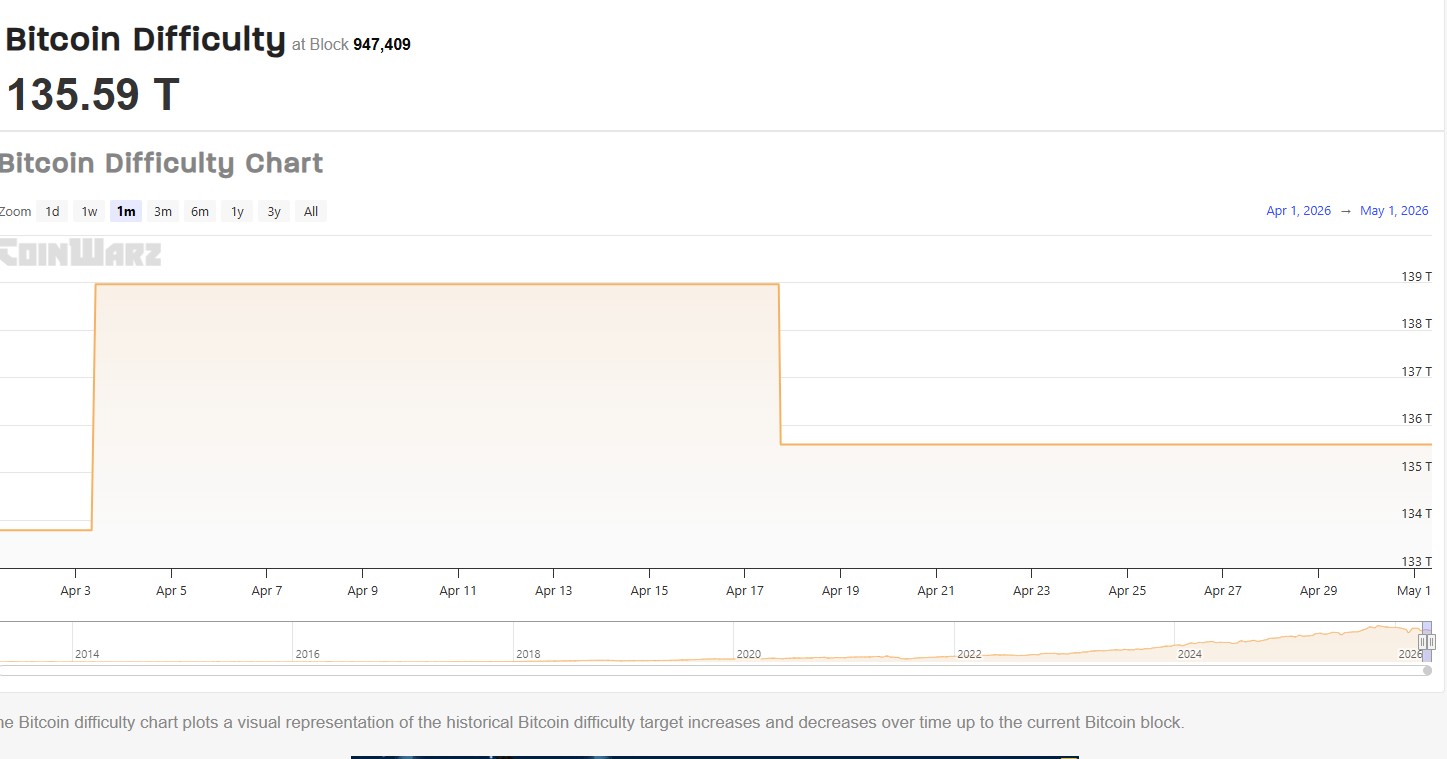
Source: Official CoinWarz
How Bitcoin Mining Difficulty Responds to Miner Activity
BTC is a core part of the Proof-of-Work system that secures the network. It measures how difficult it is for miners to solve cryptographic puzzles and add new blocks to the blockchain. When more computing power joins the ecosystem, difficulty rises. When miners exit or reduce activity, it falls.
Recent data show mixed trends. Over the past 30 days, difficulty increased by 1.35%, while the 90-day trend shows a decline of 4.29%. These shifts reflect changing mining conditions, including energy costs, hardware deployment cycles, and global hashrate distribution.
The SHA-256 algorithm ensures that Bitcoin remains secure while adjusting automatically to maintain stable block production. This self-regulating system is one of the key features that keep issuance predictable over time.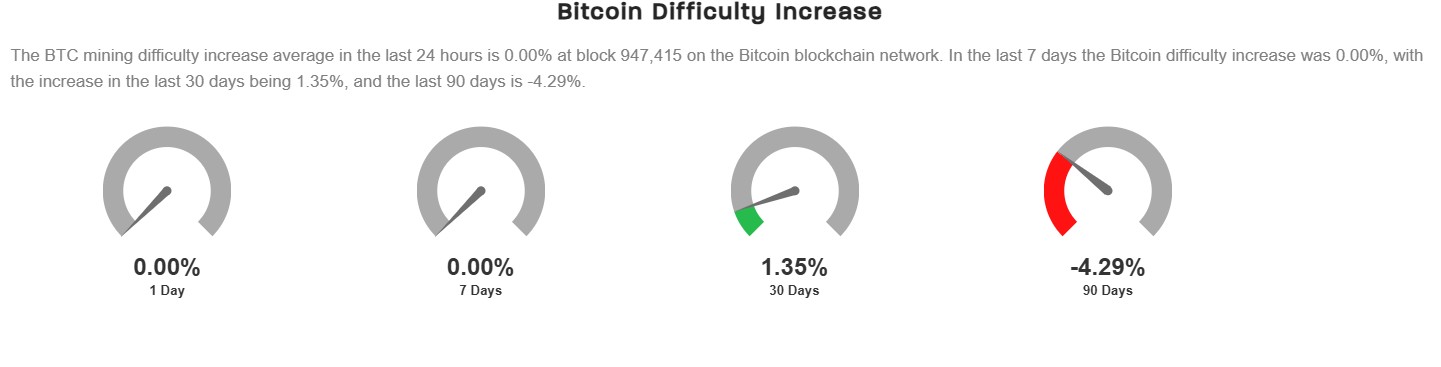
Source: CoinWarz
Market Watches Miner Economics Ahead of Adjustment
Market participants often track changes in difficulty as a signal of miner profitability and ecosystem health. A reduction can ease pressure on miners, especially those operating with higher energy costs or older equipment. However, broader Bitcoin price trends remain the dominant factor influencing mining economics.
At present, sentiment in the mining sector appears neutral, with attention focused on the upcoming adjustment. Traders are closely watching whether the expected 3.23% drop will be confirmed once the cycle completes.
The adjustment is also seen as part of BTC's long-term balancing mechanism. It ensures that the ecosystem remains stable even as global mining conditions shift due to energy prices, hardware efficiency, and competition among miners.
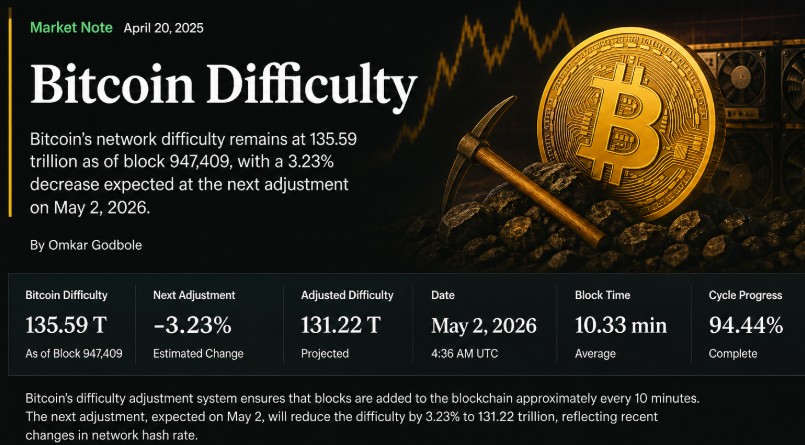
Source: CoinDesk Website
Network Balance Signals a Short-Term Shift
The Bitcoin network is showing signs of a temporary slowdown in processing speed. Blocks are taking slightly longer than the usual ten-minute target, indicating a shift in overall computing activity. This adjustment cycle helps restore timing balance across the system.
A small downward recalibration is expected to improve efficiency and bring block production back in line. Such changes reflect normal behavior as participation levels fluctuate across global operators.
Conclusion
Bitcoin mining remains steady at 135.59 trillion as the networks approaches its next scheduled adjustment. A slight reduction is expected, reflecting slower block times and changing miner participation. The adjustments mechanism continues to play a key role in keeping Bitcoin Blocks production stable and predictable across varying networks conditions.
Disclaimer: This article is for informational purposes only and does not provide financial or investment advice. Cryptocurrency markets are volatile, and users should conduct their own research before making any decisions.









