GTech Network Listing Date: How GTC Utility Will Drive 2026 Success


GTech Network Listing Date and the GTC Utility Map
What matters more right now: the exact day on the calendar, or what users can actually do with the token once trading starts? That is the real question around the GTech Network Listing Date. While the community still searches for a launch date, the project has been filling out a broader utility story across its website, white paper, and roadmap post on X. The official FAQ says GTC is expected on centralized and decentralized exchanges in 2026, but no exact date has been published yet. For now, the market context is simple: GTC utility is visible, but public exchange trading is still pending.
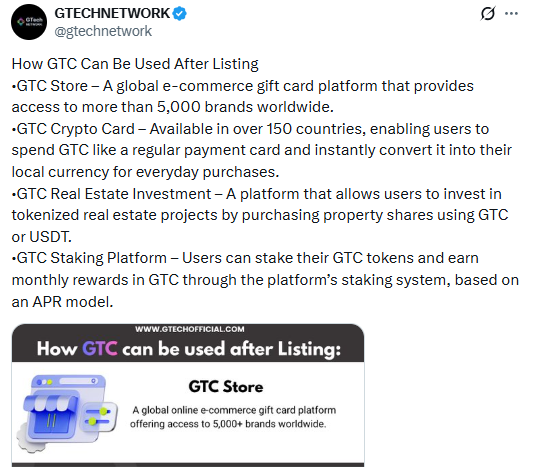 Source: X(formerly Twitter)
GTech Network Listing Date and utility after launch
The strongest new angle is not just the GTech Network Listing Date, but what follows it. On its website, the project says the store is already live and supports crypto payments across 1,000+ brands, with purchases using USDT or GTC. Its white paper also presents a GTC crypto card with debit-style use, global acceptance, and instant crypto-to-fiat conversion. That matters because most mining tokens reach the market stage with little working utility beyond exchange trading. The team is trying to show spending use before the token hits open markets.
GTech Network Listing Date and the real asset case
A second layer of the GTech Network Listing Date story sits in real-world assets and staking. The roadmap on the website places staking and rewards in the exchange phase, while the real estate section says users will be able to access tokenized property exposure, rental income, NFT-backed ownership records, and DeFi tools. The white paper and site both frame this as fractional access to property, with smart contracts handling ownership and transfers. In plain terms, that gives users a reason to hold GTC, not just sell it on day one.
GTech Network Listing Date and the supply debate
The supply side may shape the GTech Network Listing Date narrative as much as the utility side. The white paper says the project plans to burn 9 billion tokens from a 10 billion maximum supply, leaving 1 billion before exchange debut. A later official X update added another figure: current circulating supply at 112 million, with launch supply around 200 million. Project materials also show a $0.002 presale price and an expected debut price of $0.05, though these remain project-stated figures until live market trading begins. The exchange page shows names such as BingX and LBank, but the project has not released a formal venue and date notice yet.
GTech Network Listing Date and what comes next
The bigger lesson from this debate is that timing alone may not decide long-term demand. Store access and a crypto card can support spending demand. Real estate access and staking can support holding demand. If those tools launch cleanly, the token may face less sell pressure than a standard mining-only project. That makes the next official exchange notice, store usage rollout, and staking update the key items to watch.
Conclusion
The story is no longer just about a countdown. The project is trying to enter the market with a token that can be spent, staked, and tied to real-world assets. Whether that plan works will depend less on hype and more on execution, clarity, and verifiable post-launch use.
YMYL Disclaimer: This article is for informational purposes only and does not constitute financial advice. Crypto assets are volatile, and readers should verify all project claims through official sources before making any financial decision.
Also read:






