Hyperbridge Exploit: Hacker Mints 1 Billion $DOT in Major Breach

Technical Analysis: Why the Hyperbridge Exploit Hit Polkadot $DOT Hard
The cryptocurrency community is on high alert after a massive Hyperbridge exploit targeted the bridged version of Polkadot ($DOT) on the Ethereum network. On April 13, 2026, an attacker successfully bypassed security protocols to mint an incredible 1 billion DOT tokens out of thin air.
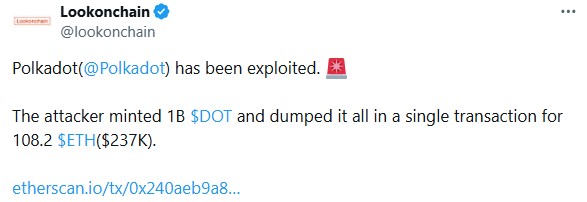
Source: X Official (@lookonchain)
The Hyperbridge exploit has sent shockwaves through the decentralized finance (DeFi) space, as the attacker used the minted tokens to drain liquidity pools. This event serves as a stark reminder of the risks associated with cross-chain bridges, even those marketed as high-security solutions.
How the Polkadot Bridge Hack Occurred
The Polkadot bridge hack was made possible by a critical vulnerability in the TokenGateway contract of Hyperbridge, a protocol built by Polytope Labs. The attacker exploited a weakness in state-proof verification. Essentially, they were able to trick the system into thinking they had the authority to change the AssetAdmin role.
Once they gained control through Hyperbridge exploit, the process was fast and cheap:
The Mint: The attacker minted 1 billion fake DOT tokens from a null address.
The Cost: The entire transaction cost only $0.74 in gas fees.
The Dump: The attacker immediately swapped the tokens via Uniswap V4 and the Odos Router, netting approximately 108.2 ETH (worth about $237,000).
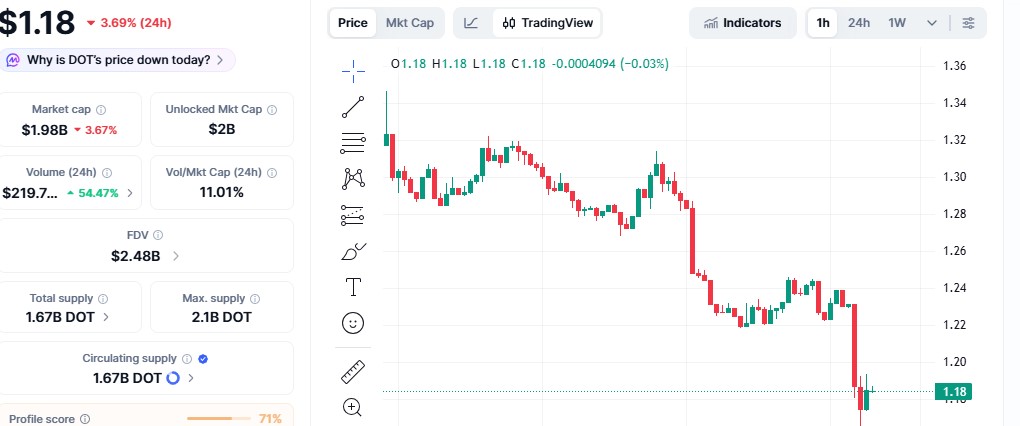
Source: CoinMarketCap Official
Because the liquidity for bridged DOT on Ethereum was relatively low, the massive sell-off triggered an immediate price crash of nearly 100%. A vertical red candle on trading charts showed the price falling from $1.22 to effectively zero in seconds.
Is Your Native Polkadot Safe After the Hack?
It is important to clarify that this was not a hack of the Polkadot "Relay Chain." The Hyperbridge exploit only affected the "bridged" or "wrapped" version of DOT that lives on the Ethereum blockchain.
Native $DOT holders who keep their assets on the Polkadot network or in official staking wallets are unaffected. However, the news did cause a brief "panic dip" in the native price of DOT, which fell about 7% before recovering as analysts confirmed the core network remained secure.
Why the Hyperbridge Exploit Succeeded
Security experts, including firms like CertiK, pointed out that Hyper bridge was deployed with a zero-second challenge period. In many bridges, there is a delay that allows the community to dispute suspicious transactions. Without this safety window, the forged messages were accepted instantly.
This event is particularly embarrassing for Polytope Labs, as Hyper bridge was promoted as a proof-based alternative to older, more fragile bridges. It shows that even the most advanced cryptographic designs can fail if their safety features are disabled in production.
Conclusion: Lessons from the DeFi Breach
The Polkadot bridge hack is a cautionary tale for all DeFi users. While the Hyperbridge exploit loss of $237,000 is small compared to the $625 million Ronin hack, it serves as a wake-up call.
Security experts are now looking closer at the code to ensure this doesn't happen again. If you own native tokens, you can breathe easy, but anyone using cross-chain bridges should always check for a project’s safety challenge period before moving their funds.
Note: The article is for informational purposes only and does not provide any financial or legal advice.
Also read:






