Trump Address on Iran War Hits Bitcoin and Altcoins

Analyzing the Trump address on Iran war impact on Bitcoin and Altcoins
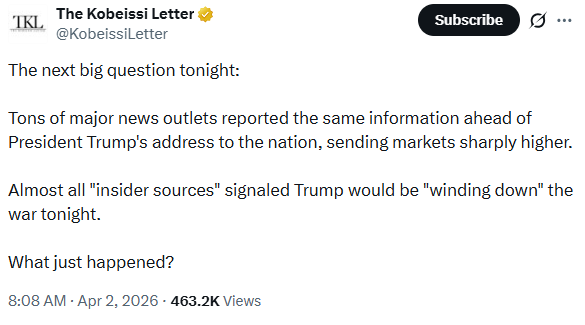
What does the crypto market do when traders expect relief but get a harder war message instead? It usually sells first and asks questions later. That is what happened after President Donald Trump Address on Iran War from the White House on April 1. Before the speech, The Kobeissi Letter had highlighted growing expectations that major outlets were pointing to a possible wind-down. Instead, Trump said the United States would keep hitting Iran hard, and markets quickly reversed across crypto, stocks, oil, and the dollar.
 Source: X(formerly Twitter)
Crypto Market Reverses After Trump Iran Speech
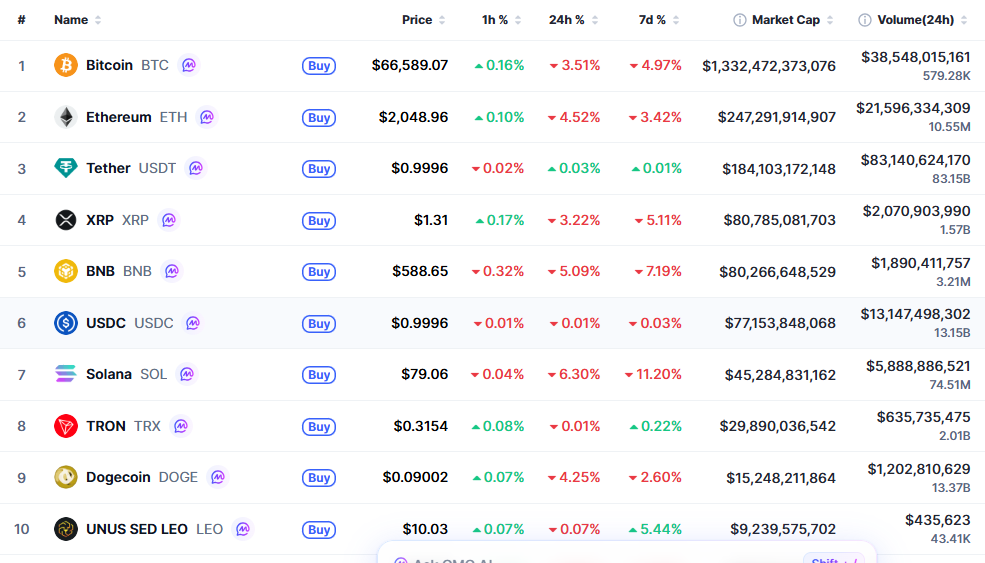
The first move was clear: the crypto market gave back part of its short-lived relief rally. Investors who tuned into the Trump address on Iran war heard no clear timeline for an exit and no clarity on when the critical Strait of Hormuz might reopen. In Digital asset, that translated into fresh selling. CoinMarketCap shows bitcoin near $66,609, ether at $2,056, XRP at $1.31, and BNB near $591, while Solana led losses among major tokens.
 Source: CoinMarketCap Coins Price
That reaction matters because bitcoin has not traded like a pure safe-haven asset during this conflict. Instead, it has behaved more like a fast-moving macro asset. The Trump address on Iran war effectively broke the budding peace narrative, forcing the market back into a defensive posture. Solana led the losses among major tokens, reminding traders that altcoins often bear the brunt of geopolitical volatility.
Crypto Market Faces Oil Shock and Macro Reset
The broader pressure point for the economy was the sudden surge in energy costs. Following the Trump address on Iran war, Brent crude jumped more than 6% to $107.69. Investors saw no quick route to lower geopolitical risk, which sent shockwaves through global equity markets. U.S. stock futures fell 1.3%, while Japan’s Nikkei lost 2.4% and South Korea’s Kospi slid 4.7%.
For crypto, that macro mix is important. Higher oil can lift inflation worries, strengthen the dollar, and keep yields elevated, all of which tend to pressure risk assets. The 10-year Treasury yield at 4.376% and after the Trump address on Iran war the dollar index at 100.05 after the speech. That helps explain why altcoins sold off faster than bitcoin as traders cut exposure rather than chase volatility.
Crypto Market Outlook as Traders Cut Exposure
The next signal is straightforward: traders will watch whether the war language softens or whether shipping risk starts to ease. If neither changes, the crypto market may stay trapped in headline-driven swings. The pre-speech rally was real, but it was fragile, and the White House address showed how quickly that optimism could disappear.
Expert analysis
This selloff shows that geopolitics is moving digital asset through macro channels, not crypto-native ones. Oil, yields, the dollar, and equity futures are setting the tone first, while digital assets are reacting second. That does not remove crypto-specific drivers, but it does mean traders now have to read the broader market before reading the chart.
Future Outlook
We expect digital assets to remain in a defensive posture as long as "boots on the ground" remain a possibility in the Middle East. While seasonality often favors a green April, the "hope-headline-reversal" cycle triggered by the Trump address on Iran war will likely dominate trading until a formal ceasefire is achieved. Investors should keep a close watch on the U.S. Dollar Index (DXY); a strengthening dollar typically creates a major headwind for any potential Bitcoin recovery.
YMYL Disclaimer: This article is for informational purposes only and does not constitute financial, investment, legal, or trading advice. Digital assets are volatile, and readers should verify facts and assess risk independently before making financial decisions.






