US Trump Extends Iran Ceasefire: Is The Strait of Hormuz Crisis Over?

US Trump Iran Ceasefire Update: Pakistan In, Hormuz Blockade Lifts Oil
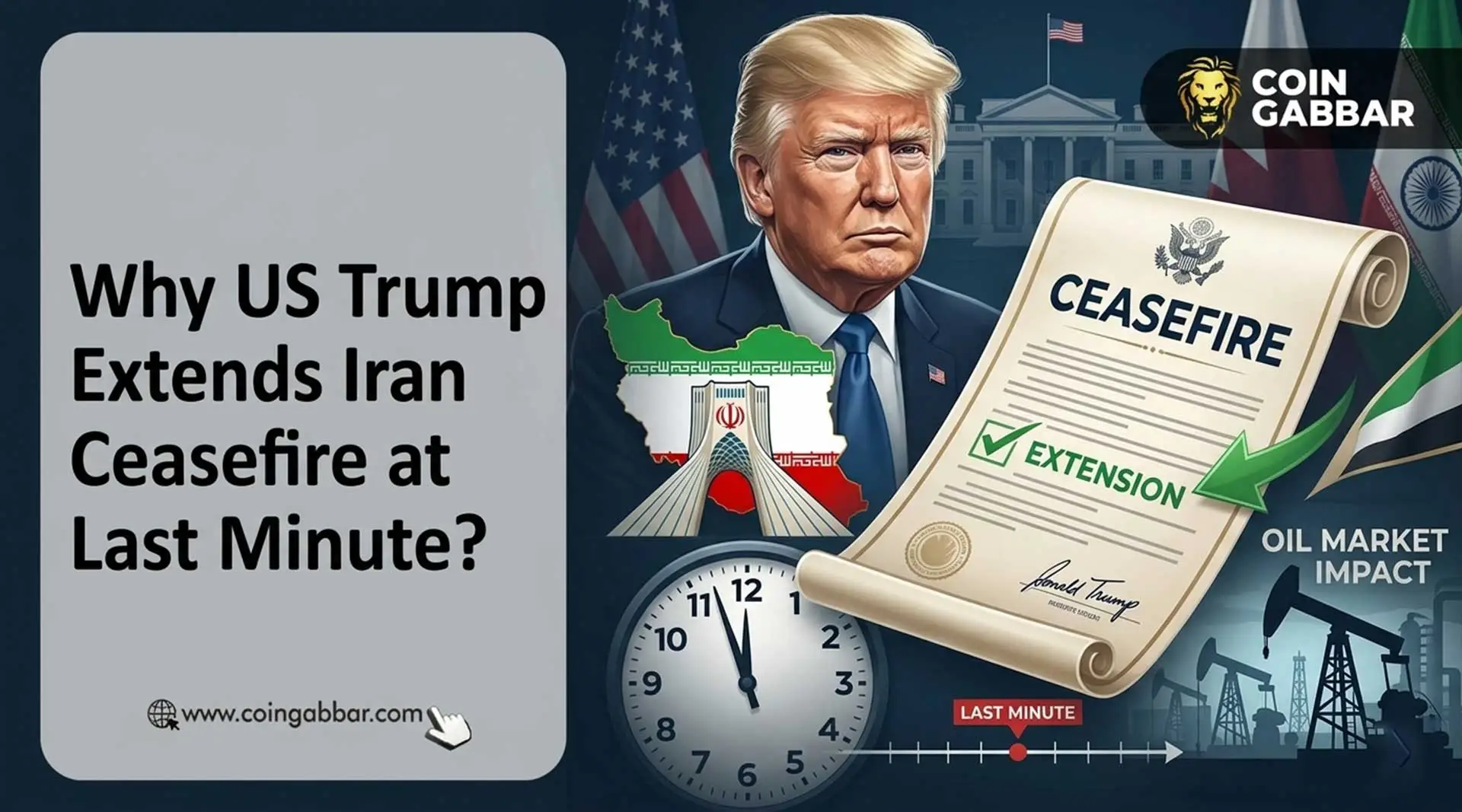
Fears of a fresh U.S.-Iran clash eased late Tuesday after President Donald Trump extended the ceasefire with Iran. He announced the move on Truth Social. Trump said Pakistan had urged the delay. The extension landed as oil markets stayed tense and traders watched the Strait of Hormuz very closely worldwide.
Why did Trump pull back?
Trump said he was holding back another attack until Iran’s leaders and representatives could present a unified proposal. Pakistan requested the extension. The move appeared unilateral. US President added that the U.S. blockade of Iranian ports and shores would stay in force.
The timing mattered. The US Trump Iran ceasefire had been due to expire within hours. Earlier that day, Trump had signaled he did not want another delay. By evening, he reversed course and gave diplomacy more time.
Pakistan welcomed the move. Prime Minister Shehbaz Sharif thanked Trump publicly. He also said he hoped talks in Islamabad could still produce a wider peace deal.
Source: Official X
What is the Hormuz fight really about?
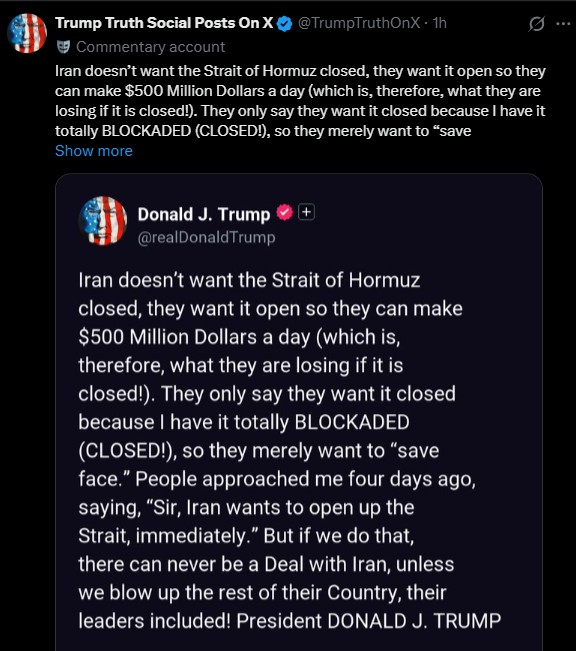
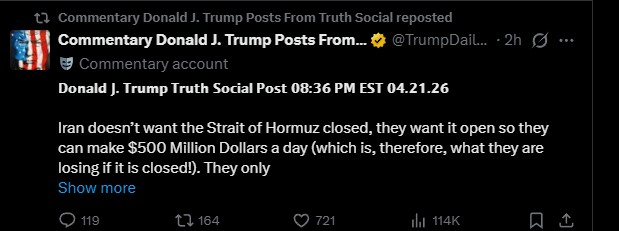
Soon after the extension, US Trump posted that Iran does not want the Strait of Hormuz closed. He said Tehran wants the waterway open so it can make about $500 million a day. He argued Iran talks about closure only to save face. Reports said he also described the strait as blockaded.
The waterway is the core pressure point. Reuters reported that the original two-week ceasefire began on April 8 after Pakistan brokered talks. The war started on February 28 and has killed thousands. President Donald's message framed the blockade as leverage, not a short military step.
Tehran pushed back quickly. Mahdi Mohammadi, an adviser to parliament speaker Mohammad Baqer Qalibaf, called the extension a ploy. He said Washington may be buying time for a surprise strike. Iran’s foreign minister, Abbas Araqchi, also called the U.S. blockade an act of war on X.
 Source: Truth Daily X
Why should crypto readers care?
This standoff reaches far beyond diplomacy. The Strait of Hormuz normally carries about 20% of global oil and liquefied natural gas supplies. It also said shipping remained broadly halted on Tuesday, with only three ships passing through in the prior 24 hours.
Oil stayed volatile. Brent crude traded near $98.27 a barrel early Wednesday. U.S. crude traded near $89.39 after both benchmarks rose about 3% on Tuesday. Also, U.S. stocks slipped as investors weighed the ceasefire uncertainty.
Crypto readers should watch the macro angle. Energy shocks can hit wider risk appetite first. That can affect stocks, bonds, oil, gold, and digital assets at the same time.
Watch the next signals closely. Iran still has not clearly accepted the extension. Pakistan-backed talks remain uncertain. The blockade also remains in place. Any change in the strait’s status could move oil fast. It could also shift global risk appetite and the mood around crypto in the days ahead
Conclusion
The ceasefire extension gives diplomacy a narrow opening, yet the Strait of Hormuz remains the main flashpoint. For markets, the next moves from Tehran, Washington, and Pakistan could shape oil prices, risk sentiment, and broader crypto trading conditions.
Disclaimer: This article is for informational purposes only and does not provide financial, legal, or geopolitical advice. Events in the region are evolving quickly, so readers should follow official statements and verified market data before concluding.






