Ripple USD Launch on BitMart Expands RLUSD Stablecoin Use

Why Ripple USD Expansion Is Sparking the RLUSD vs XRP Narratives
Ripple USD (RLUSD) has officially launched on BitMart exchange today (Jan 28, 2026), marking another important step for its stablecoin strategy. According to the exchange, users can now:
Deposit the coins from 3:00 AM UTC
Trade RLUSD/USDT from 4:00 AM UTC
Withdraw the coins from 5:00 AM UTC
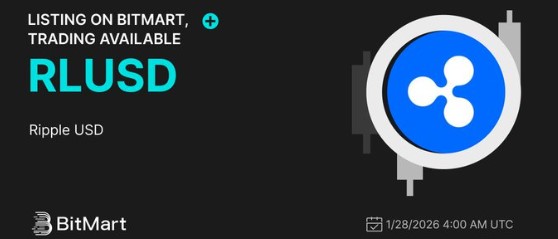
Source: BitMart Official
The BitMart listing adds to previous listings on major platforms like Binance and Kraken, improving overall liquidity.
However, it has to be noted that the trading is restricted in Lithuania due to regulatory rules.
The launch gives broader access to the stablecoin for both retail and institutional users, while strengthening the payment-focused ecosystem, but can it stabilize the staggering value of the stablecoin? And why is it being compared to XRPs?
Ripple USD: Designed to Strengthen Payment Systems
RLUSD is USD-denominated stablecoin issued by Standard Custody & Trust Company, a fully owned Ripple subsidiary. Each token is backed 1:1 by U.S. dollars and cash equivalents, focusing on trust, liquidity, and regulatory compliance.
According to market data, the RLUSD coin is currently hovering around $0.9992, with around $117-$120 million in 24-hour trading volume and 1.33 billion in market cap.
To strengthen the stablecoin's real world use more, the platform has already integrated it into several enterprise products. These include Ripple-Payments, institutional treasury tools, and DeFi integrations across both the XRP Ledger and Ethereum.
On the other side, XRP, Ripple’s blockchain native crypto token, sustained price strength in broader markets leaving Bitcoin and Ethereum in recent growths. Currently trading at $1.90, with $2.27 billion in around the clock trading volume and $116.06 billion in market cap.
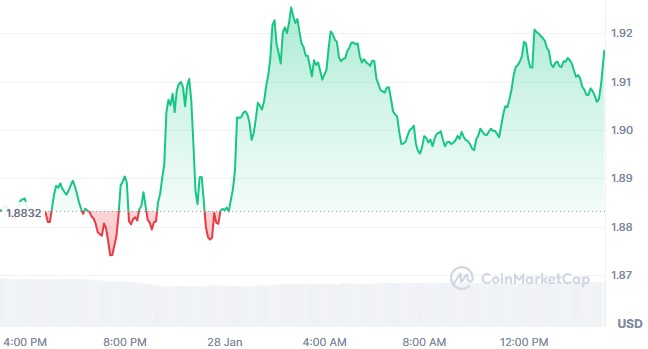
Source: CoinMarketCap Data
Growth in the price is majorly seen due to the recent DXC Technology partnership, $9.16 million in spot XRP ETFs while others saw outflows, and a most hyped news which expected Japan to consider the crypto token as a regulated financial asset.
The mass attention on the platform’s crypto coin is shaping user narratives around RLUSD versus XRP.
Ripple USD vs XRP: Different Roles, Same Ecosystem
Many investors compare RLUSDs and XRPs, but the two assets serve different purposes.
Ripple USD stablecoin: Designed for price stability, payments, remittances, treasury management, and settlements.
XRP: Acts as a bridge asset, enabling fast and low-cost currency conversions across borders.
In simple terms, the USD-backed coin provides stability, while XRPs provide speed and liquidity. Ripple uses a dual-asset strategy where RLUSD handles USD-based transfers, and XRP supports multi-currency flows when converting between different fiat or stablecoins.
This approach reduces volatility risks for institutions while keeping XRPs essential for cross-border liquidity.
Market Impact: RLUSD Stablecoin Use Cases Keep Growing
As the coin is stable in nature, its success depends on usage in payments, DeFi, and institutional finance. Taking that, the network has already been working on it diligently.
Key developments include:
Multichain expansion for broader DeFi access
Chainlink price feeds for transparency
Institutional adoption, including using the stablecoin as collateral
Regulatory approvals in regions like Singapore, UAE, and New York
And now as BitMart also supports the vision of building real utility, adoption seems to grow steadily. With RLUSD bringing stability and XRP enabling fast global transfers, Ripple’s ecosystem continues to mature in 2026.
Disclaimer: This article is for informational purposes only and does not constitute financial or investment advice. Cryptocurrency markets are volatile—always do your own research before investing.