What is Decentralized Identity - DID and SSI Crypto Explained

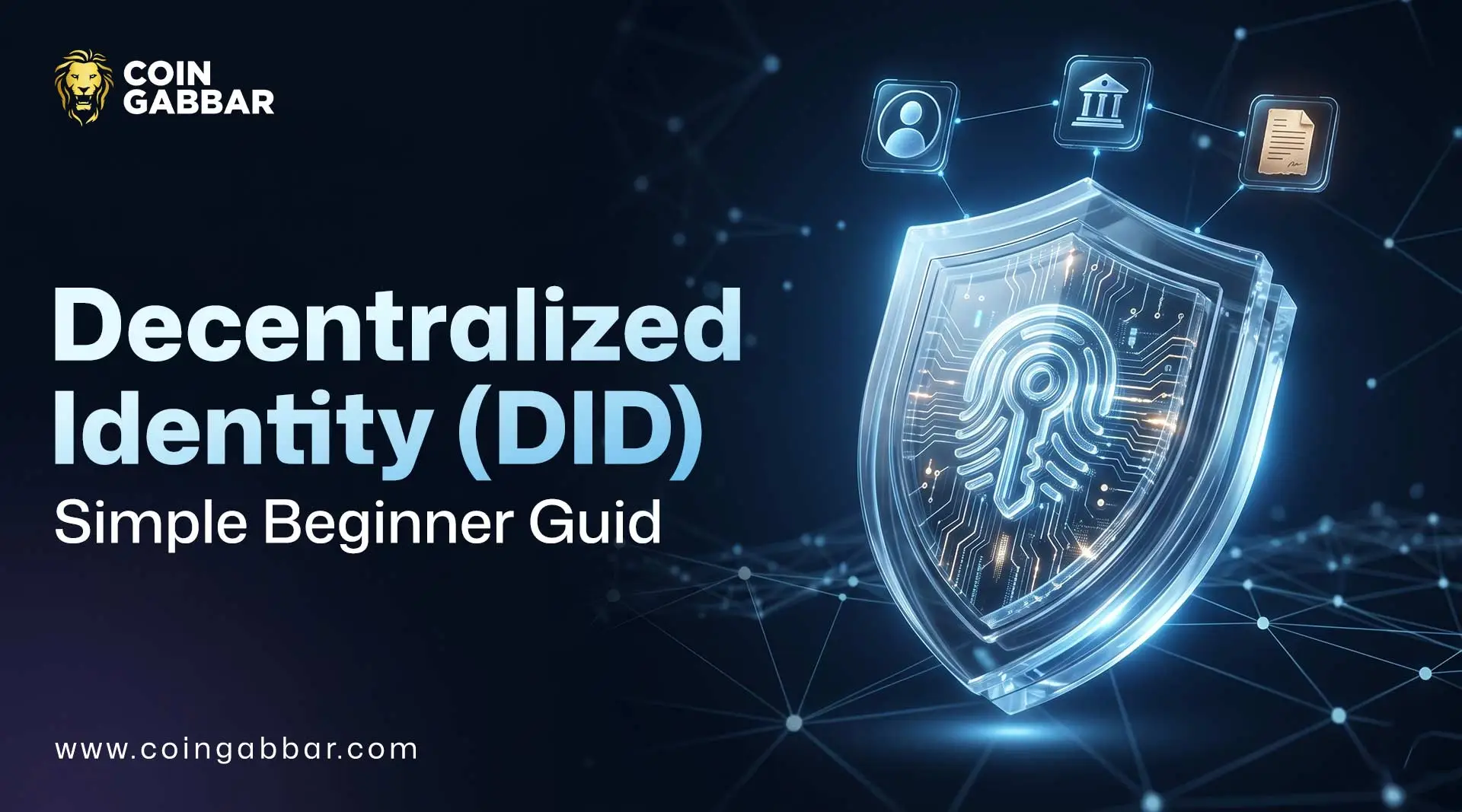
How Decentralized Identity Gives You Full Data Control
Think about the last time you registered with an App. You put in your name, Email address, possibly date of birth, and within seconds, some Company had your Personal Information stored on their Computers. Honestly, you did not have a choice.
You just clicked "agree" and moved on.
Now imagine doing that hundreds of times across hundreds of apps. If any one of them gets hacked, your data could be stolen. If any one of them shuts down, your data disappears, or gets sold.
This is the problem with how identity works on the internet today. And “Decentralized Identity” is the solution that the crypto and Web3 world is building to fix it.
The Problem In A Nutshell
When you sign onto Google or Facebook right now, both of those companies essentially become the "bosses" of your identity. They determine what you are allowed to do, who sees your data (and how it is used), and they have complete control over whether or not to let you back in.
I have noticed that some other websites have a thing that says "Sign in with Google". This "Sign in with Google" option is really common. That sounds convenient, right? But it means Google knows every website you're logging into. They are the middleman, and they have a lot of power over you.
This is called centralized identity. One company holds all the keys. It's like renting an apartment. You live there, but you don't actually own it. The landlord makes the rules.
So What is Decentralized Identity?
Decentralized Identity, means “you” are in charge of your identity, and no one else gets to make decisions about it on your behalf for you
Your personal information stays with you. You decide who gets to see it. You can prove who you are without handing over all your private details to strangers on the internet.
This idea is also called “Self-Sovereign Identity”, or SSI. The word "sovereign" means having full control. So SSI simply means you are fully in control of your own identity — just like a king or queen of your own data.
What is a DID?
DID = Decentralized Identifier. Think of a DID as a Username, but instead of a Company controlling your Username, YOU do! No Company can TAKE AWAY your DID!
Your Decentralized Identity will live on a Blockchain, which is essentially a type of Digital Ledger that NO ONE single entity controls. The W3C (same people that set standards for Websites) formally standardized DIDs as a Global Standard in 2022.
Because your Decentralized Identity is on a blockchain and follows international rules, it belongs to you permanently. No company issued it. No company can delete it.
What Are Verifiable Credentials?
Once you have a Decentralized Identity, you need something to attach to it like your degree, your age, your address. These are called “Verifiable Credentials”.
A Verifiable Credential is basically a digital version of a real-world document like your school ID, your passport, or a certificate from a course you completed. An organization (like your school or your government) issues this credential to you. You store it in a “digital wallet” on your phone.
Here is a simple example. Imagine your school gives you a digital certificate saying you passed 8th grade. You store it in your phone. Two years later, a new school asks for proof. You just tap a button and share it instantly. No phone calls, no waiting, no paperwork.
The best part? The new school can verify it is real using math and cryptography, without ever calling your old school.
The Cool Privacy Trick, Zero-Knowledge Proofs
Here is something that sounds like a magic trick but is actually just really clever math.
Imagine you want to enter a place that only allows people above 18. Normally, you'd show your ID, which also reveals your full name, your address, and your exact birthday. That's a lot of extra information the bouncer doesn't even need.
With something called a “Zero-Knowledge Proof”, you can prove "yes, I am above 18" without revealing anything else at all. No name, no address, no birthday.
This is exactly what advanced decentralized identity systems use. You prove only what is necessary. Everything else stays private.
How Does This Connect to Crypto and DeFi?
In Crypto and DeFi (Decentralized Finance) there is a major problem called KYC (Know Your Customer). This is the practice by Financial Platforms to validate who their customers are so they can be prevented from committing Fraud and Money Laundering.
Right now, KYC is annoying. You upload your passport, wait days, hand over sensitive documents, and then repeat the whole thing on every new platform.
With decentralized identity, you complete KYC once, get a Verifiable Credential, and use it on every platform. No re-uploading documents. No company storing copies of your passport. Much safer and much faster.
So who is behind this thing called Worldcoin?
Worldcoin is something that people are working on. It is a project that looks at the colored part of your eye, which is called the iris using a special machine called the Orb. Then it gives you a kind of proof on the computer that you are a real person, not a machine or a fake person on the internet but a real and unique human being, a real person, with Worldcoin.
This is useful because AI can now create fake identities very easily. However, many people worry about giving a company their eye scan, which is a fair concern.
Polygon ID is built on the Polygon blockchain. It lets users prove facts about themselves to apps and smart contracts without revealing personal data. It uses zero-knowledge proofs at its core, making it one of the most privacy-friendly tools in this space.
Things to Be Careful About
Decentralized identity is really exciting. Decentralized identity is not perfect yet.
Decentralized identity has some problems that we need to think about.
If you lose your key, which is like the password, to your digital wallet you could lose your entire digital identity.
There is no "forgot password" button.
Also, the credentials you hold are only as trustworthy as who gave them to you. A fake school issuing fake diplomas is still a problem, even in a decentralized system.
And for projects like Worldcoin, handing over your eye scan raises serious privacy questions that are still being debated.
Conclusion
Decentralized Identity is one of the most important ideas in Web3, and it goes far beyond crypto. It could change how students share school records, how patients share health information, and how millions of people without government IDs prove who they are.
The core idea is beautifully simple: your identity should belong to you. Not to Google. Not to Facebook. Not to any company. Just you.
The technology is still growing and has real challenges to solve. But for the first time, the tools to make this possible actually exist. Understanding them today puts you ahead of most people — and that is always a good place to be.
Disclaimer
This article is for learning purposes only and is not financial or legal advice. Always do your own research before using any technology or platform mentioned here.
Also read: