Layer 3 Blockchain Complete Beginner Guide With App Chains

Layer 3 Blockchain Explained: Why App Chains Are Gaining Attention?
What Is Layer 3 Blockchain? App Chains and Hyperchains Explained
Ethereum scaling already changed a lot with rollups. Fees fell. Speed improved. So why are builders now asking what is layer 3 blockchain in the first place?
The answer is specialization. A public rollup can scale Ethereum well, yet one shared lane still serves many apps with very different needs. Arbitrum’s docs now describe chains that can launch as Layer 2 or Layer 3 blockchain, with L3 chains settling to an Ethereum L2 such as Arbitrum One.
Why Isn’t Layer 2 Always Enough?
Layer two solved a major problem. It moved work away from Ethereum mainnet. That cut costs for many users.
Still, one general rollup can get crowded. A hit game, a trading spike, or a social reward event can all fight for the same blockspace. That is why the layer 3 blockchain idea keeps getting more attention.
If you want the layer 3 blockchain meaning in simple words, think of a custom lane built above a faster highway. The highway is your rollup. The custom lane is built for one app or one group of apps.
That matters because teams often want more control. Arbitrum says chains can choose dedicated throughput, custom gas crypto tokens, and different data availability models such as Rollup, AnyTrust, or Alt-DA. ZKsync also lets chains choose rollup or validium modes and even use a custom ERC-20 gas token.
How Does Layer 3 Sit On Top Of Rollups?
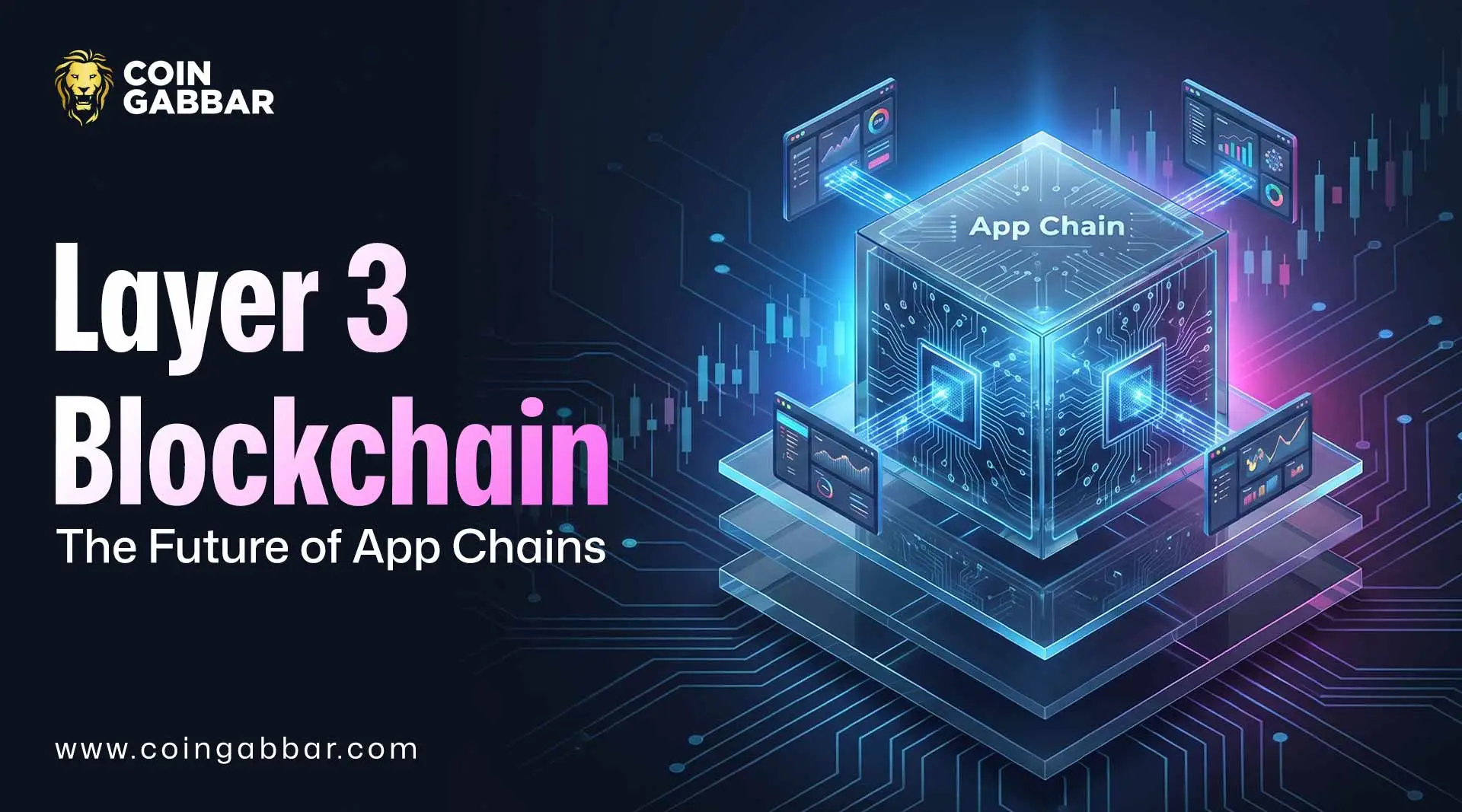
The stack is easier than it sounds. Ethereum stays at the base. A rollup sits above it. Then a Layer 3 blockchain can sit above that rollup for one focused job.
That is why many people describe app chains crypto as purpose-built networks. They do not try to serve every use case at once. They try to fit one product better.
A layer 3 blockchain explained: you take the speed gains of a rollup, then add another chain for more control. That control can include fee design, bridge setup, data rules, or how fast users get confirmations.
This is also where blockchain app chains stand out. They can tune the chain for one type of traffic instead of taking whatever a busy public rollup gives them.
Layer 3 Vs Layer 2: What Changes?
The easiest way to read layer 3 vs layer 2 scope. Layer 2 tries to scale a broad base of users. Layer 3 blockchain tries to fine-tune the experience for a narrower use case.
In a layer 3 vs layer 2 blockchain comparison, L2 is the main road. L3 is the service road built for one mall, one game, or one network. Both roads matter. They just solve different problems.
This is why layer 3 crypto keeps showing up in new product plans. Teams want Ethereum-linked security and interoperability, yet they also want more control over costs, speed, and user flow.
Which Stacks Are Pushing Layer 3 Forward?
Right now, one of the clearest examples is arbitrum orbit. Arbitrum says teams can launch custom chains as L2s or L3s, and those chains can be configured with choices around gas tokens, throughput, and data availability.
On the ZK side, the current docs focus on ZK Stack, ZKsync Chains, and the Elastic Network. The docs describe interoperable ZK-powered chains that share a bridge on Ethereum and connect inside one broader network.
You may still see the phrase zksync hyperchains in older Matter Labs writing. That older language pointed to custom L2s and L3s called ZK Chains, while newer docs mostly use ZKsync Chains and Elastic Network instead.
So where does hyperchains blockchain fit here? It is best read as an earlier label for the same broad idea: many linked, customizable chains built for scale and specialization.
Where Does Layer 3 Make The Most Sense?
You can see the strongest fit in high-volume apps. These apps generate many small actions. They also care a lot about cost predictability.
Some of the clearest use cases are:
Gaming. Arbitrum has highlighted high-frequency gaming as a strong fit for AnyTrust-style chains, and it pointed to Xai as a game-focused chain.
Social apps. Social products can record many low-cost actions onchain, and Arbitrum previously used Reddit community points on Nova as an example of this type of workload.
AI and compute-linked apps. This is a reasonable next step because an app specific blockchain can isolate machine-driven traffic, custom fees, or crypto token-based access, even though today’s official docs highlight gaming, finance, social, and enterprise first.
That is the real promise of a layer 3 blockchain. It gives one product more room to breathe without forcing every other app to share the same lane.
What Are The Trade-Offs?
Nothing comes free. More control means more setup. You may need to manage bridges, governance, sequencing, monitoring, and fee design.
You also need to pick your trust and cost model carefully. Arbitrum gives choices like Rollup, AnyTrust, and Alt-DA. ZKsync gives rollup or validium options. Lower-cost modes can change how data gets posted and verified.
There is also user friction. Another chain can mean another wallet network, another bridge step, or another support burden. Shared bridges and connected chain designs help, yet the experience can still feel more complex than using one big rollup.
So a layer 3 blockchain works best when the app is large enough to justify that extra complexity. If you do not need custom fees, isolated traffic, or dedicated throughput, a strong L2 may still do the job.
Final Take
The clean way to understand a layer 3 blockchain is not as “more layers for no reason.” It is a design choice. Use an L2 when you want broad access and simple deployment. Use an L3 when your app needs its own rules.
That is why the layer 3 blockchain story matters now. Rollups solved shared scaling. App chains try to solve tailored scaling. If that trend keeps growing, the next big user apps may not just launch on a rollup. They may launch above one.
Disclaimer: This content is for education only and should not be treated as financial or investment advice. Always do your own research before using any blockchain network, token, or app.