AlloX Token Crash Hard in Pre-Market: Will Listing Happen in September

Is AlloX Token a Scam or a Legit Crypto Project? Full Details
Something did not add up this week for early AlloX token buyers. The chart turned red fast, the community sale news dropped at the same time, and traders started asking one blunt question: is this project falling apart, or just cooling off before its real launch? Here is what the numbers actually show.
Key Takeaways
The AlloX token fell 6.03% in a single day and now trades at $0.5628, with a fully diluted value of $56.28M, per Aspecta.
It confirmed a $2 million public sale on Base, running through Sonar's onchain sale infrastructure and powered by Coinbase, with whitelist access opening first.
The Binance Wallet airdrop closed with 86.29K KYC-verified participants sharing 10,000,000 tokens, claimable after the token generation event.
Why Did AlloX Token Crash Hard in Pre-Market Trading?
At the time of writing, the AlloX token trades at $0.5628 on Aspecta, down 6.03% in a day, with a fully diluted valuation of $56.28M. It listed in pre-market on September 21 at $0.84 and has been sliding since.
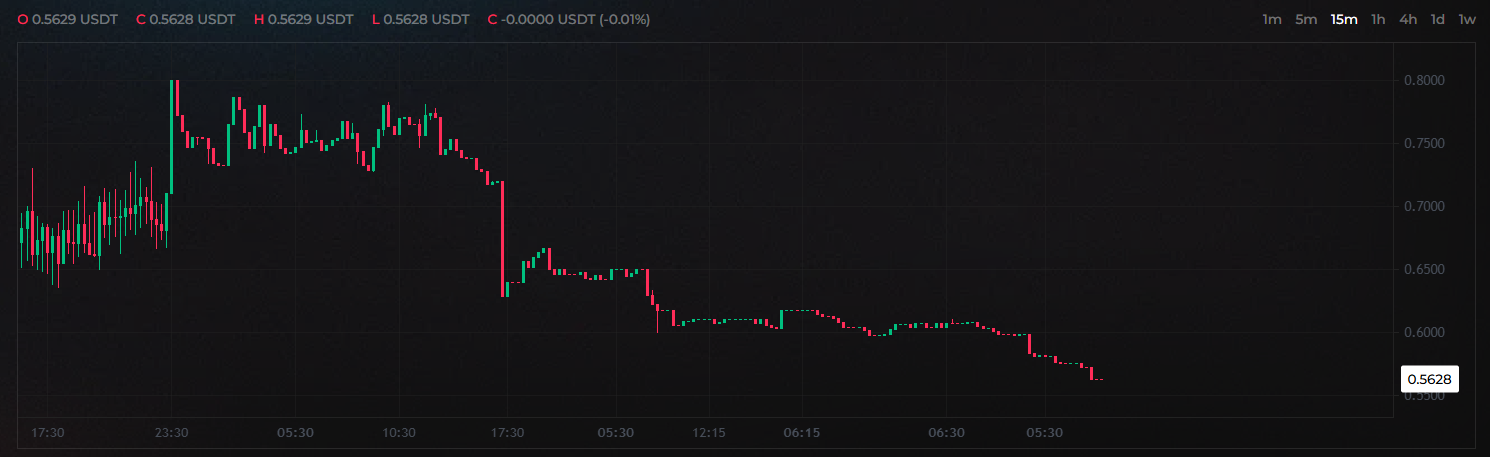
Source: Aspecta official
An earlier Aspecta snapshot placed the price at $0.6102, which shows the drop has been steady, not a single bad hour.
Is AlloX Token a Scam or a Legit Crypto Project? Full Details
A crash alone does not equal a scam, and this one has a paper trail. AlloX's public sale sits on Sonar's onchain sale infrastructure, is powered by Coinbase, and carries an ESMA MiCA regulated label. The completed Binance Wallet airdrop needed KYC checks from every one of its 86.29K participants, which is a step most low-effort projects skip.
Still, no independent audit report has been shared yet, so treat it as an early-stage project with real infrastructure behind it, not a confirmed safe bet.
Whitelist Sale Opens Before the $2 Million Public Round
AlloX confirmed on X that whitelist access opens before the community sale goes live to everyone else, and it asked followers to watch official channels for the remaining details.
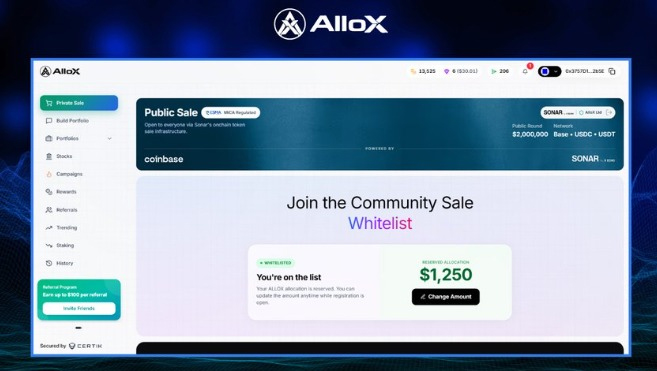
Detail | Information |
Sale Type | Public Sale |
Sale Access | Whitelist first, then open to everyone |
Total Public Round | $2,000,000 |
Reserved Allocation Shown | $1,250 (adjustable) |
Payment Network | Base |
Payment Tokens | USDC / USDT |
Sale Infrastructure | Sonar's onchain sale infrastructure |
Platform | Coinbase |
Regulatory Label | ESMA MiCA Regulated |
When Will AlloX Token List? TGE Timeline Explained
AlloX's own roadmap points to Q3 2026 for its token generation event, a quarter that ends September 30. That puts a possible token listing date near month-end, with October also in play since the team has not locked an exact date.
Neither the presale opening date nor the TGE date has an official confirmation yet, so this stays a roadmap-based estimate.
What's Next for AlloX After the Robinhood Crypto Announcement?
It also flagged a Robinhood Crypto integration on X, calling it "not live yet, but coming." The plan centers on AI-driven, narrative-based portfolios placed on a platform where capital already sits, while keeping non-custodial, onchain execution.
However, the integration is done on September 25, yet no presale or TGE date is revealed by the team.
Between the open whitelist sale, the closed airdrop, and this integration plan, the AlloX token's next few weeks carry more scheduled activity than most early-stage projects show at once.
Expert Opinion: Analysts who track early-stage token launches note that a double-digit pre-market drop within days of listing is common for low-liquidity tokens and does not by itself signal failure. KYC-gated distribution and named infrastructure partners like Sonar and Coinbase point to a working process behind it. That said, without a confirmed audit or a locked TGE date, the token stays a speculative, early-stage asset until firmer milestones land.
Conclusion
The AlloX token's crash points to early volatility, not a confirmed collapse. A whitelist sale, a $2 million round, a completed KYC airdrop, and a Robinhood plan are all moving together. Watch official channels directly, since the presale and TGE dates are still unconfirmed.
YMYL Disclaimer: This content covers a cryptocurrency project and is for informational purposes only. It is not financial, investment, or trading advice. Crypto assets, especially pre-market and presale tokens, carry high volatility and risk of total loss. Prices cited reflect a specific point in time and can change quickly. Always verify details through official channels and do your own research before making any financial decision.









