BRICS Cross-Border Payments: CBDCs, Crypto, and Interoperability

What Are BRICS Cross-Border Payments, and Why Do They Matter?
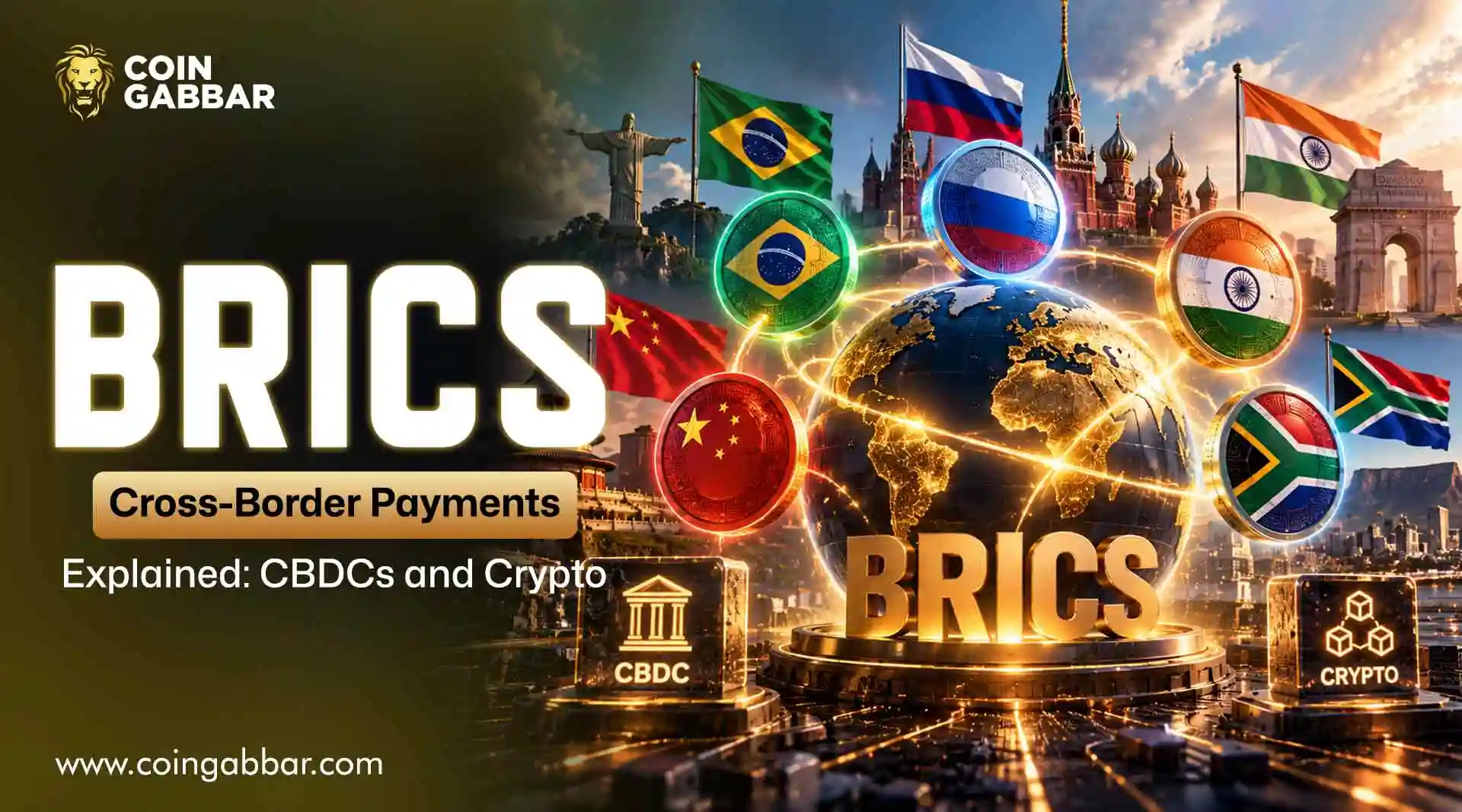
A cross-border payment is simply money moving from a person or business in one country to someone in another. BRICS cross-border payments refer to the group's push to make this process faster and cheaper between its own member nations Brazil, Russia, India, China, and South Africa- along with newer members like the UAE and Egypt.
Today, sending money internationally often means paying high fees and waiting several days for it to arrive, mostly because of how many banks a single transfer passes through. That cost and delay is exactly what this group is trying to fix, and tools like India's own digital currency, along with crypto and better technical connections, all come up as possible ways to do it.
Why BRICS Countries Want an Alternative Payment Network
Most international transfers today still lean on a small number of global banking networks. That works fine, but it comes with extra fees at every stop, delays that can stretch to several days, and a heavy reliance on just a handful of major currencies for settlement.
BRICS members have said they'd rather settle more trade directly in their own currencies, cutting out some of those extra steps, a shift that echoes the broader move away from dollar dependence already showing up in how some member countries manage their reserves.
This is really the whole point behind BRICS cross-border payments: reducing payment barriers between member countries as a practical goal, not as a political statement aimed at any single currency.
How Cross-Border Payment Systems Work Across BRICS Nations
A typical international transaction system moves through a chain of banks, each one checking and forwarding the transaction until it finally reaches its destination.
Correspondent banks connect countries that don't have a direct banking relationship with each other, and clearing systems match up who owes what before the final settlement actually happens.
Newer digital systems try to shorten that whole chain. Instead of routing through several middlemen, they aim to connect national payment networks or currencies more directly. According to the Bank for International Settlements, speed, cost, and access remain the core targets the wider international community has been working toward under the G20's cross-border payments roadmap.
The Role of CBDCs in BRICS International Payments
A central bank digital currency, or CBDC, is a digital form of a country's own currency, issued and controlled directly by its central bank. Unlike crypto, it isn't decentralized; the central bank still manages the supply and keeps oversight over everything.
CBDCs could support faster settlement by letting two countries' digital currencies talk to each other directly, without routing through a correspondent bank. That said, most BRICS members are still piloting their own CBDCs rather than running them at full scale.
Coverage of India's own digital rupee pilot shows this clearly; even with 19 banks already offering wallets, the Reserve Bank of India has said in official statements that linking systems like UPI with other countries' networks remains an evolving, multi-year process rather than a finished project.
Can Crypto Support BRICS Cross-Border Transactions?
Crypto assets, especially stablecoins, offer a different route for moving value internationally. A stablecoin-based transfer settles on a blockchain rather than through a bank chain, which can cut both time and cost for certain transactions.
Some banks outside the BRICS bloc have already tested this directly; a recent pilot saw a major U.S. bank move funds between its own entities using a stablecoin pilot built on a public blockchain.
Still, crypto is not automatically part of any official BRICS payment plan. The group's public statements have focused on CBDCs and linking existing transaction systems, not on adopting cryptocurrencies as an official settlement tool.
Why Interoperability Matters for BRICS Payment Systems
Interoperability just means different systems being able to talk to each other properly. A CBDC in one country, a bank network in another, and a blockchain bridge-style connection somewhere else all need shared technical standards to actually work together.
Without that, each system stays stuck on its own island, and the promised speed and cost savings never really show up.
Identity checks, compliance rules, and settlement standards all need to line up too; a payment that clears fine in one country can still get stuck if the receiving system uses different rules for verifying who sent it.
Key Benefits of a BRICS Cross-Border Payment Network
Faster International Settlements
Digital systems that skip several middlemen banks can cut settlement time from days down to minutes, or even seconds, when everything works as planned.
Lower Transaction Costs
Fewer middlemen usually means fewer fees stacked onto a single transfer, since each bank in a payment chain typically takes its own cut along the way.
Greater Use of Local Currencies
Countries could settle more trade directly in their own currencies instead of converting through a third currency first.
The BRICS-owned New Development Bank is already working toward a growing share of its own lending running through local currencies instead of the dollar, which lines up closely with this same goal.
Improved Payment Access
Smaller businesses and financial institutions that struggle to get proper access to correspondent banking could get a more direct route into international payments.
Challenges Facing BRICS Cross-Border Payment Development
A long list of obstacles still stands between the current pilots and a fully working network:
Different financial regulations across member countries
Currency conversion and liquidity limits in smaller markets
Cybersecurity threats aimed at new digital payment rails
Data privacy and sovereignty concerns, since payment data often reveals sensitive financial activity
Uneven levels of technology and financial infrastructure between member countries
A lack of shared technical standards across the group
The basic challenge of building trust and political coordination between five or more governments
CBDC and Crypto Risks in International Payment Networks
A few risks apply specifically when settlement runs through CBDCs or crypto:
Regulatory uncertainty rules around digital currencies still differ sharply by country, an area covered in more depth by crypto regulation guides
Money laundering and compliance risks tied to faster, less visible settlement
Cyberattacks and technical failures hitting new infrastructure
Crypto price volatility, where it applies
Stablecoin reserve and issuer risk, since not every stablecoin is backed the same way
Privacy concerns around just how much financial data a CBDC transaction reveals
The risk of a fragmented system if interoperability efforts don't come together properly
What the Future May Hold for BRICS Digital Payments
Growth is more likely to come through bilateral or regional payment links first, rather than one unified system launching all at once. More CBDC pilots and cross-border settlement tests seem likely over the next few years, alongside continued work on shared technical standards.
Blockchain and regulated digital assets may play some role in this, but a fully unified BRICS payment system is far from guaranteed and could take years to show up if it ever does.
Conclusion
BRICS cross-border transaction network aims to make settlement between member countries faster, cheaper, and less dependent on a handful of major currencies. CBDCs, crypto, and better technical links all offer possible ways to get there, but none of them fix the problem entirely on their own. Regulation, trust between governments, and basic technical coordination remain the real hurdles standing in the way.
Disclaimer
This article is for educational purposes only and doesn't provide financial, investment, or legal advice. BRICS payment initiatives are still developing, and no outcome described here is guaranteed to happen. Readers should verify current details through official sources before drawing any conclusions.
Also read: