Best Crypto Exchange for Margin Trading in 2026

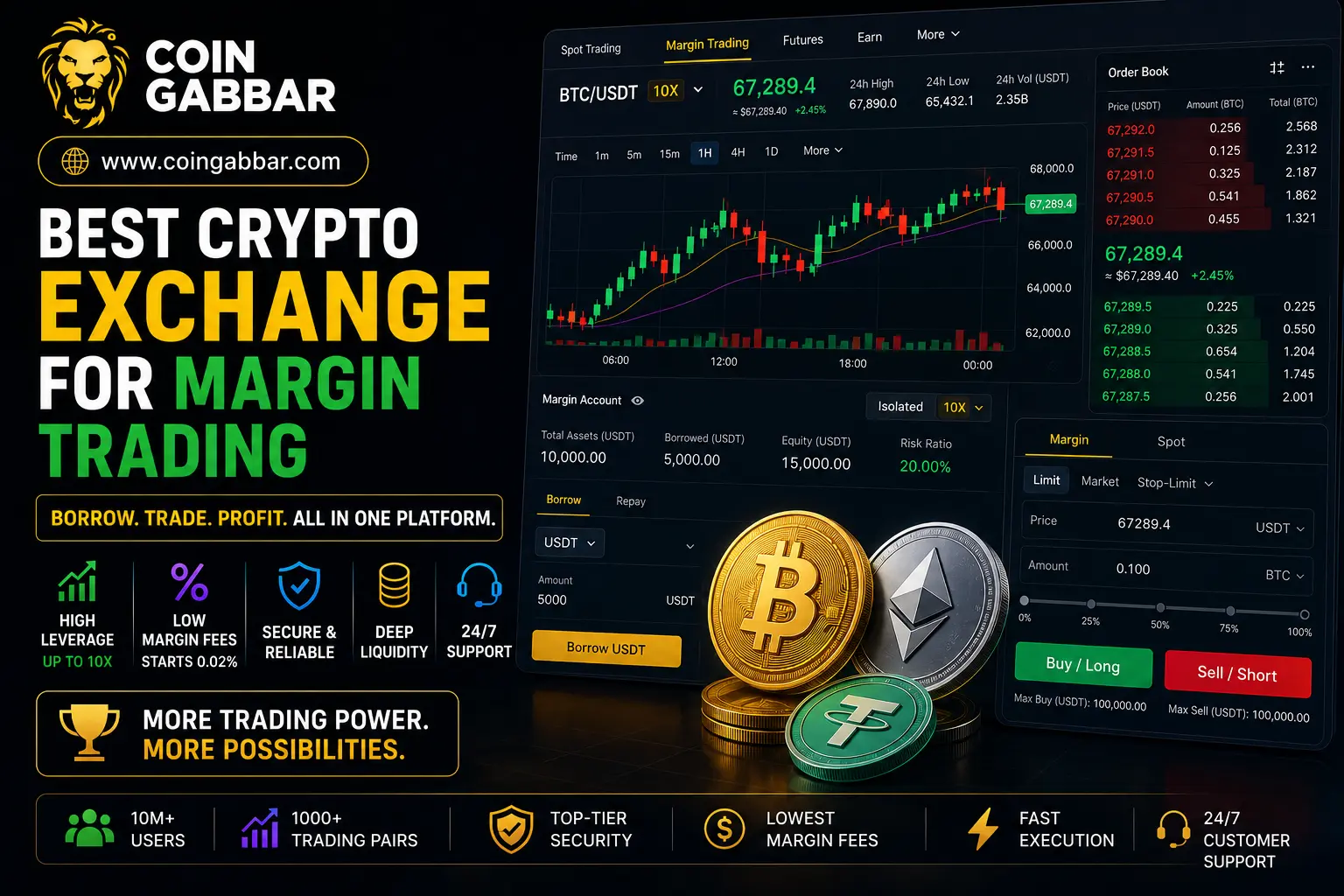
Best Crypto Exchange for Margin Trading: Global Guide
best crypto exchange for margin trading should be selected by borrow-cost transparency, isolated and cross mode support, maintenance rules, liquidation protection, trading fees, order-book strength, supported collateral, repayment process, risk alerts, country access, and withdrawal reliability. Borrowed-fund trading lets users use collateral to increase position size, but it also increases loss risk.
best crypto exchange for margin trading is different from a futures-focused platform. In spot-based borrowing, users may borrow actual crypto or fiat-equivalent assets and trade the underlying asset. In futures or perpetual trading, participants use contracts. This difference matters because borrowed positions can involve daily interest, warning levels, repayment obligations, and asset-level borrowing rules.
This global guide compares 12 platforms that may suit collateral-based accounts: Binance, Bybit, OKX, Gate.io, KuCoin, Kraken Pro, MEXC, Bitget, Coinbase Advanced or Coinbase Derivatives, Deribit, Hyperliquid, and dYdX. Availability depends on country, account level, KYC status, product rules, and local regulations.
Readers comparing overall crypto platforms can review CoinGabbar’s best crypto exchange guide. New investors should also study the beginner crypto exchange guide before borrowing funds for any trade.
What Makes a Good Borrowed-Fund Exchange?
best crypto exchange for margin trading should provide clear borrow rates, simple repayment, strong BTC and ETH markets, stop-loss orders, take-profit orders, collateral-level alerts, liquidation warnings, asset-level limits, low spread, and transparent account history.
Low fees alone are not enough. A platform can look cheap but become expensive through daily interest, wide spreads, forced liquidation, poor borrow availability, high withdrawal charges, or weak order support on smaller tokens.
Core Factors to Check
- Borrow rate: Check hourly or daily interest before opening a position.
- Borrowed asset: Understand whether you are borrowing USDT, BTC, ETH, or another asset.
- Isolated mode: Limits risk to one trading pair or position.
- Cross mode: Uses wider account equity and can expose more balance.
- Maintenance level: Minimum equity needed to keep the position open.
- Risk warning: Alert or forced reduction when account equity falls too low.
- Liquidation rule: Forced closure process when collateral becomes insufficient.
- Order types: Stop-loss, take-profit, trigger order, and limit order are important.
- Repayment process: Borrowed assets must be repaid with interest.
- Country access: Borrowing-based products are restricted in several regions.
For trading research, readers can use CoinGabbar’s crypto trading analytics. For external market comparison, readers may review CoinGecko derivatives rankings.
Best Crypto Exchange for Margin Trading: Quick Comparison
| Exchange | Best For | Borrowing Angle | Key Benefit | Main Risk |
|---|---|---|---|---|
| Binance | BTC, ETH, USDT and major altcoins | Isolated and cross products where available | Large markets and many assets | Regional restrictions |
| Bybit | Active long-short trading | Unified account and risk settings | TP/SL tools and copy ecosystem | High-risk product overlap |
| OKX | Advanced collateral users | Cross, isolated and portfolio-style tools | Bots, risk modes, Web3 access | Complexity for beginners |
| Gate.io | Altcoin borrowed-fund markets | Broad token access | Large asset list | Thin smaller markets |
| KuCoin | Altcoin borrowing and bots | Cross and isolated products | Bot tools and broad crypto access | Pair-level quality varies |
| Kraken Pro | Security-first borrowed-fund access | Spot borrowing on selected assets | Security and fiat support | Fewer speculative markets |
| MEXC | Altcoin and new-token users | High-volatility markets | Many token opportunities | Fast liquidation risk |
| Bitget | Active accounts and copy tools | Collateral-style products and perps | BGB ecosystem and trading tools | Copy-trading drawdown |
| Coinbase | Regulated-market users | Availability depends by region | Compliance and USD access | Limited product access |
| Deribit | Advanced BTC and ETH participants | Portfolio and collateral tools | Options plus perpetual products | Advanced-user complexity |
| Hyperliquid | Decentralized long-short trading | Wallet-based collateral | Self-custody style access | Wallet and liquidation risk |
| dYdX | Decentralized perpetual users | Wallet-based risk model | Non-custodial style trading | Protocol and self-custody risk |
1. Binance: Broad Borrowing Access and Deep Markets
best crypto exchange for margin trading searches often include Binance because it offers borrowing-based products, large BTC and ETH markets, many USDT pairs, isolated and cross modes where available, strong order tools, and broad asset coverage.
Trading features: Binance may support limit orders, market orders, stop-limit orders, OCO orders, borrowing, automatic repayment, manual repayment, collateral-level alerts, APIs, and advanced charting.
Borrow and collateral angle: Users should check the asset they borrow, the interest rate, collateral ratio, maximum borrow amount, and maintenance level before placing any order. A trade must earn more than borrowing cost, spread, and fees to become worthwhile.
Fees and benefits: Binance may offer tiered trading fees, strong market activity, exchange-token benefits where available, and many major-asset markets.
Investor caution: Regional restrictions may apply. Accounts must verify country access, KYC rules, borrow availability, repayment process, and liquidation mechanics before using collateral-based products.
Best fit: Binance suits experienced users who need large markets, flexible order types, and access to major crypto assets.
For Binance-specific internal coverage, readers can check CoinGabbar’s Binance token listing page.
2. Bybit: Unified Account and Active Trading Tools
Bybit is popular with active users because it offers long-short products, strong mobile tools, clear TP/SL controls, trading bots, copy trading, and unified account features in supported regions.
Trading features: Bybit may support isolated settings, cross settings, stop-loss orders, take-profit orders, trigger orders, position modes, copy tools, bots, and active derivatives markets.
Borrow and collateral angle: Bybit participants should understand whether they are using true spot borrowing, perpetual exposure, or another collateral-based product. Each product has different funding, liquidation, and repayment rules.
Fees and benefits: Bybit offers active BTCUSDT and ETHUSDT markets, campaign incentives, copy-trading tools, and strong mobile order controls.
Investor caution: Copy trading does not remove risk. A copied account can use high exposure, poor stop-loss discipline, or risky averaging methods.
Best fit: Bybit suits experienced users who want strong order tools, copy features, and active long-short markets.
3. OKX: Advanced Risk Modes and Portfolio Tools
best crypto exchange for margin trading also fits OKX because it offers spot and borrowing-based products, isolated mode, cross mode, portfolio-style risk tools, trading bots, advanced order types, and Web3 access.
Trading features: OKX may support asset borrowing, isolated trading, cross account modes, trigger orders, stop orders, take-profit orders, trailing orders, bots, sub-accounts, APIs, and portfolio risk tools.
Borrow and collateral angle: OKX users should monitor account health, mark price, collateral value, risk mode, and auto-repayment rules. A lower collateral level means higher liquidation risk.
Fees and benefits: OKX may suit accounts that need multiple account modes, trading automation, Earn tools, Web3 access, and advanced risk settings.
Investor caution: OKX has many product types. Beginners should separate spot, borrowed-fund trading, perpetuals, expiry products, and options before placing any trade.
Best fit: OKX suits advanced users who want flexible account modes, bots, and account-health controls.
For official education, readers may review OKX isolated and cross guide.
4. Gate.io: Altcoin Borrowing and Token Access
Gate.io is useful for investors who want many altcoin markets, broad token discovery, USDT-based pairs, and long-short access across more assets than conservative fiat exchanges usually provide.
Trading features: Gate.io may support borrowing-based products, stop orders, take-profit tools, charting, APIs, many altcoin instruments, and risk controls for selected markets.
Borrow and collateral angle: Borrow availability and interest can vary by asset. Smaller tokens can have weaker depth, wider spreads, and faster liquidation risk.
Fees and benefits: Gate.io may offer tiered pricing, wide token coverage, launch activity, and many altcoin opportunities.
Investor caution: A large token list does not mean every token is suitable for borrowed-fund trading. Participants should check spread, borrow rate, order support, and withdrawal status.
Best fit: Gate.io suits research-driven users who understand altcoin volatility and account-health risk.
5. KuCoin: Altcoin Borrowing, Bots, and Broad Access
best crypto exchange for margin trading can include KuCoin for investors who want altcoin borrowed-fund products, cross and isolated modes where available, trading bots, USDT pairs, and a broad crypto ecosystem.
Trading features: KuCoin may support asset borrowing, isolated mode, cross mode, stop orders, limit orders, take-profit tools, trading bots, APIs, and mobile order management.
Borrow and collateral angle: Users should compare daily interest, borrow limits, repayment rules, and liquidation thresholds before using borrowed funds.
Fees and benefits: KuCoin may appeal to investors who combine spot trading, altcoin discovery, Earn tools, bots, and collateral-based trading.
Investor caution: Market quality varies by asset. Smaller altcoins may be unsuitable for large borrowed positions.
Best fit: KuCoin suits altcoin-focused accounts and bot users who apply strict stop-loss and position sizing rules.
6. Kraken Pro: Security-First Spot Borrowing
Kraken Pro can suit investors who prefer security, fiat support, transparent trading rules, selected spot borrowing markets, and a more conservative trading environment.
Trading features: Kraken Pro may support spot borrowing on selected assets, professional order tools, APIs, fiat funding, account security controls, and advanced charting.
Borrow and collateral angle: Kraken’s spot borrowing model uses existing crypto as collateral while participants trade actual underlying assets. Product access and limits depend on region and eligibility.
Fees and benefits: Kraken Pro may suit accounts that prefer security and fiat support over aggressive altcoin access.
Investor caution: Kraken may not offer the widest speculative borrowed-fund asset list. Its strength is disciplined access, security, and clearer operating standards.
Best fit: Kraken Pro suits security-first users who want selected borrowing access on major assets.
7. MEXC: Altcoin Borrowing and New-Token Opportunities
best crypto exchange for margin trading may include MEXC for experienced investors who want exposure to high-volatility assets, new-token markets, and altcoin trading opportunities.
Trading features: MEXC may support collateral-style products, USDT-based markets, stop orders, take-profit orders, mobile tools, campaign incentives, and many altcoin products.
Borrow and collateral angle: Investors should check whether the trade is true spot borrowing or another long-short product. Borrowing costs, funding charges, and liquidation rules can differ.
Fees and benefits: MEXC may offer campaign-based fee benefits and broad token access. Total cost must include spread, interest, funding, and withdrawal fees.
Investor caution: New-token markets can reverse sharply. A profitable setup can become a forced exit if collateral falls too quickly.
Best fit: MEXC suits experienced users who understand liquidation and interest-cost risk.
8. Bitget: Collateral-Style Trading and Copy Tools
Bitget may suit active accounts that want copy trading, long-short products, BGB ecosystem benefits, mobile tools, and selected collateral-style trading options.
Trading features: Bitget may support isolated and cross settings, stop-loss orders, take-profit orders, trigger orders, copy trading, mobile execution, alerts, and risk controls.
Borrow and collateral angle: Investors should confirm product type before trading. Copy positions, perpetual products, and spot borrowing-style products may have different cost and liquidation rules.
Fees and benefits: Bitget can be useful for accounts that want copy tools and active long-short markets, but campaign rewards should not encourage poor risk sizing.
Investor caution: Copy-trading performance can change quickly. Review drawdown, position size, stop-loss history, and collateral behavior before copying.
Best fit: Bitget suits active users who want copy tools plus direct long-short access.
Readers comparing short-term platforms can also review CoinGabbar’s day trading exchange guide.
9. Coinbase Advanced and Coinbase Derivatives
best crypto exchange for margin trading may include Coinbase-related products for investors who prefer regulated access, USD markets, compliance clarity, and institutional-grade reporting. Product availability depends heavily on country and account type.
Trading features: Coinbase Advanced focuses on order-book trading, while Coinbase Derivatives may support regulated products where available. Direct borrowing access can vary by region.
Borrow and collateral angle: Market participants should not assume borrowing access is available in every country. Read product rules, eligibility terms, collateral rules, and tax reports before trading.
Fees and benefits: Coinbase may appeal to investors who prefer fiat access, compliance, reporting, and regulated-market orientation.
Investor caution: Product access may be limited compared with offshore exchanges.
Best fit: Coinbase suits investors who prioritize regulated access over maximum exposure or altcoin variety.
10. Deribit: Advanced BTC and ETH Collateral Products
Deribit is known for Bitcoin and Ethereum options, but it also supports perpetual and dated products used by advanced and institutional participants.
Trading features: Deribit may support BTC and ETH perpetuals, dated products, options, advanced order types, portfolio-style risk tools, and institutional infrastructure.
Borrow and collateral angle: Deribit users should understand collateral rules, risk models, portfolio exposure, options risk, and nonlinear losses before using complex strategies.
Fees and benefits: Deribit suits BTC and ETH specialists who need options plus perpetual products in one venue.
Investor caution: Deribit is not ideal for beginners. Options and combined strategies can create complex losses.
Best fit: Deribit suits advanced BTC and ETH users, market makers, and strategy participants.
11. Hyperliquid: Decentralized Collateral-Based Trading
best crypto exchange for margin trading for decentralized investors may include Hyperliquid because it offers on-chain perpetual trading, order-book style execution, wallet-based collateral, and self-custody-style control.
Trading features: Hyperliquid supports perpetual products, funding rates, long-short exposure, advanced order types, wallet-based access, and fast market execution.
Borrow and collateral angle: Users must understand wallet risk, bridge risk, collateral mechanics, funding, liquidation rules, and self-custody responsibilities before using decentralized products.
Fees and benefits: Hyperliquid appeals to investors who want decentralized long-short trading without relying fully on a traditional centralized account.
Investor caution: Perp DEX trading adds wallet, smart contract, bridge, and liquidation risk.
Best fit: Hyperliquid suits advanced users comfortable with on-chain trading and self-custody operations.
For broader new-asset research, readers can use CoinGabbar’s new token exchange guide.
12. dYdX: Wallet-Based Long-Short Access
dYdX is a decentralized platform used by investors who want wallet-based long-short products, non-custodial-style access, funding-rate visibility, and advanced order controls.
Trading features: dYdX may support perpetual products, advanced orders, funding-rate data, mobile tools, API access, and decentralized governance components.
Borrow and collateral angle: Users should understand collateral, liquidation, funding, wallet security, and protocol risk before opening positions.
Fees and benefits: dYdX can suit participants who want decentralized access while still using order-book-style long-short trading.
Investor caution: Wallet security, network issues, and protocol risk must be considered alongside market risk.
Best fit: dYdX suits experienced users who prefer decentralized perpetual markets.
Borrowed-Fund Trading vs Futures Trading
best crypto exchange for margin trading should be chosen after understanding the difference between spot borrowing and futures. Borrowed-fund trading usually involves borrowing actual assets. Futures trading uses contracts that track price movements.
| Feature | Borrowed-Fund Trading | Futures Trading |
|---|---|---|
| Structure | Borrow actual crypto or fiat-equivalent asset | Trade derivative contract |
| Ownership | May involve underlying spot asset | No direct spot ownership |
| Cost | Borrow interest may accrue daily | Funding rate may apply on perpetuals |
| Risk Event | Warning level or forced liquidation | Liquidation based on contract rules |
| Best For | Advanced spot-based users | Advanced long-short users |
How Borrowing Works: 3x and 5x Examples
best crypto exchange for margin trading should make users understand borrowed funds before placing orders. A 3x position means the account controls three times the account equity. A $1,000 equity amount can control $3,000 in asset exposure, with $2,000 effectively borrowed.
| Setup | Account Equity | Borrowed Amount | Total Position | Main Risk |
|---|---|---|---|---|
| 1x | $1,000 | $0 | $1,000 | Normal price risk |
| 3x | $1,000 | $2,000 | $3,000 | Borrow interest plus liquidation risk |
| 5x | $1,000 | $4,000 | $5,000 | Faster warning-level risk |
| 10x | $1,000 | $9,000 | $10,000 | Very high risk |
Higher exposure should not be treated as a profit shortcut. Borrowing increases both upside and downside. Interest keeps accruing even when the position is flat or losing.
Daily Borrow Interest: The Hidden Cost
best crypto exchange for margin trading should clearly show borrow interest before order placement. A small daily rate can become expensive if a position is held for weeks.
Example: if USDT borrowing costs 0.03% per day, a $10,000 borrowed amount costs about $3 per day before compounding. Over 30 days, this becomes about $90 before trading fees and spread. The position must first recover this cost before producing real profit.
Warning Levels and Liquidation Risk
best crypto exchange for margin trading should provide account-health alerts and liquidation warnings. A warning event happens when account equity falls near the maintenance requirement. If the account is not topped up or the position is not reduced, the platform may force closure to repay borrowed funds.
Practical Risk Checklist
- Use borrowing only after understanding spot trading.
- Start with 1x to 2x before testing 3x or 5x.
- Use isolated mode while learning.
- Check daily borrow rate before entry.
- Set stop-loss before opening the trade.
- Use take-profit orders to avoid emotional exits.
- Do not hold borrowed positions without a time limit.
- Do not average down losing trades.
- Keep free collateral above the warning level.
- Check repayment rules before selling or withdrawing.
- Avoid borrowing-based trades on small tokens with weak order books.
- Keep full records for tax reporting.
Readers who prefer lower-risk trading can compare CoinGabbar’s spot trading exchange guide, futures trading exchange guide, and leverage trading exchange guide.
India-Specific Note on Borrowed-Fund Crypto Trading
This article is global, but Indian residents should treat borrowed-fund crypto trading with extra caution. India’s VDA tax treatment can make this activity expensive because gains may be taxed at 30%, while interest cost may not provide practical deduction benefits against VDA gains.
Indian investors should verify 30% VDA tax treatment, 1% TDS where applicable, exchange compliance status, foreign exchange rules, record keeping, and product legality before using any collateral-based product. International venues may not automate Indian tax reporting.
For broader policy context, readers can use CoinGabbar’s India crypto adoption guide. For long-term non-borrowed research, readers can also check CoinGabbar’s crypto price prediction section.
Best Platform by Investor Profile
| Investor Profile | Better Options | Why It Fits |
|---|---|---|
| BTC and ETH borrowed-fund account | Binance, Kraken Pro, OKX | Strong major-asset support |
| Altcoin borrowed-fund account | Gate.io, KuCoin, MEXC | More token coverage |
| Advanced account holder | OKX, Deribit, Binance | More risk and portfolio tools |
| Security-first investor | Kraken Pro, Coinbase | Regulated orientation and strong controls |
| Copy trading participant | Bybit, Bitget | Copy tools and active communities |
| Decentralized investor | Hyperliquid, dYdX | Wallet-based long-short access |
Glossary
best crypto exchange for margin trading
A platform that offers crypto borrowing, collateral-based trading, account-health controls, interest visibility, liquidation rules, and risk tools.
Borrowed-Fund Trading
Trading with borrowed funds or borrowed crypto to increase position size beyond account equity.
Maintenance Level
The minimum equity level required to keep a borrowed position open.
Risk Warning
A warning or forced reduction event when account equity falls too close to the maintenance level.
Borrow Rate
The interest charged on borrowed crypto or fiat-equivalent assets.
Isolated Mode
A mode where risk is limited to one trading pair or position.
Cross Mode
A mode where wider account equity supports positions, increasing flexibility and risk.
Liquidation
Forced closure of a position when collateral is no longer sufficient.
Carry Cost
The total interest paid while holding a borrowed position.
Conclusion
best crypto exchange for margin trading depends on investor experience, country access, borrow rates, asset choice, collateral rules, and risk tolerance. Binance, OKX, and Kraken Pro are strong for major-asset borrowed-fund accounts. Gate.io, KuCoin, and MEXC suit altcoin-focused investors. Bybit and Bitget suit active accounts that want tools and copy features. Coinbase suits investors who prefer regulated access where available. Deribit, Hyperliquid, and dYdX suit advanced or decentralized long-short participants.
best crypto exchange for margin trading should not be selected only by maximum exposure. Borrow cost, repayment rules, maintenance level, order support, liquidation alerts, and stop-loss discipline matter more than headline multipliers.
The safer approach is to start without borrowing, then test small size, use isolated mode, check daily interest, set a stop-loss before entry, avoid weak altcoin books, and never use money needed for living expenses or long-term savings.
Disclaimer
This article is for informational and educational purposes only. It is not financial, investment, legal, tax, or trading advice. Crypto borrowed-fund trading involves high risk and may cause rapid loss of capital. Borrow rates, liquidation rules, maintenance levels, trading fees, country availability, and product access can change without notice. Always verify official exchange terms before trading.
Also read: