Best Crypto Exchange UAE 2026: VARA and ADGM-Licensed Picks

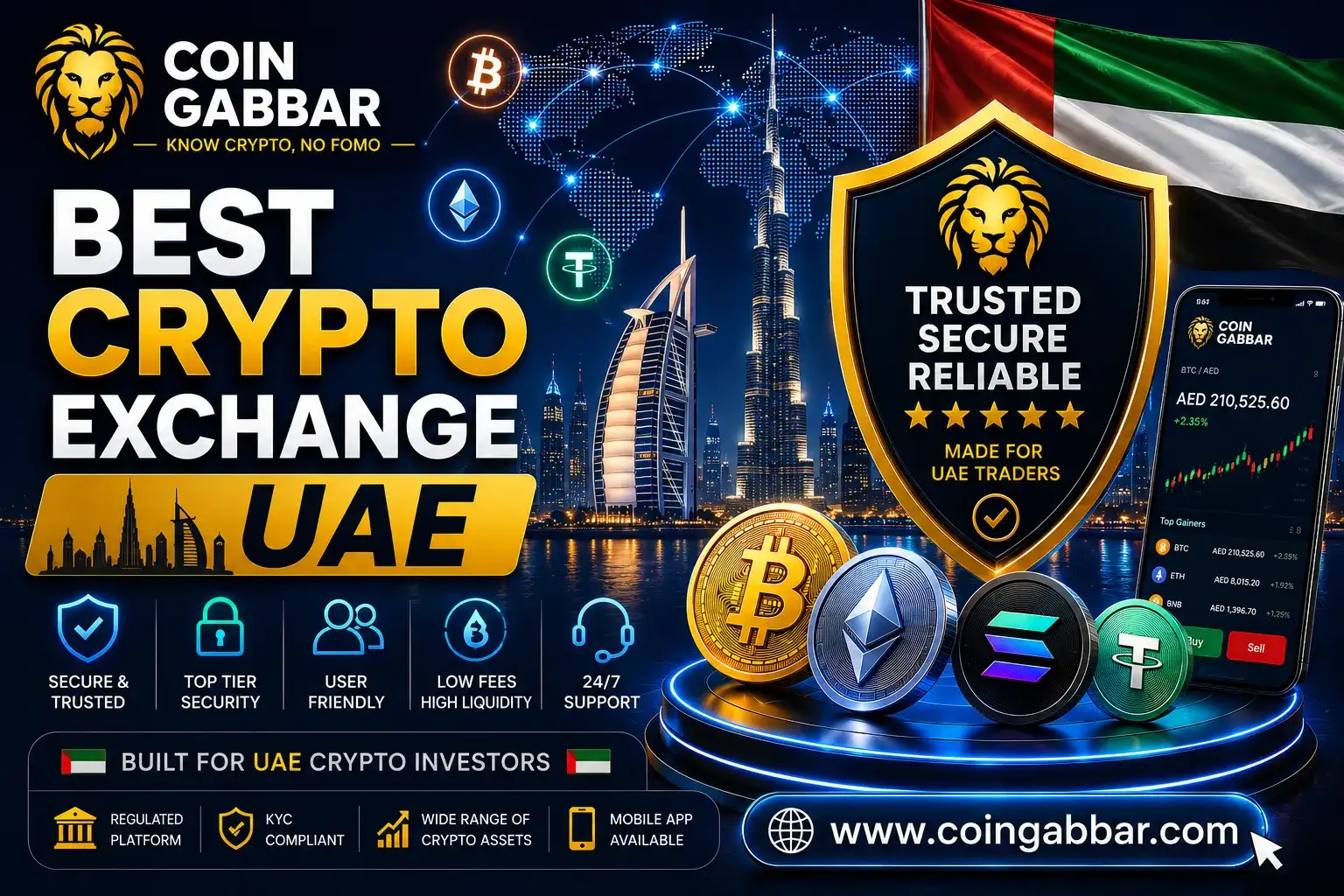
Best Crypto Exchange UAE Guide for 2026
Choosing the best crypto exchange UAE investors can use in 2026 requires more than checking fees, coin count, or app design. Residents should compare VARA, ADGM, FSRA, SCA, or CBUAE status, AED deposit methods, local bank transfer support, wallet withdrawals, custody controls, proof of reserves, customer support, KYC process, and product restrictions before opening an account.
This guide reviews 10 major digital asset platforms used across Dubai, Abu Dhabi, and the wider Emirates: Binance, Bybit, OKX, Crypto.com, BitOasis, Rain, M2, eToro, Kraken, and CoinMENA. The article is written from a global perspective and removes India-centric paragraphs, FEMA notes, Indian tax comparisons, and India-residency sections from the earlier draft.
The United Arab Emirates has become one of the world’s most active digital asset hubs. Dubai has a dedicated virtual asset regulator, Abu Dhabi Global Market has a mature FSRA framework, federal regulators continue to shape wider market rules, and the Central Bank supervises payment-related activity. This creates more structure than many markets, but it does not remove volatility, counterparty risk, custody risk, or phishing risk.
Readers can also compare CoinGabbar resources, including the crypto platform listing, proof of reserves tracker, platform news updates, best crypto wallets, regulated trading platforms, and verify a platform.
UAE Digital Asset Platform Comparison
| Platform | Best For | Main Strength | Main Limitation | User Level |
|---|---|---|---|---|
| Binance | Advanced global liquidity | Large market depth, broad asset coverage, strong trading tools | Users must verify local entity, product access, and AED rails | Intermediate to advanced |
| Bybit | Active traders | Strong trading interface, liquidity, and regional presence | Product access and leverage rules require careful review | Intermediate to advanced |
| OKX | Spot traders and Web3 users | Advanced trading, Web3 wallet tools, proof-of-reserves focus | Not every global feature may be locally available | Advanced |
| Crypto.com | Mobile ecosystem users | App, card features, wallet tools, and payment expansion | Fee tiers and service eligibility need review | Beginner to intermediate |
| BitOasis | MENA-focused investors | Regional brand, AED access, local onboarding focus | Asset range may be narrower than global giants | Beginner to intermediate |
| Rain | GCC-focused users | Regional compliance focus and simple app design | Liquidity and product coverage should be compared | Beginner to intermediate |
| M2 | Abu Dhabi and institutional-style access | ADGM-linked positioning, custody focus, professional interface | May feel less familiar to casual retail users | Intermediate to institutional |
| eToro | Multi-asset investors | Stocks, ETFs, copy trading, and digital assets in one app | Not designed for deep crypto-only trading | Beginner to casual investor |
| Kraken | Security-focused active traders | Kraken Pro, proof-of-reserves culture, strong security reputation | AED access and regional product details must be checked | Intermediate to advanced |
| CoinMENA | Regional retail access | MENA-focused app, fiat support, beginner-friendly flow | Pair depth and local availability need comparison | Beginner to intermediate |
UAE Crypto Regulation: VARA, ADGM, SCA and CBUAE
The regulatory framework is divided by activity and jurisdiction. VARA regulates virtual asset activity in Dubai outside the DIFC. ADGM’s Financial Services Regulatory Authority regulates virtual asset and related financial services activity inside the Abu Dhabi Global Market. The Securities and Commodities Authority has a federal role for certain virtual asset activities outside specialised zones, while the Central Bank is important for payment tokens, stored value, and payment-related services.
This structure means investors should verify the exact legal entity, not only the global brand name. A platform may have one licence for Dubai, another permission in Abu Dhabi, or a partner arrangement for fiat and custody. Some global features may be unavailable locally even when the brand operates in the market.
VARA maintains a public register showing firms with licences or in-principle approvals. ADGM also provides a regulatory framework for firms carrying on virtual asset activities through FSRA financial services permissions. Investors should use official registers before depositing funds and avoid relying on social media claims or influencer links.
For official checks, review the VARA public register and the ADGM digital assets framework before funding any account.
Key Local Rules for Digital Asset Investors
- Check whether the provider is licensed, approved, or operating through a permitted local entity.
- Confirm whether the licence covers exchange, broker-dealer, custody, payments, or other services.
- Review whether spot trading, staking, cards, stablecoins, lending, or derivatives are locally available.
- Use platforms with clear AED deposit and withdrawal methods.
- Complete Emirates ID, passport, residence visa, and source-of-funds checks where required.
- Do not treat regulatory status as a guarantee against price loss, hacks, or insolvency.
UAE Income Tax Rules for Crypto Investors
The Emirates generally does not impose personal income tax on individuals. This means many personal investment gains, including gains from digital assets held personally, may not be subject to personal income tax in the same way they are in many other countries. However, tax treatment can change when activity becomes commercial, business-like, or part of a corporate structure.
Businesses may fall within the corporate tax regime. The standard corporate tax rate can apply to taxable business profits above the applicable threshold. A company involved in trading, brokerage, mining, advisory, market making, custody, payments, or other virtual asset services should take professional advice before assuming all digital asset gains are tax-free.
VAT treatment can also be relevant for businesses, services, consulting, mining operations, token issuance, or payment activities. Individuals should keep transaction records for banking, compliance, source-of-funds review, exchange checks, and future residency or tax reporting needs.
Common Records to Keep
- Buy and sell dates for Bitcoin, Ethereum, and other assets
- AED value at the time of every transaction
- Bank transfer and exchange statement records
- Wallet addresses and transaction IDs
- Staking, lending, rewards, referral, and airdrop records
- Source-of-funds documents for larger deposits
- Corporate accounting records if activity is business-related
1. Binance: Best for Advanced Global Liquidity
Binance is one of the largest global digital asset platforms by market depth, spot pair coverage, and user activity. It may suit experienced residents who want broad market access, charting tools, order controls, staking-style products where available, and large liquidity pools.
For readers comparing the best crypto exchange UAE options, Binance is important because of its local regulatory progress, global scale, and deep asset coverage. Users should still verify the exact local entity, available products, AED deposit options, proof-of-reserves disclosures, and withdrawal rules before funding an account.
Binance Key Features
- Large global liquidity
- Wide spot pair selection
- Advanced trading interface
- Proof-of-reserves disclosures
- Wallet withdrawals for self-custody
- Useful for experienced traders
Binance Limitations
Beginners may find the interface complex. Users should avoid leverage, derivatives, and high-risk products unless they understand the legal, financial, and liquidation risks.
2. Bybit: Best for Active Traders
Bybit is widely used by active traders because of its trading interface, market tools, liquidity, and regional visibility. It can suit users who want fast execution, advanced charts, spot markets, and an app designed for frequent trading.
Users should verify local licensing status, permitted products, risk disclosures, proof-of-reserves updates, and AED funding methods. Product availability can vary between regions, and some services may carry higher risk than simple spot buying.
Bybit Key Features
- Strong trading interface
- Spot trading and advanced tools
- Regional market presence
- Security and reserve disclosures where available
- Useful for intermediate and advanced users
- Mobile and web access
Bybit Limitations
High-speed trading features can increase risk. Users should check whether each product is locally permitted and should avoid using borrowed funds or excessive leverage.
3. OKX: Best for Spot Trading and Web3 Tools
OKX combines centralised spot trading with Web3 wallet tools, on-chain access, advanced charting, and proof-of-reserves style transparency. It may suit users who want both exchange trading and self-custody tools from one ecosystem.
OKX can be useful for advanced investors who understand wallet risk, smart contract approvals, and on-chain transaction fees. Beginners should start with spot buying and learn wallet safety before using DeFi features.
OKX Key Features
- Advanced spot market tools
- Web3 wallet ecosystem
- Proof-of-reserves disclosures
- Useful charting and order controls
- Mobile and web platform access
- Good fit for Web3-focused users
OKX Limitations
Web3 tools increase user responsibility. A wrong contract approval, malicious link, or seed phrase leak can cause permanent loss.
4. Crypto.com: Best Mobile Ecosystem
Crypto.com offers a broad mobile ecosystem that may include buying, selling, wallet access, card features, payment tools, rewards-style services where permitted, and portfolio management. It is useful for app-first investors who want many features in one place.
The platform’s local regulatory developments also make it relevant for users tracking payment and stored-value use cases. Users should compare app pricing, spread, account tier rules, card terms, reward conditions, and withdrawal charges before larger transfers.
Crypto.com Key Features
- All-in-one mobile app
- Card and payment ecosystem features
- Wallet and self-custody tools
- Large asset selection
- Proof-of-reserves style transparency
- Useful for app-first investors
Crypto.com Limitations
Fees, spreads, card benefits, reward terms, and local product eligibility can vary. Users should read the country-specific terms before funding an account.
5. BitOasis: Best MENA-Focused Local Platform
BitOasis is one of the most recognised MENA-focused digital asset platforms and has historically served users who want regional onboarding, AED access, and a simpler local experience. It can suit beginners and intermediate investors who prefer a regional brand.
The platform is relevant for users who want local support and straightforward buying flows. Investors should still compare fee structure, reserve transparency, asset coverage, withdrawal fees, and current licence status before using it as their main venue.
BitOasis Key Features
- MENA-focused platform design
- AED funding routes where available
- Simple buying and selling flow
- Regional customer familiarity
- Major digital asset support
- Useful for local retail investors
BitOasis Limitations
Asset range and liquidity may be narrower than global platforms. Active traders should compare execution cost and wallet withdrawal options.
6. Rain: Best GCC-Focused App
Rain is a GCC-focused digital asset platform known for simple onboarding and regional market orientation. It may suit users who want a straightforward app, fiat access, and support from a platform built around Middle East users.
Rain can be practical for newer investors, but users should compare local availability, fee model, supported assets, wallet withdrawals, regulatory permissions, and bank transfer experience before moving larger funds.
Rain Key Features
- GCC-focused platform
- Simple mobile app
- Fiat funding options where available
- Major coin access
- Beginner-friendly experience
- Regional customer support focus
Rain Limitations
Liquidity, spreads, product depth, and local regulatory status should be reviewed before relying on Rain for active trading.
7. M2: Best Abu Dhabi and Institutional-Style Platform
M2 is an Abu Dhabi-linked digital asset platform associated with ADGM’s regulated ecosystem. It may suit users who want a more professional interface, custody focus, and institutional-style market structure.
M2 can be relevant for serious traders, high-net-worth users, and professional investors. Casual retail users should compare the interface, deposit routes, wallet withdrawals, fees, and customer support with simpler apps.
M2 Key Features
- ADGM-linked market positioning
- Professional trading environment
- Custody-focused structure
- AED and fiat routes where available
- Useful for serious investors
- Institutional-style approach
M2 Limitations
The platform may feel less familiar to casual users. Beginners may prefer a simpler mobile-first app for first purchases.
8. eToro: Best for Multi-Asset Investors
eToro is useful for people who want digital assets alongside stocks, ETFs, copy trading, and social investing tools. It is not a crypto-only trading venue, but it can suit investors who prefer one portfolio interface for several asset types.
For casual investors, eToro may be convenient. For deep spot liquidity, direct wallet control, or frequent trading, a specialist platform may provide more flexibility.
eToro Key Features
- Digital assets plus traditional markets
- Social and copy trading tools
- Beginner-friendly interface
- Useful for casual investors
- Portfolio view across asset classes
- Global brand recognition
eToro Limitations
It may not suit users who need advanced order books, wide wallet withdrawal support, or low-cost high-frequency trading.
9. Kraken: Best for Security-Focused Traders
Kraken is widely known for security culture, proof-of-reserves focus, Kraken Pro tools, and advanced trading controls. It may suit users who want a more technical trading environment and strong account-security features.
Residents should check local availability, AED funding, supported assets, wallet withdrawal rules, and country-specific restrictions before selecting Kraken as a main platform.
Kraken Key Features
- Kraken Pro trading tools
- Strong security reputation
- Proof-of-reserves focus
- Advanced order types
- Wallet withdrawal controls
- Useful for active traders
Kraken Limitations
New users may need time to learn the interface, funding methods, order types, and withdrawal controls.
10. CoinMENA: Best Regional Retail Platform
CoinMENA is a regional platform built for MENA users who want simple buying, fiat access, and beginner-friendly onboarding. It may suit residents who prefer local language support and a region-first product experience.
Users should compare its asset list, spread, funding methods, wallet withdrawals, KYC process, customer support, and licence coverage before using it as a primary venue.
CoinMENA Key Features
- MENA-focused retail app
- Fiat funding support where available
- Simple buying flow
- Major asset access
- Regional customer support focus
- Useful for beginner and intermediate users
CoinMENA Limitations
Pair depth and advanced trading features may be more limited than large global platforms. Compare total costs before larger transactions.
Best Platform by Investor Type
| Investor Type | Best-Fit Platforms | Why |
|---|---|---|
| Complete beginner | BitOasis, Rain, Crypto.com | Simple apps, regional access, easier onboarding |
| Active trader | Binance, Bybit, OKX | Liquidity, advanced tools, stronger execution controls |
| Security-focused user | Kraken, OKX, Binance | Proof-of-reserves culture and account security tools |
| Abu Dhabi or institutional-style user | M2, Binance, Kraken | Professional interfaces and regulated-market focus |
| Multi-asset investor | eToro, Crypto.com, Binance | Digital assets beside other portfolio tools or app features |
| Web3-focused trader | OKX, Crypto.com, Binance | Wallet tools, self-custody access, and broader ecosystem features |
Do’s and Don’ts for UAE Digital Asset Investors
Do’s
- Verify the local entity and licence status before depositing funds.
- Check the VARA register, ADGM register, SCA status, or CBUAE permission where relevant.
- Use platforms with clear AED deposit and withdrawal methods.
- Complete Emirates ID, passport, residence visa, and bank verification accurately.
- Start with a small test deposit and withdrawal.
- Enable app-based two-factor authentication and address whitelisting.
- Keep transaction records for bank, compliance, residency, and tax review.
- Compare spreads, withdrawal fees, funding costs, and total execution cost.
- Check proof of reserves and custody disclosures where available.
- Move long-term holdings to self-custody only after learning wallet safety.
Don’ts
- Do not assume every global platform is licensed for every local activity.
- Do not treat a licence as a guarantee against losses, hacks, or market crashes.
- Do not use Telegram, WhatsApp, or influencer links to open accounts.
- Do not trust guaranteed-return, mining, arbitrage, or staking promises without proof.
- Do not keep all holdings on one platform.
- Do not reuse passwords across exchange accounts and email accounts.
- Do not share OTPs, private keys, or seed phrases with anyone.
- Do not trade with money needed for rent, debt, school fees, tax, or emergencies.
- Do not ignore bank source-of-funds requirements for larger transfers.
- Do not assume business activity has the same tax treatment as personal investing.
How to Choose a Trusted Platform
The right platform depends on experience level, emirate, funding method, trading purpose, and custody plan. Beginners may prefer BitOasis, Rain, Crypto.com, or CoinMENA. Active traders may compare Binance, Bybit, and OKX. Security-focused users may review Kraken and OKX. Institutional-style users may compare M2, Binance, and regulated Abu Dhabi options.
Before opening an account, compare CoinGabbar’s trading platform comparison, platform directory, choose a platform, and security features guide.
Platform Selection Checklist
- Is the provider licensed, approved, or permitted for the relevant service?
- Does the legal entity match the regulator’s public register?
- Does it support AED deposits and withdrawals?
- Are local bank transfers or card payments available?
- Are fees, spreads, and withdrawal charges clearly shown?
- Can users withdraw assets to an external wallet?
- Has it published proof of reserves or custody details?
- Does it provide strong account security features?
- Are product restrictions clearly explained?
- Does customer support cover local time zones and language needs?
Security and Fund Protection
Platform accounts are not the same as bank deposits. If a service suffers a hack, insolvency event, outage, withdrawal freeze, or operational failure, investors may face losses or delayed access. Regulation improves oversight, but it does not create full bank-style deposit protection for digital assets.
Good platforms use cold storage, client asset segregation, withdrawal controls, two-factor authentication, address whitelisting, internal monitoring, proof-of-reserves reporting, and incident response procedures. Investors should still avoid keeping all holdings in one place.
Security Features to Check
- Two-factor authentication
- Withdrawal address whitelisting
- Withdrawal delay controls
- Cold storage policy
- Proof of reserves or custody disclosure
- Client asset segregation
- Public security incident history
- Device and session controls
Market Outlook for 2026
The local digital asset market is becoming more structured because Dubai, Abu Dhabi, and federal regulators have built clearer pathways for virtual asset service providers. The market benefits from zero personal income tax, strong banking infrastructure, free-zone activity, institutional interest, and large regional demand for Web3 services.
At the same time, stricter licensing and compliance reviews mean users should expect detailed KYC, source-of-funds checks, product restrictions, and bank monitoring for larger transfers. The strongest approach is to use permitted platforms, keep full records, test withdrawals, and select providers based on custody, AED rails, security, and regulatory status rather than promotions.
Key Terms Glossary
- VARA
- Virtual Assets Regulatory Authority, Dubai’s dedicated regulator for virtual asset activity outside DIFC.
- ADGM
- Abu Dhabi Global Market, a financial free zone with its own digital asset framework.
- FSRA
- Financial Services Regulatory Authority, the ADGM regulator responsible for financial services and virtual asset activity within ADGM.
- SCA
- Securities and Commodities Authority, a federal regulator relevant to certain securities and virtual asset activities.
- CBUAE
- Central Bank of the United Arab Emirates, important for payment tokens, stored value, and payment-related services.
- VASP
- Virtual Asset Service Provider, a business offering virtual asset services such as trading, brokerage, custody, transfer, or payments.
- AED Rail
- A fiat deposit or withdrawal method using UAE dirham through local bank transfer, card, or other supported payment routes.
- KYC
- Know Your Customer checks used to verify identity, residence, source of funds, and account ownership.
- Proof of Reserves
- A process showing whether a platform holds enough assets to match customer balances.
- Self-Custody
- Holding assets in a wallet where the investor controls private keys instead of leaving funds on a platform.
Final Verdict: Which Platform Should You Choose?
The right choice depends on your trading style, emirate, banking access, custody plan, and risk level. Binance is strong for advanced global liquidity. Bybit suits active traders. OKX is useful for spot and Web3 users. Crypto.com offers a broad mobile ecosystem. BitOasis and Rain are useful for regional onboarding. M2 suits Abu Dhabi and institutional-style users. eToro fits multi-asset investors. Kraken is strong for security-focused active traders. CoinMENA may suit users who prefer MENA-focused retail access.
The safest approach is to compare licence status, AED rails, fees, spreads, withdrawals, custody, proof of reserves, product availability, and customer support before depositing funds. The best crypto exchange UAE investors choose should match their risk level, trading frequency, residency profile, custody plan, and funding method.
Disclaimer
This article is for educational purposes only and is not financial, tax, legal, or investment advice. Digital assets are high-risk and can lose all value. VARA, ADGM, FSRA, SCA, CBUAE, tax rules, platform access, fees, product availability, and withdrawal terms may change. Always verify official registrations, local permissions, banking rules, tax obligations, and risk disclosures before trading or investing.



.jpg)