What Is Crypto Delisting and How Does the Process Actually Work

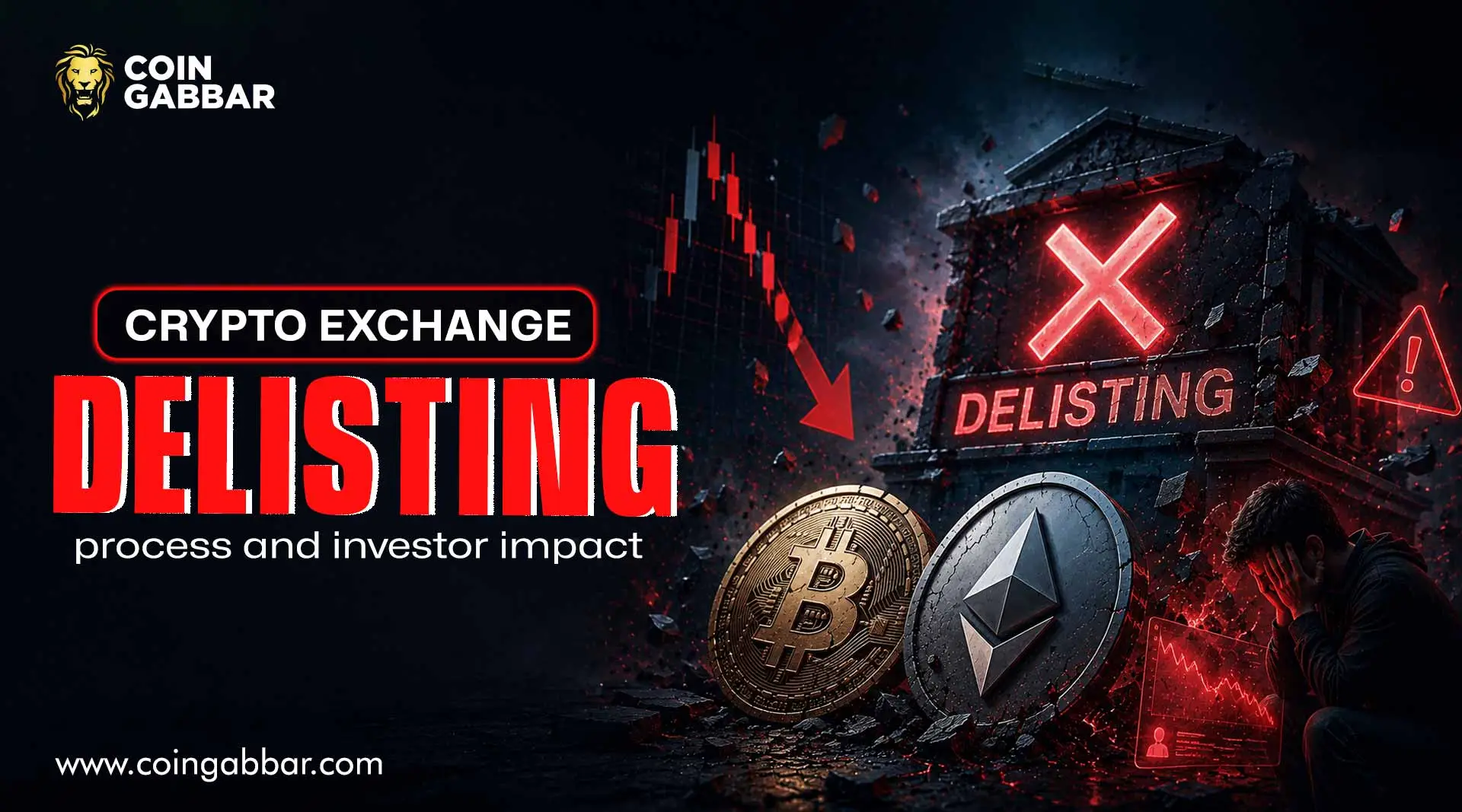
Crypto Delisting Explained: Reasons, Process, and Investor Impact
A coin trading happily on an exchange one month can vanish from that same platform a few months later. That is crypto delisting, the flip side of a listing that once got a token onto that same exchange in the first place.
It happens more often than most new investors realize, and it rarely gets the same attention a new listing does.
Sometimes it is quiet, just a notice buried in an exchange's announcement page. Other times it makes headlines and drags the token's price down with it. This guide covers what it actually means, why it happens, how the process plays out, and what it means for anyone holding the token when it does.
What Does Crypto Delisting Mean?
It is the removal of a token and all its trading pairs from an exchange. Once it happens, that coin can no longer be bought, sold, or traded on that particular platform. As CoinMarketCap's own glossary explains, It's is not unique to crypto either. Traditional stock exchanges do the same thing when a company stops meeting listing standards.
A few basics worth knowing upfront:
-
Delisting can be voluntary, where a project itself asks to be removed, or involuntary, where the exchange makes the call
-
Centralized exchanges (CEXs) can remove a token from their trading platform entirely.
-
Decentralized exchanges (DEXs) generally do not control tokens in the same way, although they may remove trading pairs or hide them from their interface while the token itself remains accessible on the blockchain.
-
A delisting on one exchange does not automatically mean the token disappears everywhere. It might still trade on smaller platforms or through a personal wallet
Why Do Exchanges Delist Tokens?
Exchanges do not remove a token on a whim. Most run ongoing reviews of everything they list, and a handful of red flags tend to trigger a delisting decision.
-
Low trading volume: If almost nobody is buying or selling a token, the market becomes thin and easy to manipulate.
-
Regulatory pressure: If a token gets flagged as an unregistered security or falls foul of local law, exchanges often pull it rather than risk legal exposure.
-
Security issues: A hacked protocol, a broken smart contract, or a compromised team wallet can all be reason enough.
-
Project abandonment: Teams that stop building, stop communicating, or quietly disappear put their token at risk.
-
Evidence of fraud or manipulation: Pump-and-dump schemes, insider trading, or misleading marketing are common triggers.
-
Strategic decisions: Sometimes an exchange just wants to clean up its listings and cut low-performing pairs, even without any wrongdoing involved.
None of these reasons work in isolation either. A token with thin volume that also happens to be facing regulatory scrutiny is far more likely to get flagged than one dealing with just a single issue.
How the Crypto Delisting Process Works
Crypto delisting rarely happens overnight. Exchanges tend to follow a fairly predictable sequence, even if the exact timing varies from platform to platform.
-
Warning or risk tag. The exchange flags the token as higher risk, sometimes publicly and sometimes just internally.
-
Formal announcement. The exchange publishes a delisting notice naming the token and the effective date.
-
Trading halt. Buying and selling of the token pairs stops on the announced date.
-
Withdrawal window. Users get a set period, often somewhere between two weeks and a few months, to move their tokens elsewhere.
-
Final removal. After the deadline, the exchange fully removes the token, and any remaining balances may be converted or forfeited.
One exchange moving first is common too. Once a major platform delists a token, others often follow within weeks, since a lot of exchanges watch each other's listing decisions closely. The gap between the first announcement and the final removal can range from under two weeks for a token facing serious fraud allegations to several months for one that is simply being phased out over low volume.
What Happens to Your Tokens When Delisting Happens
For a holder, the practical fallout depends on how fast someone reacts.
-
Price impact: Delisting announcements often trigger sharp price declines because liquidity falls and investor confidence weakens, although the size of the drop varies depending on the project and market conditions.
-
Withdrawal option: Most exchanges let users move the actual tokens to an external wallet or another exchange during the notice period.
-
Conversion to stablecoin: Some exchanges may automatically convert certain delisted assets into another asset under specific policies, but many simply suspend trading and provide a withdrawal period. Users should always check the exchange's official announcement.
-
Forfeiture risk: In rare cases, exchanges reserve the right to simply keep unclaimed balances if nobody withdraws before the deadline.
-
The token is not necessarily dead: Delisting from one exchange does not erase the blockchain the token lives on. It may still trade elsewhere or get relisted later if the project turns things around.
How to Protect Yourself From a Delisting
A little vigilance goes a long way here.
-
Turn on notifications from every exchange you use so delisting announcements do not slip past you.
-
Check trading volume and liquidity on any token you hold, since thin markets are usually the first sign trouble is coming.
-
Follow the project's own social channels and development activity, not just the exchange listing.
-
Move tokens to a personal wallet if a project shows warning signs, rather than waiting for an official notice.
-
Diversify across exchanges so a single delisting does not lock up your entire position.
None of these steps guarantee you will dodge every delisting. What they do is shrink the window between an exchange's decision and your own reaction, which is usually the difference between a smooth withdrawal and a scramble.
Conclusion
Crypto delisting is simply an exchange removing a token it no longer wants to support, whether that is because of weak volume, regulatory risk, security concerns, or a project that has gone quiet.
The process usually follows a warning, an announcement, a trading halt, and a withdrawal window before the final removal. Watching liquidity, staying close to project updates, and acting fast once a notice goes out are the best defenses any holder has against getting caught off guard.
Disclaimer
This article is for educational and informational purposes only and should not be considered financial or investment advice. Always do your own research before making decisions related to any crypto asset.