DePIN Crypto Explained: How Decentralized Infrastructure Works

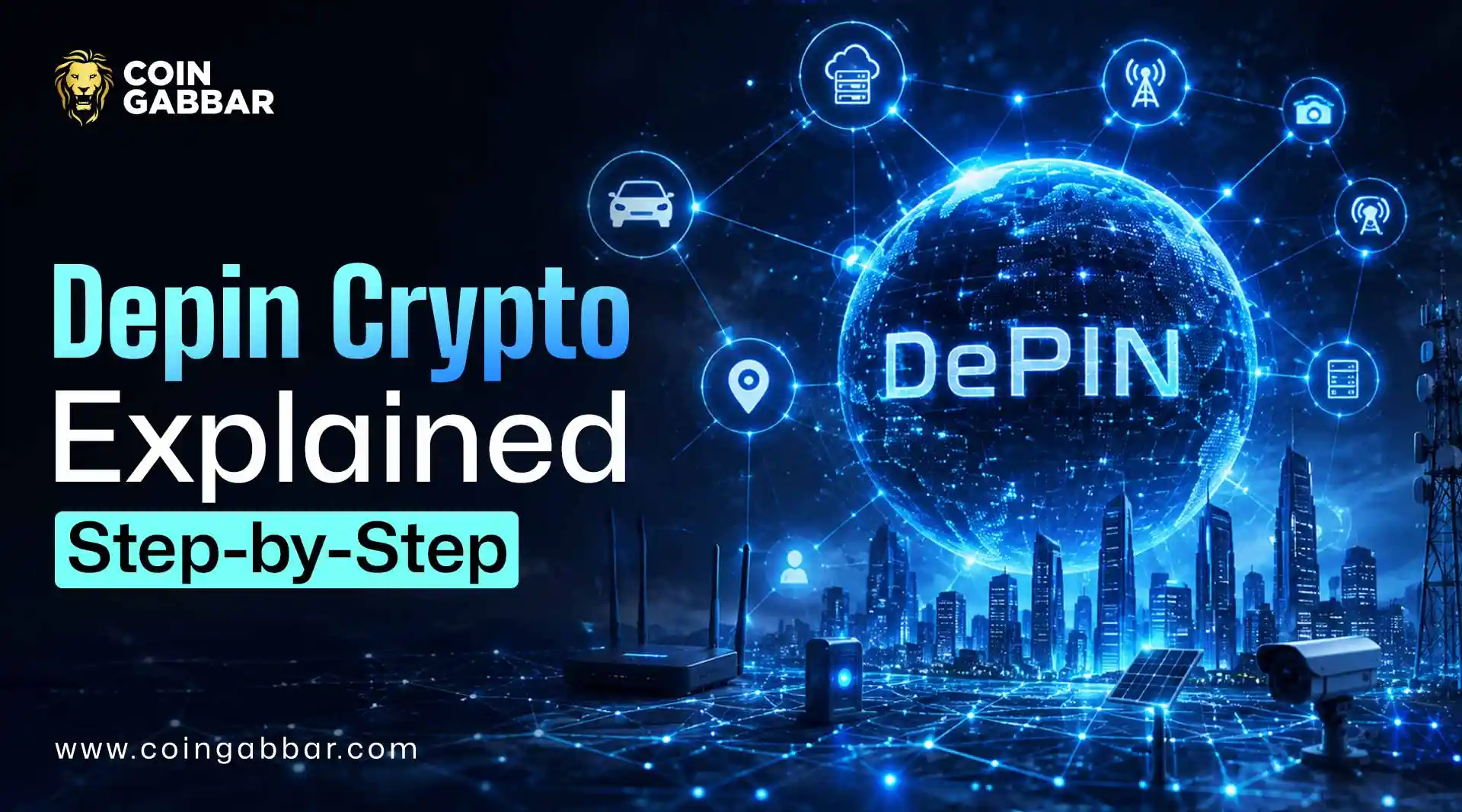
DePIN Crypto Explained for Beginners With Projects and Examples
If you've been hearing the term "DePIN" everywhere and still feel lost, this guide has you covered. Here, DePIN crypto explained in plain, simple language: what it is, how it actually works, real projects you can look at, and the risks worth understanding before you get involved.
What Is DePIN Crypto?
DePIN stands for Decentralized Physical Infrastructure Networks. In simple terms, it's a way to build and run real-world infrastructure like wireless networks, computing power, or data storage using everyday people instead of one large company. Anyone can plug in hardware, share their resources, and receive crypto tokens in return.
Think of it like Airbnb, but for infrastructure. Instead of one company owning every server or antenna, thousands of individuals contribute their own devices. That is the core idea behind DePIN crypto explained in the simplest way possible.
DePIN Crypto Explained for Beginners
For someone brand new to this space, here is the easiest way to picture it. Every project usually has three parts:
The hardware: a device, sensor, GPU, or storage drive that does the actual work
The network: the blockchain layer that tracks and verifies contributions
The token: the reward distributed to contributors, based on verified activity
So when people say "DePIN crypto explained for beginners," it comes down to this: you contribute a real-world resource, the network verifies it on-chain, and tokens are distributed as a result. It is infrastructure participation first, not a guaranteed income stream.
DePIN vs Traditional Infrastructure
Traditional infrastructure, like a telecom tower or a cloud data center, is usually owned and controlled by a single company. That company decides pricing, coverage, and maintenance, and it keeps the profits.
DePIN flips this model. Instead of one owner, the network is made up of many independent contributors. No single company controls the hardware, and rewards are distributed based on rules written into the blockchain rather than decided by a corporate office. This can lower costs and increase coverage in areas a single company might not find profitable, but it also means there is no central authority to fall back on if something goes wrong, which is an important trade-off to understand.
Types of DePIN Networks
DePIN projects generally fall into a few broad categories:
Compute networks: share GPU or CPU power for tasks like AI training or 3D rendering
Storage networks: provide decentralized data storage instead of relying on centralized cloud servers
Wireless and connectivity networks: build community-run coverage for Wi-Fi, 5G, or IoT devices
Sensor and data networks: collect real-world data, such as weather or mapping information, from physical devices
Knowing which category a project falls into helps you understand what hardware or resource it actually needs from you.
How DePIN Works: Step-by-Step
Here is DePIN crypto explained step by step, from setup to reward distribution:
Pick a network. Choose a best DePIN project that matches a resource you can offer wireless coverage, compute power, storage, or mapping data.
Set up the hardware. Most projects need a specific device or app. Some, like compute-sharing networks, only need your existing GPU.
Connect to the network. You register your device or node using the project's app or dashboard and link it to a crypto wallet.
Start contributing. Your device begins its job storing data, sharing bandwidth, offering compute power, or something similar while the network records this activity on-chain.
Receive token rewards. The network verifies your contribution and distributes tokens, usually on a daily or weekly basis, based on the amount and quality of your contribution.
Manage your tokens responsibly. You can hold, stake, or trade what you earn, but remember that token value can change quickly and rewards are not fixed or guaranteed.
How DePIN Rewards Are Calculated
Blockchain plays a specific role here: it gives the network a shared, tamper-resistant record of who contributed what, without needing a central company to keep score. This is why blockchain is needed instead of a normal database no single party can quietly alter the reward history.
Verification usually works through proof mechanisms unique to each project. A storage network might verify that your device still holds the data it claims to hold. A wireless network might verify signal quality and uptime. A compute network might verify that a task was actually completed correctly.
Once verified, rewards are typically calculated using a mix of factors: how much resource you provided, how reliable your uptime was, and sometimes how early you joined the network. This incentive design is meant to reward consistent, honest participation rather than one-time or low-effort activity, though the exact formula varies from project to project.
Real DePIN Projects Worth Knowing
Three of the most established names in this space show how differently decentralized physical infrastructure projects can be built:
Project | Token | What It Does |
Bittensor | TAO | A decentralized network for machine learning, where participants are rewarded for contributing useful AI computation |
ICP | A network that lets developers run websites and apps directly on-chain instead of relying on traditional cloud servers | |
Render Network | RENDER | Connects people with spare GPU power to creators who need rendering done for 3D graphics, animation, and AI workloads |
Based on the market snapshot referenced for this article, TAO was trading around $195.78, ICP around $2.10, and RENDER around $1.35, with market caps ranging from roughly $700 million to over $2 billion. Crypto prices move constantly, so always check a live tracker before relying on any figure.
Source: CoinMarketCap data
Understanding the Risks of DePIN
Before treating DePIN as a way to earn, it is important to understand that every part of this system carries real risk:
Token price volatility: rewards are paid in tokens whose market value can rise or fall sharply, sometimes within a single day
Hardware depreciation: devices lose value and performance over time, and upgrades or replacements add ongoing cost
Reward changes: networks often adjust reward rates as more participants join, which can lower your future earnings without warning
Network failure risk: a project can lose funding, shut down, or fail technically, leaving contributors with unusable hardware or worthless tokens
Regulatory uncertainty: crypto rewards and token sales face evolving regulation in many countries, which could affect how, or whether, you can participate or cash out
None of this means DePIN is inherently unsafe, but it should be evaluated as infrastructure participation with financial exposure, not as passive income.
What Do I Need Before I Start?
Before joining any DePIN-network, a few basics make the process smoother:
A crypto wallet that supports the token you plan to receive
The right hardware, or a computer capable of running the project's app
A stable internet connection, since most networks require consistent uptime
Enough starting capital to cover hardware and setup costs, understanding this money is at risk
Basic knowledge of how to secure your wallet and private keys
How Much Does This Cost in Total?
Costs vary a lot depending on which DePIN-project you choose. A wireless or storage-sharing project might only need a device costing $100 to $500, plus regular electricity and internet costs. Compute-sharing projects that need a powerful GPU can cost anywhere from a few hundred to a few thousand dollars for the hardware alone. There are usually few ongoing subscription fees, but there is no guarantee that rewards will cover or exceed your upfront cost.
How Long Does the Whole Process Take?
Setting up your first DePIN node is usually quick. Most people finish the wallet setup, app download, and device connection within a single afternoon. That said, some networks have a waitlist or hardware shipping delay, which can add a few days to a few weeks before you are fully live and contributing.
What Are the Most Common Mistakes People Make?
A few mistakes show up again and again with new participants:
Skipping research on the token's actual utility and joining purely because of hype
Ignoring hardware requirements, then being surprised when a device cannot handle the workload
Ignoring uptime rules, which can lower rewards if a device goes offline too often
Storing wallet keys carelessly, which puts earned tokens at risk
Chasing new, unproven projects without checking whether the team, funding, and roadmap are real
Treating projected rewards as guaranteed income, instead of a variable amount tied to token price and network conditions
Avoiding these mistakes is often the difference between a smooth experience and a costly one.
DePIN Crypto Explained 2026: What's Changed
Looking at DePIN crypto explained 2026 style, the space has matured compared to a couple of years ago. More projects now focus on AI compute and data infrastructure, hardware setup has become more plug-and-play, and larger networks like Bittensor and Render have built real, active user bases instead of just promises. That said, the sector is still young, reward structures keep changing, and new projects launch constantly, so due diligence matters just as much now as it always has.
Final Thoughts
To sum it up, DePIN crypto explained simply means people-powered infrastructure, verified on-chain and rewarded with tokens. It is a genuinely interesting way to put spare bandwidth, storage, or computing power to use, but it comes with real financial and technical risk, not a guaranteed return. Start small, choose an established project first, and understand the setup, costs, and risks in full before committing real money or hardware.
Disclaimer
This article is for educational purposes only and is not financial advice. Token prices, rewards, and regulations change quickly. Always do your own research and verify current data before investing or participating.