Playnance G Coin — Web3 Gaming Token With 2M Daily Transactions

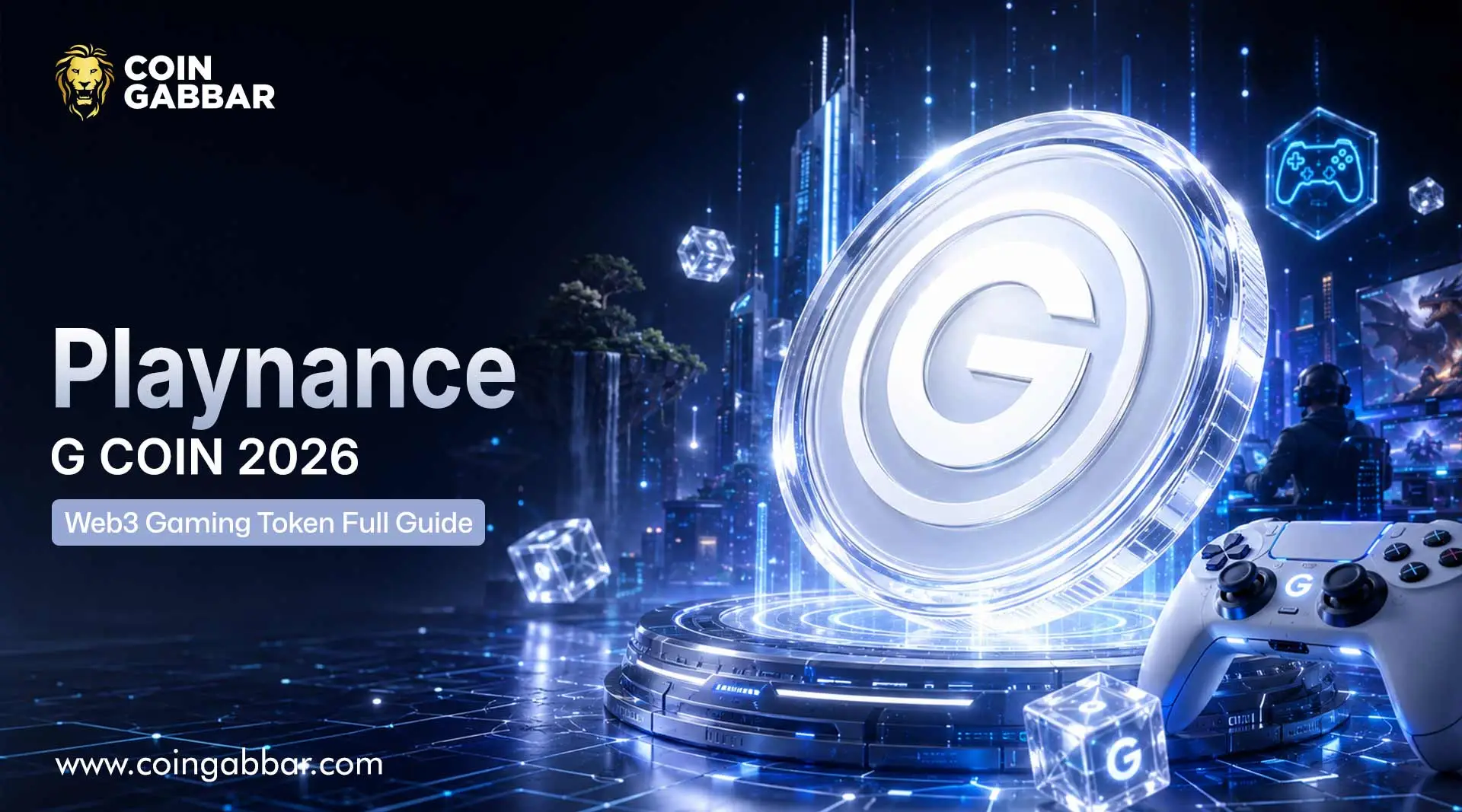
What Is Playnance G Coin and How Does It Actually Work?
What if a blockchain gaming platform already had 300,000 users, 10,000 games, and 2 million daily transactions—before its token even launched?
That is exactly the position Playnance G Coin launched from on March 18, 2026. While most Web3 gaming projects launch tokens to fund a product that does not yet exist, Playnance did the opposite—it built a live ecosystem first and then added the economic layer on top. Today, G Coin is live, trading, and the dashboard shows real activity happening right now. Here is the complete guide — what Playnance is, what G Coin does, what the numbers mean, and why the 2M daily transaction figure matters more than the price.
TL;DR: Playnance is a Web3 blockchain gaming infrastructure company. G Coin is its native utility token launched March 18, 2026, on PlayBlock. USDP is the stable gaming token pegged to USDT. Live price: 1 G = 0.00193 USDP — up 4.63% in 7 days. TVL in G: 160.6M. Total swaps: 12,801. Not financial advice.
What Is Playnance G Coin and How Does It Actually Work?
Playnance is not a game. It is the infrastructure that games run on.
Founded in 2020, Playnance is a Web3 infrastructure company developing live, non-custodial, on-chain products designed to onboard mainstream Web2 users into blockchain environments. The company develops consumer-facing platforms built on shared wallet systems and high-volume on-chain execution, currently processing approximately 2 million transactions per day.
Think of it like AWS — but for blockchain gaming. Individual game studios build on top of Playnance's infrastructure (PlayBlock), use its shared wallet system, and tap into its existing user base. The player sees a game. Behind it runs an entire on-chain economy.
The broader Playnance ecosystem operates at scale across a network of digital entertainment platforms. The infrastructure supports more than 300,000 registered accounts, integrates with over 30 game studios, and runs more than 10,000 on-chain games. Across the network, platforms process approximately 2 million on-chain transactions per day and support interaction with more than 2.5 million sports events annually.
Two tokens power this ecosystem:
USDP — The Stable Gaming Token
USDP is pegged to USDT — non-speculative, stable, and designed purely for gaming transactions. It serves as the primary token to access decentralised gaming apps on PlayBlock. USDP carries a unique taxation mechanism capped at a maximum of 1% — meaning the platform captures a tiny slice of every gaming transaction without burdening users with heavy fees. Users connecting to any game with a USDP balance automatically receive PBG gas tokens — meaning zero upfront gas cost to start playing.
G Coin — The Ecosystem Utility Token
G Coin is designed to function as the economic infrastructure across the entire ecosystem—facilitating gameplay activity, predictions, rewards, and settlement transactions across all Playnance platforms.
Simple version: USDP is what you use to play. G Coin is what you earn, stake, and use to participate in governance and rewards across the whole network.
Playnance G Coin Live Data — Price USDP TVL and What It Means
The dashboard image shows live May 28, 2026 data — and the numbers tell a specific story.
Metric | Live Value | What It Means |
G Price | 0.00193 USDP | Current market rate for G Coin |
7D Change | +4.63% | Steady weekly recovery in price |
TVL USDP | 307,131.11 | ~$307K USDP stable liquidity locked in protocol |
TVL G | 160,630,559.03 | 160M+ G Coin locked in protocol |
Total Swaps | 12,801 | Real on‑chain transactions — not simulated |
USDP Turnover | 2,940,291.43 | $2.9M+ USDP flowing through ecosystem |
G Turnover | 4,770,174,966.9 | 4.77 billion G Coin traded in protocol |
The most important number here is not the price. It is the USDP turnover of $2.94 million and the G turnover of 4.77 billion tokens. These are real transactional volumes moving through a gaming ecosystem—not wash trading, not inflated numbers. Real players spending real USDP on real games.
The 7-day price chart confirms what the numbers suggest — a gradual, stable recovery from a dip around May 25 back toward the 0.00193 USDP level. No extreme spikes. No sharp dumps. That stability reflects the ecosystem's design—USDP as the base gaming currency and G Coin as the reward and utility layer on top of it.
What the chart says: G Coin is not trying to be a volatile speculative asset. It is functioning as an economic layer for a live gaming platform—which is exactly what it was designed to be.
Playnance G Coin Tokenomics — 77B Supply, No Minting, No Gas Fees
G Coin launched with a fixed 77 billion supply — no future minting possible. Supply management is handled through a structured lock and release mechanism. 12-month locks apply for gameplay losses. A vesting schedule governs unsold tokens from presale. Approximately 13 billion G Coin was distributed in presale, with more than 200,000 holders before the token even listed.
Tokenomics Detail | Data |
Total Supply | 77,000,000,000 G |
Presale Distributed | ~13,000,000,000 G |
Pre-Launch Holders | 200,000+ |
Market Cap at TGE | ~$38M |
Minting | None—fixed supply forever |
Chain | PlayBlock (custom EVM) |
Gas Fees | Zero for USDP holders |
TGE Date | March 18, 2026 |
PlayBlock—the blockchain G Coin runs on—was built specifically because traditional blockchain systems were not designed for real-time interaction. Networks like early Ethereum prioritized security and decentralization at the cost of speed. On-chain gaming, interactive financial products, and prediction markets depend on near-instant responsiveness. PlayBlock delivers that with fast execution, minimal friction, and predictable costs.
The gas fee model deserves special attention. Users connecting to any game or DApp on PlayBlock with a USDP balance automatically receive an allocation of PBG gas tokens — eliminating the upfront cost problem that has blocked mainstream crypto gaming adoption. A daily automated wallet scan tops up PBG balances below a certain threshold, ensuring continuous uninterrupted access to the network.
This is the design detail that separates Playnance from most blockchain gaming platforms. Most require users to hold native gas tokens before they can do anything. Playnance eliminates that friction entirely — you hold USDP, you play. Gas is handled automatically.
What Playnance Is Actually Building — The Full Ecosystem
Playnance emphasises true digital asset ownership through NFTs, community governance through G Coin staking, and transparent reward systems — aiming to offer a more player-centric and economically empowering gaming experience than traditional models provide.
The platform has three major product verticals:
1. On-Chain Gaming — 10,000+ games across 30+ studio partnerships. Players own their in-game assets as NFTs. All outcomes are recorded transparently on PlayBlock.
2. Sports Prediction Markets — 2.5 million sports events supported annually. Users stake USDP on prediction outcomes and earn G Coin rewards for correct predictions.
3. Interactive Financial Platforms — DeFi-adjacent financial products where users engage with on-chain outcomes and earn rewards through G Coin participation.
Playnance CEO Pini Peter said at the G Coin TGE: "On March 18, G Coin will enter the market with real adoption already in place." That statement was not marketing — the 2 million daily transactions and 12,801 swaps on the live dashboard confirm it.
Who Is Playnance For?
User Type | How They Use Playnance |
Casual Gamer | Play 10,000+ games using USDP — no gas fees |
Sports Fan | Predict match outcomes — earn G Coin |
Crypto Trader | Buy/sell G Coin — participate in ecosystem rewards |
Game Developer | Build on PlayBlock — access 300,000 existing users |
NFT Collector | Own in‑game assets — trade on PlayBlock marketplace |
DeFi User | Stake G Coin — earn yield from platform transaction fees |
Risks to Know Before You Participate
Playnance is a live, operating platform — but risks remain:
Ecosystem concentration risk: The platform's transaction volume is distributed across 30+ studio partners. If major studios exit, volume could drop significantly.
USDP peg risk: USDP is pegged to USDT — not USD directly. A USDT depeg event would cascade into USDP, affecting all gaming activity on the platform.
G Coin liquidity: With a total supply of 77 billion and only 12,801 swaps on the dashboard, G Coin liquidity is still building. Large sells can move the price disproportionately at current volumes.
Regulatory risk: Sports prediction markets face increasing regulatory scrutiny in multiple jurisdictions. Any classification of PlayBlock's prediction products as gambling could trigger legal challenges in key markets.
Conclusion
Playnance G Coin is one of the few Web3 gaming tokens that launched into a live ecosystem rather than building one after the fact. The numbers — 300,000 users, 10,000 games, 2 million daily transactions, $2.94M USDP turnover — are real, verifiable, and growing. The 4.63% weekly price recovery on the dashboard suggests early stability after the March 18 TGE. The zero-gas-fee model, the fixed 77B supply, and the 200,000 pre-launch holders give it a more solid foundation than most GameFi tokens launched in 2026. The ecosystem is built. The question now is how fast it scales.
Disclaimer: This article is for informational and educational purposes only. Cryptocurrency investments carry high risk, and G Coin remains a volatile digital asset. Always conduct your own research before making any financial decision.
Also read: