BitMine Buys 25000 ETH From Kraken: BMNR Owns 4.59% of All Ethereum

$213 Million in One Week: BitMine Ethereum Buying Is Getting Serious
BitMine just dropped $42 million on Ethereum — again. The Tom Lee-backed firm bought 25,000 ETH directly from crypto exchange Kraken six hours ago. This isn't a one-off bet. It's part of a calculated, aggressive strategy. And the numbers behind this week's buying spree will make you rethink what institutional crypto accumulation really looks like.
Breaking It Down: What Actually Happened
On-chain tracker Lookonchain caught the transaction first. A BitMine-linked wallet pulled 25,000 ETH directly from Kraken's hot wallet. Hot wallet means funds an exchange keeps ready for withdrawals — it's always online.
The company even sent a tiny 0.01 ETH test transfer first. The receiving address was 0x708EC53182d8de6bCdFA7A9c98a6cc4dd0960074. That's standard practice before moving millions.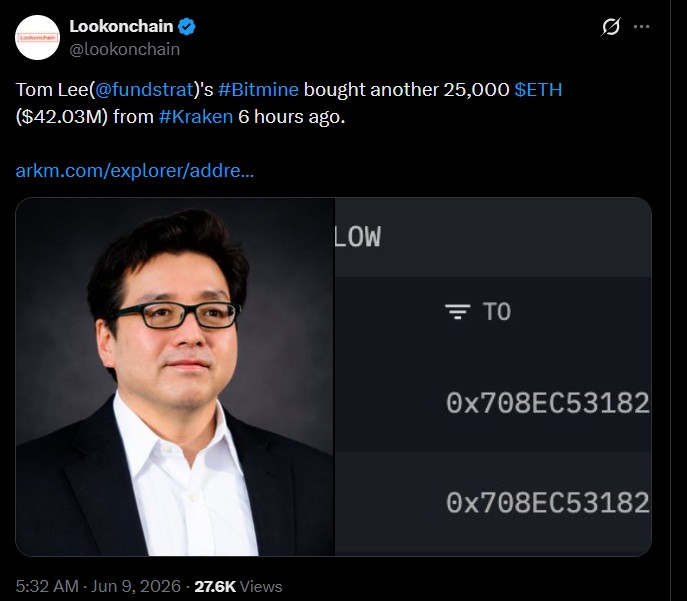 Source: Lookonchain X
One Firm. One Week. $213 Million
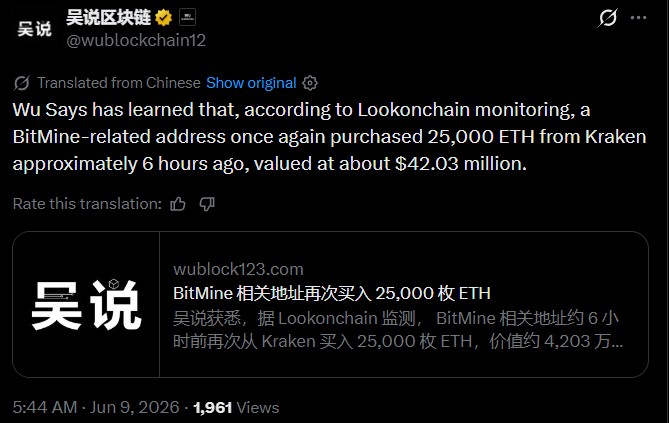
BitMine bought 126,971 coins this week alone. That's roughly $213 million spent in seven days. The latest buy? 25,000 coins for $42.03 million, pulled directly from Kraken's hot wallet.
On-chain tracker Lookonchain spotted it first. BitMine even sent a 0.01 ETH test transfer before the big move. That's standard practice to confirm the wallet address before sending millions.
What Happens When BitMine Holds 5% ETH?
That's the question every Ethereum holder should ask right now. Large holders — called whales — can move markets. Their buying signals confidence to smaller investors. Their selling can trigger panic.
Tom Lee's Firm Now Holds 5.54 Million ETH
BitMine Immersion Technologies, ticker BMNR, is a publicly traded company. It's built around one core idea: hold as much ETHs as possible. Its total holdings just crossed 5.54 million tokens. At roughly $1,630 per coin, that's a massive position.
Of those holdings, 4,718,677 coins are staked. Staking means locking up coins to help run the network and earn rewards in return.
Source: Wu Blockchain X
4.59% of All Ethereum — And Targeting More
The total circulating supply sits at around 120.7 million coins. BitMine now owns 4.59% of that. Its stated goal? Hit 5% ownership of the entire Ethereum supply. That target isn't far off. At this buying pace, it could get there soon.
Why Is BitMine Buying During a Price Dip?
Ethereum has seen weakness recently. Most retail investors sell during price drops. BitMine does the opposite. It's buying more when prices fall. This strategy, called accumulation, bets on a much higher future price.
Tom Lee, known for bold market calls at research firm Fundstrat, backs this approach publicly.
Two Big Forces Pushing ETH Higher
BitMine's strategy isn't blind faith. It's backed by two real trends driving Ethereum demand:
Wall Street tokenization: Major financial firms are moving real-world assets — like bonds and real estate — onto Ethereum's blockchain.
Agentic AI systems: AI tools increasingly need neutral, public blockchains to operate. Ethereum fits that role.
Both trends increase tokens usage. More usage means more demand. More demand, with tighter supply, pushes prices up.
Total Holdings Cross $9.6 Billion
BitMine's combined crypto and cash holdings now total $9.6 billion. That includes staked ETH worth $7.7 billion at current prices. For a publicly traded company, these are extraordinary numbers. BMNR stock watchers are paying close attention.
Ethereum Price Today
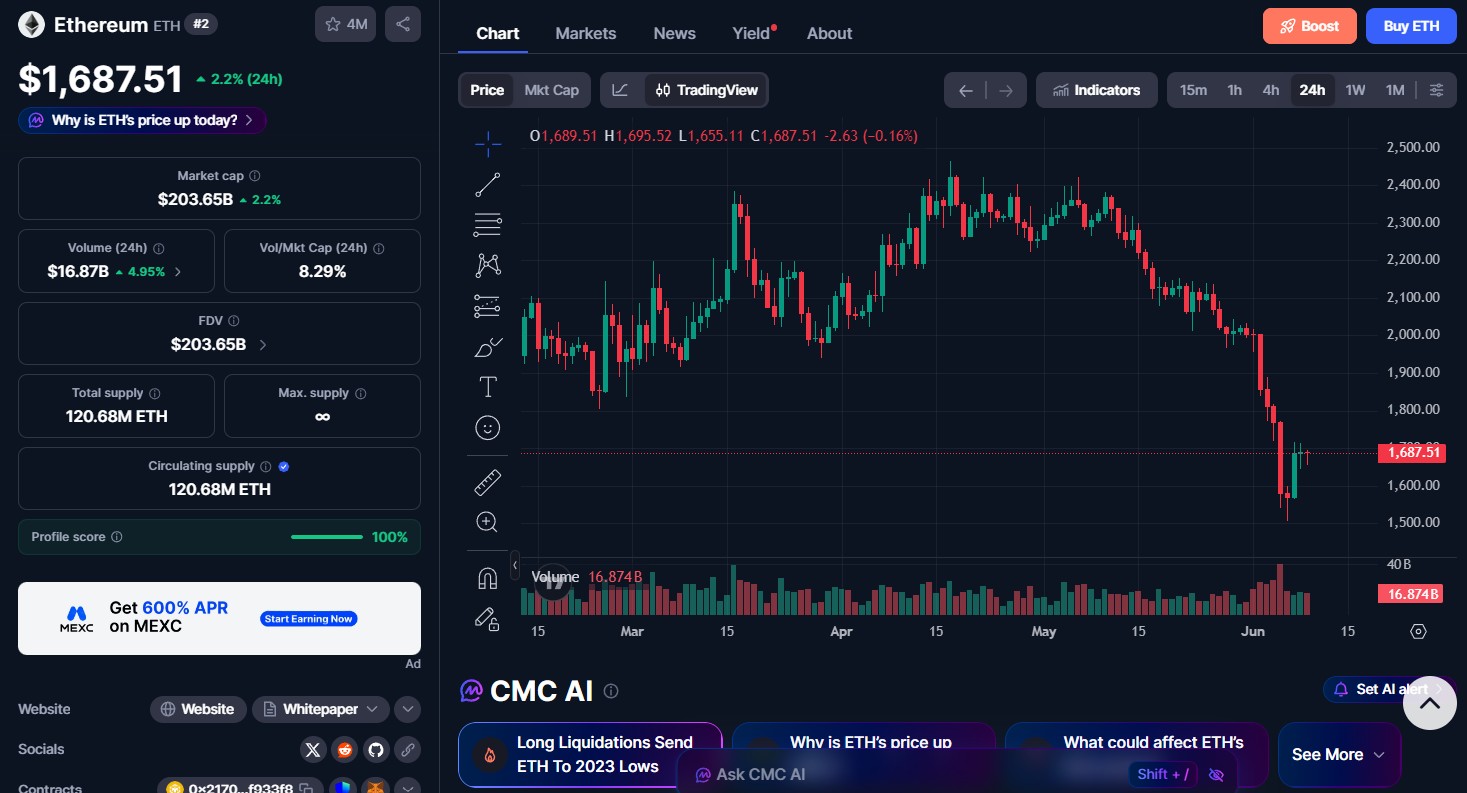
Ethereum trades at $1,687.51, up 2.2% in 24 hours, with a market cap of $203.65 billion and 24-hour volume of $16.87 billion. The chart shows a sharp drop from April highs near $2,500, but price is showing early signs of recovery — making this dip worth watching closely.
Source: CoinMarketCap
Why This News Matters to Investors
BitMine now controls 4.59% of all Ethereum in circulation. That's $9.6 billion in total crypto and cash holdings. When one company accumulates this much of a single asset, it tightens supply. Less ETH available means upward price pressure. If you hold or watch crypto markets, this move directly affects your portfolio's future value.
Conclusion
BitMine spent $213 million on ETH in one week. It now holds 4.59% of Ethereum's entire supply and is pushing toward 5%. With Wall Street tokenizing assets and AI driving new blockchain demand, this bet looks calculated — not reckless.
Disclaimer: This article is for informational purposes only. It does not constitute financial advice. Always do your own research before making any investment decisions.
Also read:


3 months ago
Mighty Hacker Recovery offers professional services in cybersecurity and digital recovery for individuals and businesses. Their services include data recovery, digital forensics, cybersecurity consulting, malware detection, and incident response. They promise experienced, confidential, and fast support while following ethical practices. Clients can contact them via their website https://mightyhackarrecovery.com/ or WhatSapp Canada +1 (343) 947-3496 for assistance. Additionally, the text poses various questions related to crypto recovery, including inquiries about stolen cryptocurrency, recovery experts, and their effectiveness. BITCOIN RECOVERY EXPERT AT MIGHTY HACKER RECOVERY USDT RECOVERY EXPERT AT MIGHTY HACKER RECOVERY ETH RECOVERY EXPERT AT MIGHTY HACKER RECOVERY CRYPTOCURRENCY FRAUD RECOVERY HACKER FOR HIRE AT MIGHTY HACKER RECOVERY WhatSapp Canada +1 (343) 947-3496

4 months ago
TOP 10 CRYPTOCURRENCY RECOVERY COMPNY IN 2026 CONTACT ZEUS CRYPTO RECOVERY SERVICES
4 months ago
It is possible to recover your lost Bitcoin with the assistance of professional recovery experts. Regardless of how long your Bitcoin has been stolen or the circumstances surrounding its loss, they can help you retrieve it all just like they just helped me recover my scammed $124,000 USD back to me within 24 hours. contact them on ( recoverydarek) (@) gmail (.) com you will thank me later and I pray God makes victims out there see this message.
4 months ago
Legitimate cryptocurrency recovery company in 2026 Viste_ZEUS CRYPTO RECOVERY SERVICES Following a cryptocurrency investment incident that resulted in substantial financial losses, I sought assistance from Zeus Crypto Recovery Services. From the initial consultation, their team demonstrated a high level of professionalism, expertise, and commitment to addressing my situation. They conducted a thorough assessment of my case, provided clear explanations of the recovery process, and maintained consistent communication throughout each stage of the investigation. Their attention to detail and methodical approach gave me confidence that my case was being handled with care and diligence. Thanks to their efforts, I was able to recover a significant portion of the funds that I believed had been permanently lost. I was particularly impressed by their transparency, responsiveness, and dedication to achieving a positive outcome. I highly recommend Zeus Crypto Recovery Services to individuals and organizations seeking professional assistance with cryptocurrency asset recovery. Their expertise and client-focused approach make them a valuable resource in navigating complex recovery matters. — Satisfied Client callum charles Contact Information WhatsApp +44 7353 848036 Website: https://zeusrecoveryservices.com Email: support@zeusrecoveryservices.com
4 months ago
Crypto Recovery Services I never thought I would recover my lost cryptocurrency after being scammed, but Zeus Crypto Recovery Services truly surprised me. Their team was professional, responsive, and supportive throughout the entire process. They explained everything clearly and kept me updated step by step. Thanks to their help, I was able to recover my funds successfully. I’m genuinely grateful for their service and dedication. If anyone has fallen victim to a crypto scam, I highly recommend reaching out to them for assistance. Thank you again, Zeus Crypto Recovery Services!” Website: https://zeusrecoveryservices.com Mail-Box: support@zeusrecoveyservices.com WhatsApp: +44 7353 848036







