GENIUS Act Stablecoin Law to Take Effect From January 2027


GENIUS Act Stablecoin Law: Treasury Rules Explained
In the latest US Treasury implementation news, the Treasury Department issued a Notice of Proposed Rulemaking on August 17, 2026, targeting Section 3 of the GENIUS Act stablecoin law. 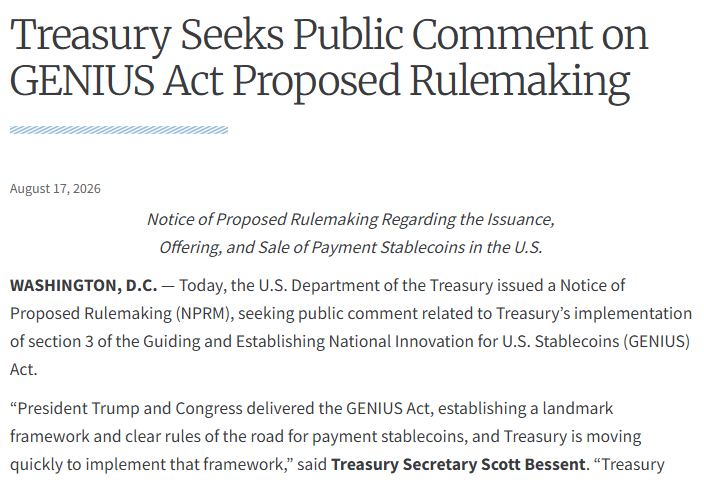
The proposal is meant to define when a person issues a payment stablecoin in the United States and when a token is offered or sold to someone in the country.
Treasury said the rule is scheduled for publication in the Federal Register on August 18, with a 60-day public comment window.
The move signals that the GENIUS Act stablecoin law is entering its final regulatory phase before taking effect.
WuBlockchain also reported in its crypto news today coverage on the U.S. Treasury's proposed rules, highlighting the licensing requirements and 2027–2028 compliance timeline. 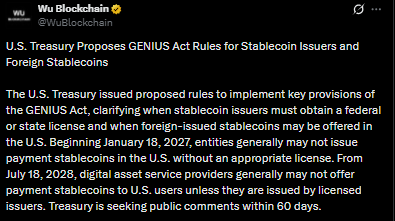
Source: WuBlockchain Official X Post
What Did Treasury Announce About the GENIUS Regulation?
According to the Treasury Department, this NPRM builds on an Advance Notice of Proposed Rulemaking issued in September 2025.
Secretary Scott Bessent said the department is moving quickly to finalize federal regulation and welcomes stakeholder input.
Under the GENIUS Act stablecoin regulation set for January 2027, comments submitted during the review window will be publicly viewable through Regulations.gov.
When Does the GENIUS Take Effect?
Two dates anchor the GENIUS Act stablecoin law effective date timeline for 2027 and beyond.
Date | What Happens |
January 18, 2027 | Expected effective date: issuing a payment in the US requires a federal or state license |
July 18, 2028 | Digital asset service providers cannot offer or sell stablecoins in the US unless issued by a licensed issuer |
According to an FDIC proposed rule published in the Federal Register, the Act is expected to take effect on January 18, 2027, unless the primary federal payment stablecoin regulators issue final implementing regulations earlier.
GENIUS Payment Framework Explained
Treasury's proposal sets out core requirements for the payment framework:
A person generally cannot issue a payment in the US without an appropriate stablecoin issuer license from a federal or state regulator
Digital asset providers cannot offer foreign-issued stablecoins unless the foreign issuer can comply with lawful US orders and reciprocal arrangements
Under the GENIUS Act, knowingly violating the payment issuance restrictions can result in a fine of up to $1 million, imprisonment for up to five years, or both.
The OCC, FDIC, and Federal Reserve rules are being developed in parallel, since multiple regulators share authority over the Act
The proposal is separate from the Clarity Act, the broader crypto market structure bill still pending a vote in Congress after this month's delay.
What Did Scott Bessent Say About the Rules?
Bessent's comments on the Scott Bessent rules framed it as historic.
He said President Trump and Congress delivered a landmark framework with clear rules for payment and that Treasury wants to cement the dollar reserve currency stablecoin position while keeping America competitive in digital assets.
His remarks reflect a broader push to finalize US Treasury Department crypto rules well before the January deadline.
Why This Matters for the Industry
For issuers, the proposal offers the clearest signal yet on how the GENIUS Act stablecoin law will apply in practice, making it an important development to watch in the broader crypto news landscape.
Firms managing issuance compliance now have a defined window to study the NPRM and prepare licensing applications before the comment period closes.
Exchanges, custodians, and payment platforms will also need to review how the offer and sale definitions affect which tokens they can support once the rule is finalized.
No exchange or platform has confirmed final licensing outcomes, since the rule remains proposed and open to public feedback at this stage.
Expert Opinion
Market analysts note that a clearer payment framework could reduce regulatory uncertainty for dollar-pegged tokens operating in the US, though the final rule may shift once Treasury reviews industry comments.
The parallel work from the OCC, FDIC, and Federal Reserve suggests coordinated federal regulation is a near-term priority, even as the Clarity Act's fate in Congress remains unresolved.
Disclaimer: This article is for informational purposes only and does not constitute financial or legal advice. Readers should consult official Treasury Department sources and a qualified professional before making decisions related to compliance.
Also read:






