Guo Wengui Crypto Fraud Sentence: 30 Years for $1B Scam

Guo Wengui Crypto Fraud Sentence Details, and the Misused Funds
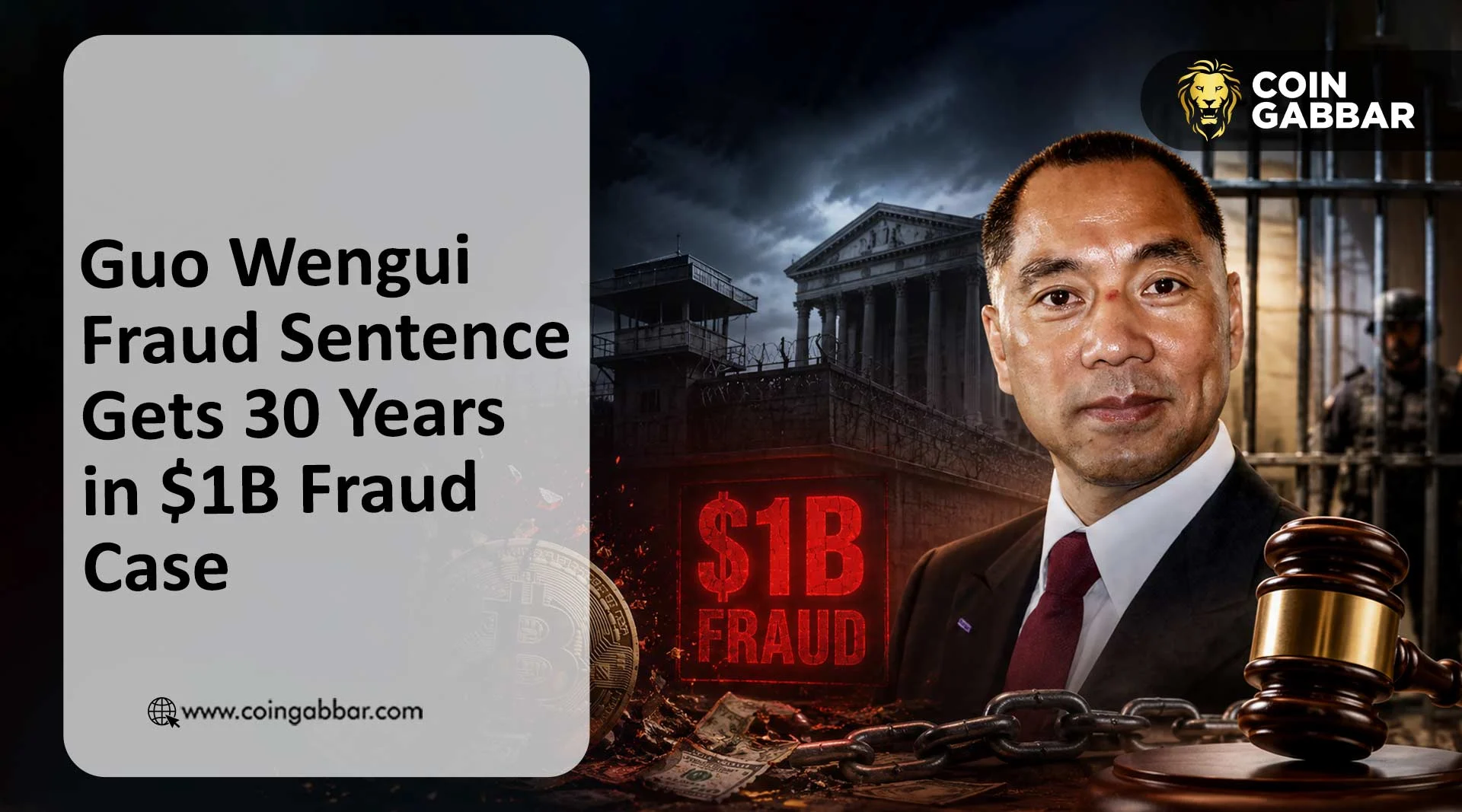
The Guo Wengui crypto fraud sentence landed this week, and it came in heavy: 30 years in a Manhattan federal court. The Associated Press reported that the self-exiled Chinese businessman raised more than $1 billion from 2018 to 2023 through several connected ventures, including a crypto exchange that promised gold-backed coins.
That money, prosecutors said, mostly funded a personal lifestyle rather than any real business.
Guo Wengui Crypto Fraud: Case Details and the Misused Funds
Guo Wengui, also known as Miles Guo, built a following as a vocal critic of the Chinese Communist Party. He used that platform to raise funds through GTV Media Group, Himalaya Farm Alliance, and Himalaya Exchange between 2018 and 2023.
Prosecutors showed the funds went toward a yacht, sports cars, and luxury homes instead of the legitimate investments Guo promised followers. The court convicted him in July 2024, and the Guo Wengui scam sentence handed down this week also requires him to forfeit nearly $900 million.
Inside Himalaya Exchange: How This Crypto Scam Scheme Was Structured
Himalaya Exchange launched around 2021, pushing two tokens: Himalaya Coin (HCN) and Himalaya Dollar (HDO). The platform told followers their money was backed by gold and framed the project as a tool against the Chinese Communist Party, raising close to $262 million on that pitch.
Behind the marketing, the exchange ran as a closed system with little real on-chain presence, and its price moves looked artificially pumped rather than market-driven.
Former CEO Jesse Brown testified that the company lacked real control or employees, and that H-Coin never had true cryptocurrency functionality behind it.
The Department of Justice went on to seize hundreds of millions of dollars in assets tied to the platform, central evidence in the Guo Wengui digital asset fraud sentence handed down this week.
Several countries issued regulatory warnings about Himalaya Exchange before Guo's conviction, and customer funds tied to the platform were frozen or seized. Today the exchange still has a website and social media presence, but it is widely treated as defunct, with affected users now pursuing legal routes to recover what they put in.
Guo Wengui Crypto Fraud Echoes FTX, Celsius, and Bitzlato Collapses
This case fits a pattern cryptocurrency has seen before.
Sam Bankman-Fried, former CEO of FTX, was convicted in 2023 of fraud and money laundering for misusing billions in customer funds, and received a 25-year sentence in 2024 for one of the largest exchange collapses on record.
Alex Mashinsky, founder of Celsius, pleaded guilty in 2025 to fraud and market manipulation charges after misleading investors on a multi-billion dollar lending platform that filed for bankruptcy back in 2022.
Anatoly Legkodymov, the Russian founder of Bitzlato, was arrested in Miami in 2023 for processing more than $700 million in illicit funds through an exchange with weak anti-money-laundering controls.
Each case shares a common thread with the cryptocurrency fraud sentence: bold promises of innovation covering up weak or absent operations underneath, with customer money treated as the founder's own.
Emerging Crypto Regulations and Risks of Frauds
The Guo Wengui crypto fraud sentence adds to growing scrutiny on celebrity-driven cryptocurrency schemes that lean on political or ideological appeal to attract retail investors.
The Department of Justice and SEC pursued charges around unregistered securities offerings and wire fraud despite offshore elements in the case, backing it up with asset seizures.
Cases like this push regulators toward stricter know-your-customer and anti-money-laundering rules worldwide, alongside closer scrutiny of stablecoins, exchanges, and influencer-driven token promotions.
Frameworks such as MiCA in Europe and clearer US guidance aim to close some of these gaps, though enforcement still trails the speed at which new schemes appear.
For anyone putting money into a token or platform, the lesson from this scam stays simple: check who runs the project, whether independent audits exist, and whether the technology actually does what the marketing claims.
Closed ecosystems with no outside verification carry the highest risk of becoming the next headline.
Disclaimer: This article is for informational purposes only and does not constitute financial or investment advice. Crypto markets carry significant risk. Always do your own research before making any investment decisions.
Also read:


2 months ago
Mighty Hacker Recovery offers professional services in cybersecurity and digital recovery for individuals and businesses. Their services include data recovery, digital forensics, cybersecurity consulting, malware detection, and incident response. They promise experienced, confidential, and fast support while following ethical practices. Clients can contact them via their website https://mightyhackarrecovery.com/ or WhatSapp Canada +1 (343) 947-3496 for assistance. Additionally, the text poses various questions related to crypto recovery, including inquiries about stolen cryptocurrency, recovery experts, and their effectiveness. BITCOIN RECOVERY EXPERT AT MIGHTY HACKER RECOVERY USDT RECOVERY EXPERT AT MIGHTY HACKER RECOVERY ETH RECOVERY EXPERT AT MIGHTY HACKER RECOVERY CRYPTOCURRENCY FRAUD RECOVERY HACKER FOR HIRE AT MIGHTY HACKER RECOVERY WhatSapp Canada +1 (343) 947-3496