Pi Network Launchpad Live on Testnet: Is Mainnet Launch Coming Soon?

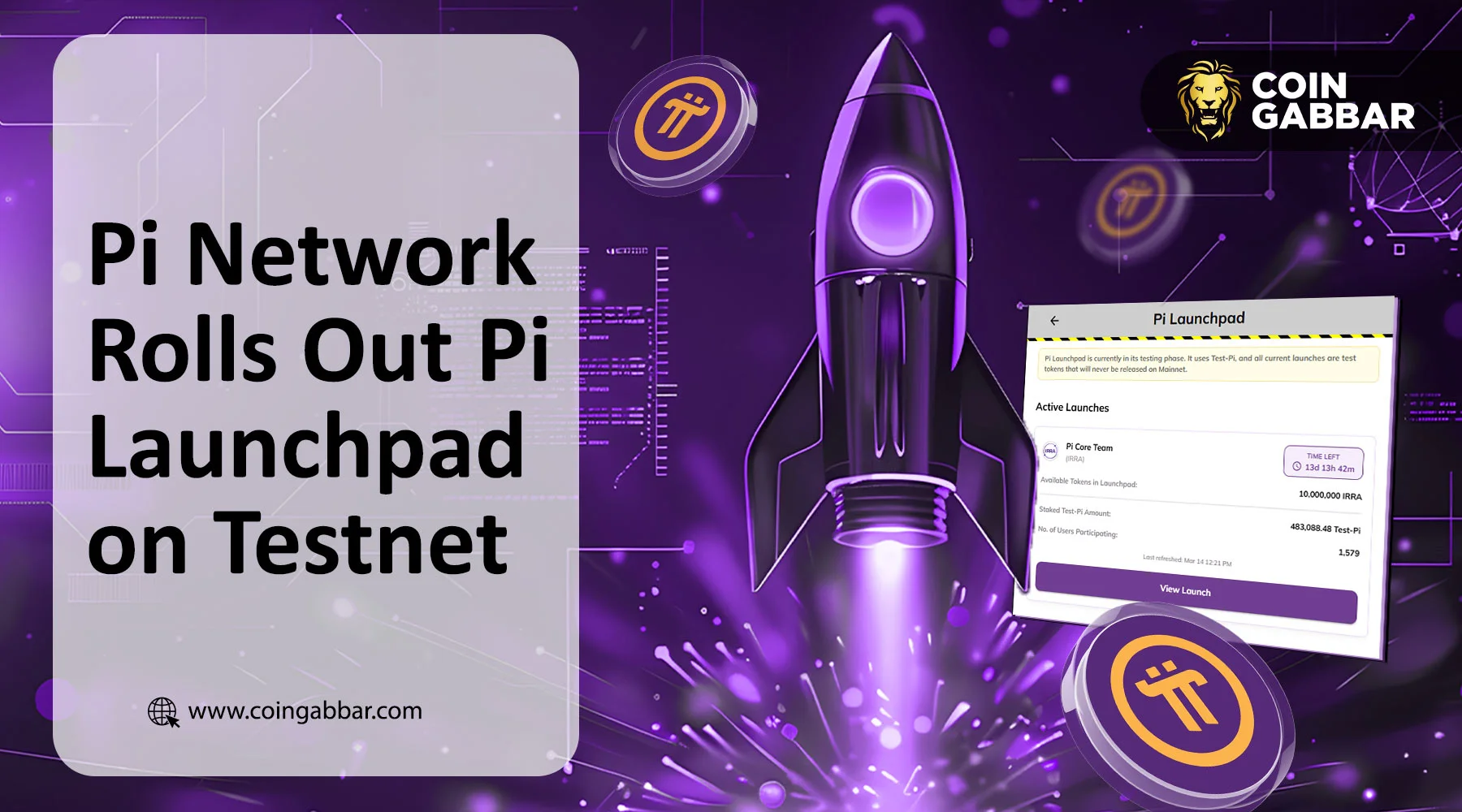
Pi Network Test Pi Launchpad With Dummy Token: Is Mainnet Launch Soon?
Highlights
Pi Network Launchpad launches on Testnet using a dummy token.
The utility-first token model requires a working application before launch.
All launch proceeds flow into liquidity pools for market stability.
What Is Pi Network Launchpad and Why Did It Launch on Testnet First?
Pi latest update has officially launched the Pi Launchpad MVP on its Testnet, which is a new step towards the creation of a decentralized token ecosystem on the network. The feature was introduced as a Pi App in the browser, which gives the community the chance to test the functionality of launches prior to the system launching on the mainnet.
The launchpad is currently in test mode, which implies no assets are involved. According to the Team, this approach allows the community—known as Pioneers—to learn the mechanics of token launches without financial risk.
The release forms part of the broader Pi Day 2026 ecosystem updates, which also included network upgrades, node improvements, and ongoing mainnet migrations.
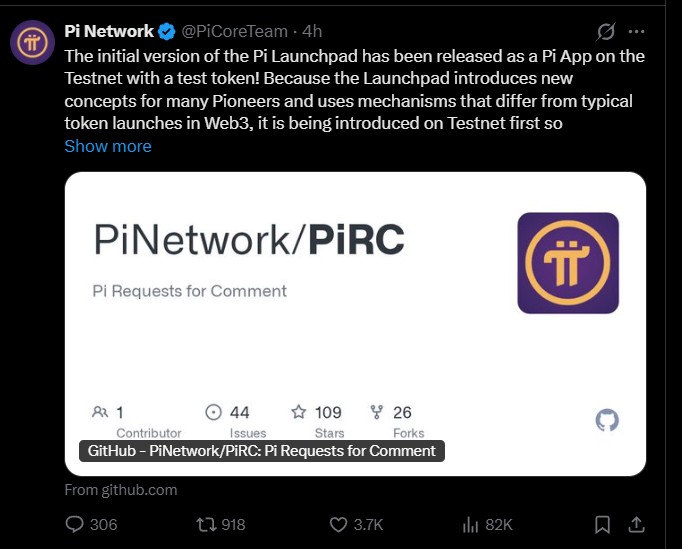
Source: Official X
Could Pi Launchpad Change How Tokens Are Created?
The Launchpad is oriented towards utility-first tokens, unlike most other Web3 launchpads, which are fundraising or speculation-oriented. Before they can issue an ecosystem token, the projects have to create a functioning application. This implies that in an app, tokens should have a real use, i.e.:
Internal payments within the application.
User rewards and incentives
Governance participation
Premium features or access to services.
The coin will minimize the hype-driven projects by forcing working products to be launched before tokens, which will, in turn, promote the development of real applications in the ecosystem.
How Does the Launchpad Prevent Token Dumps or Rug Pulls?
One of the most notable features of the launchpad is its liquidity-focused design. Instead of sending funds directly to developers during launch, all coins used by participants are automatically placed into permanent liquidity pools paired with the newly issued token. This mechanism is designed to:
Ensure liquidity from the beginning
Support trading in future decentralized markets
Reduce the risk of insider selling or rug pulls
The design is based on Design 1 from the PiRC, which was released during the network’s Open Network anniversary announcement.
Why Is the Community Testing It First?
The Pi Coin Team launched the feature on Testnet to help educate its massive community about decentralized coin mechanics.
Having millions of users that are not accustomed to Web3 launchpads, the testing stage provides Pioneers with a chance to learn:
How token launches work
How liquidity pools operate
Ecosystem interaction with applications.
The team will also receive feedback during this time with the developers and users to improve the system prior to the release of the mainnet version.
What Does This Mean for the Future?
The introduction comes as the network continues expanding its ecosystem infrastructure. The team recently confirmed that 17.7 million KYC-verified users are eligible for the second wave of mainnet migrations.
Combined with node upgrades and upcoming smart contract capabilities, this update signals a broader push to move toward real decentralized applications and utility-driven tokens.
For now, the Testnet version acts as a learning environment. But if the experiment succeeds, it could become a central gateway for new apps and tokens inside the ecosystem, bringing developers closer to the network’s large global user base.
Disclaimer: This is not financial advice. Please DYOR before investing. CoinGabbar is not responsible for any financial losses. Crypto assets are highly volatile, and you can lose your entire investment.









