Pi Network Mainnet Upgrade v24 Live: Why Users Must Act Before June 2?

How to Upgrade Pi Network Node: Step-by-Step Before Deadline?
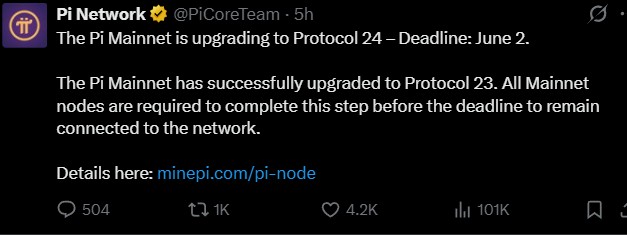
The team has officially confirmed that the Pi Mainnet has successfully upgraded to Protocol 23. It has issued a critical alert to all Mainnet node operators.
Every user must upgrade to Protocol v24.1 by June 2, 2026. Miss it, and your nodes get disconnected from the network. No exceptions. No extensions announced.
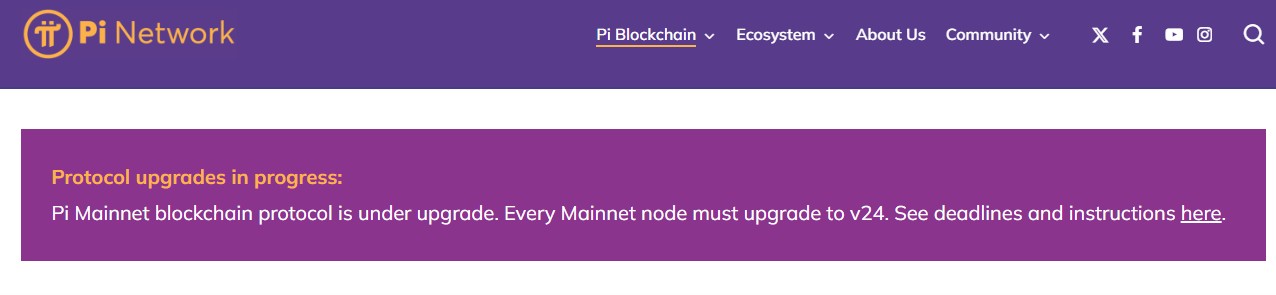
This isn't a suggestion. It's a mandatory step in the biggest blockchain transformation to date, and most node runners don't yet know what's actually at stake. The team shared instructions and technical guidance through the official portal.
The Pi Network's latest update is part of a broader effort to strengthen its blockchain infrastructure, improve performance, and support long-term decentralization as the ecosystem continues expanding globally.
Source: X
What Is Protocol 24 and Why Does It Even Matter?
It is upgrading its blockchain protocol from version 19 all the way to version 26. Think of it like updating the rules of a game. Every player must follow the same rulebook — or they can't play.
The upgrade path looks like this:
19.1 → 19.6 → 19.9 → 20.2 → 21.2 → 22.1 → 23.0 → 24.1 → 25.1 → 26.0
All nodes have already passed versions 19 through 23. Now 24.1 is live and active. Version 25.1 follows on June 15. Version 26.0 comes after that. Here's the rule: you can't skip steps. Each upgrade must happen in order.
Source: Website
The Good News: This Upgrade Is Fast
Unlike the brutal Protocol 23 upgrade, which rewrote database files and risked data corruption.
-
This Protocol 24.1 is clean and quick.
-
Expected downtime: under 15 minutes
-
No major database migration
-
No backup required (though it's always wise)
The Team calls it "straightforward." Most nodes will be back online before you finish your coffee.
How to Upgrade: Pick Your Node Type
Pi Desktop (Windows or macOS Users): You don't need to do anything. The desktop app upgrades itself automatically when you open it. Just launch Pi Node and let it run.
Pi Linux Node CLI (New in 2026): This is a new recommended tool for Linux users. It manages everything for you.
-
Auto-update enabled? No action needed. Done.
-
Auto-update off? Run this one command: pi-node update-protocol. Then monitor progress with the watch status
Your nodes is ready when the status field shows "Synced" — not "Syncing."
Still running on Docker? Here's What You Need to Do
If you manage your Pi Node manually using Docker on Linux, this one's for you. It is now recommends switching to its newer CLI tool — but the old Docker method still works. You just need to upgrade it yourself.
One thing: Don't update all your nodes at the same time. Do them one by one. The whole process takes under 15 minutes. But don't wait. June 2 is the hard deadline.
What Happens If You Miss the Deadline?
Missing the June 2 deadline means your node drops off the network. You'll need to manually run each missed step in order. In the worst case, you may need to resync your node from scratch, which takes significantly more time and effort. Don't put this off.
The Full Timeline at a Glance
-
Status Deadline19.1 → 23.0
-
All completed Done 23.0 → 24.1
-
Active now: June 2, 2026 24.1 → 25.1
-
Do NOT start yet: June 15, 2026 25.1 → 26.0
-
Do NOT start yet: TBD
Important: Do not jump ahead to 25.1 or 26.0. Pi explicitly warns against starting any upgrades before it's officially announced. Doing so could break your node.
Community Reaction
The reactions are mixed. While many users welcomed the continued technical progress and infrastructure, others raised concerns about unresolved issues.
Several community members highlighted frustration due to ongoing delays in KYC approvals, limited real-world utility for the token, and continued weakness in Pi Coin market price.
Despite these concerns, supporters argue that steady backend development and consistent protocol upgrades remain critical for the network’s long-term sustainability.
Conclusion
Protocol 24.1 is live. June 2 is the deadline. It takes under 15 minutes. Whether you run Windows, macOS, or Linux, the process is simple. Act now, stay connected, and get ready for what Pi next move brings to the network.
Disclaimer: This article is for informational purposes only. It does not constitute financial or investment advice. Always verify upgrade instructions directly through official Pi Network channels before proceeding. Cryptocurrency investments carry significant risk. Do your own research before making any financial decisions







