Wildest Bitcoin Week of 2026: Saylor Sold 32, Strive Wants 70000 BTC


Strategy Sells Bitcoin First Time Since 2022; Crypto Market Went Wild
Michael Saylor's firm just sold 32 BTC. It's a tiny amount. But the crypto market reaction was anything but small. Here's what really happened — and what it means for you.
A Small Sale That Sent Shockwaves
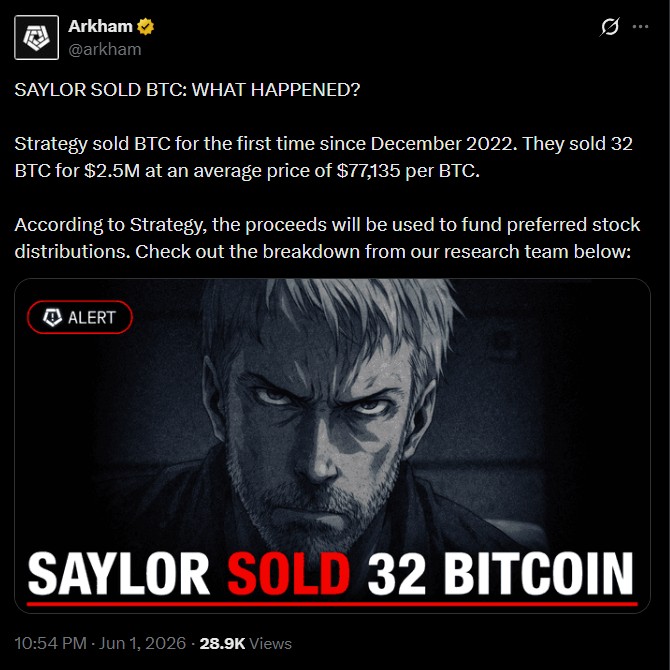
Strategy sold Bitcoin. That's not something you read often. The company sold just 32 BTC between May 26 and May 31, 2026, raising $2.5 million at an average price of $77,135 per coin. It's their first Bitcoins movement since December 2022.
To put that in context, Strategy holds 843,706 BTC in total. This sale was 0.0038% of their entire stack. Tiny. Yet markets reacted like something major just shifted.
Last Time Saylor Sold, Bitcoin Went to the Moon
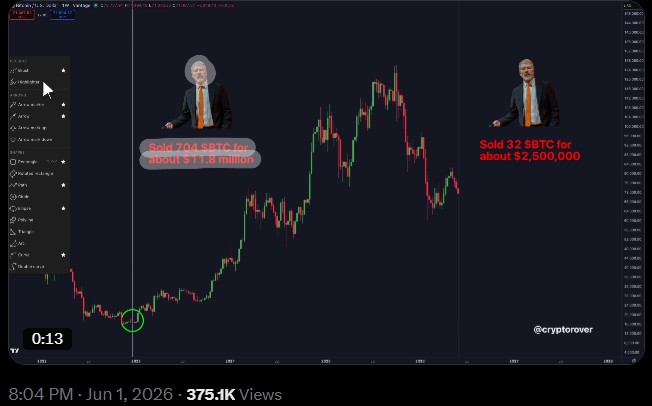
Here's a fact that makes this sale so interesting. In December 2022, Strategy sold 704 BTC for $11.8 million. That sell happened almost exactly at bear market bottom. After that sell, it didn't just recover — it ran to all-time highs above $100,000.
Saylor essentially sold at the worst possible price. Then Bitcoin exploded upward.
Source: CryptoRover X
This Time, the Story Looks Different
Fast forward to May 2026. Strategy sold just 32 BTC for $2.5 million at an average price of $77,135 per coin. But this time, the chart tells a different story. Instead of a bottom followed by a massive rally, the market dropped after the disclosure. Traders noticed. Fear spread fast.
Is history repeating — or reversing?
Source: Arkham X
Why Did Saylor Sell? Here's the Real Reason
Strategy filed an 8-K with regulators on June 1. The filing stated clearly: the proceeds will fund distributions on preferred stock. These are dividend payments owed to certain investors.
Saylor himself had hinted at this earlier, saying the company would "probably sell some Bitcoins to pay a dividend — just to inoculate the market." So this wasn't panic. It wasn't a strategy change. It was a planned, small financial move to meet an obligation.
Saylor Breaks His Silence
After the filing went public, Saylor posted Strategy's Bitcoin tracker chart on social media. Many read it as a signal — another purchase could be coming soon. He also reaffirmed his bigger vision: making $STRC the "ultimate global standard for digital credit." His goal hasn't changed. The sale was a tool, not a turning point.
What Happened After the Sale?
Here's where it gets interesting. Within hours of the disclosure, massive sell-offs appeared across major platforms:
-
Binance moved large BTC amounts out
-
Coinbase showed big outflows
-
Wintermute (a major crypto trading firm) sold BTC
-
BlackRock moved BTC holdings
-
Multiple crypto whales hit the sell button
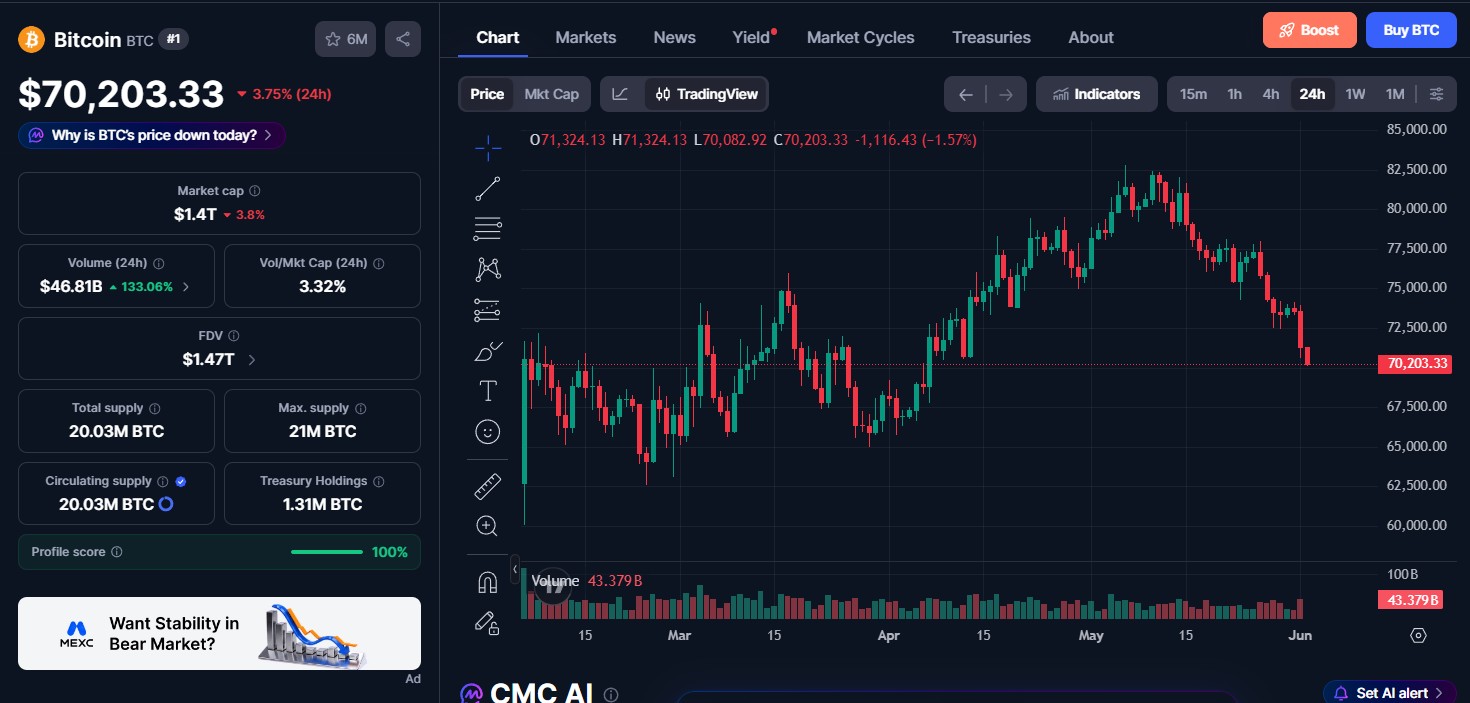
All at once. All around the $70K Bitcoin price mark. Crypto account called it a "coordinated dump." Others disagree. Many analysts say institutions simply rebalance portfolios together during market stress. It's correlation, not conspiracy.

Source: CryptoPulse X
The Polymarket Drama Nobody Saw Coming
Here's where it gets strange. Prediction market Polymarket had millions of dollars bet on whether Strategy would sell Bitcoin in May or June. The execution happened May 26–31. The filing came on June 1. Bettors are now fighting over which date counts. It exposes a real problem — prediction markets don't always have clear rules for complex financial events.
A New Player Enters The Market, Eyes 70,000 BTC
While Strategy made headlines for selling 32 coins, Strive Asset Management made headlines for wanting to buy 70,000. Strive, backed by Vivek Ramaswamy and listed on Nasdaq under the ticker ASST, currently holds about 16,500 BTC worth over $1 billion. The firm plans to raise $5.1 billion through new share offerings to buy even more Bitcoin. Many are calling Strive's CEO the "new Michael Saylor." Corporate Bitcoin buying isn't slowing down — it's speeding up.

Source: X
What This Means for You as an Investor
Don't let one small sale scare you. Strategy still holds the largest corporate Bitcoin position in the world — by far. The sale was planned, disclosed, and tiny relative to their holdings. Watch for:
-
Saylor's next purchase announcement
-
Strive's fundraising progress toward 70,000 BTC
-
Whether ETF inflows recover in coming weeks
Source: CoinMarketCap
The Bottom Line
One 32-BTC sells moved headlines, markets, and prediction platforms simultaneously. That tells you everything about how closely people are watching corporate moves right now. The real story isn't the sale — it's the sensitivity around it.
Disclaimer: This article is for informational purposes only. It does not constitute financial advice. Always do your own research before making any investment decisions.
Also read:






