Superseed Ethereum Mainnet Migration Deadline And SUPR Token Claims


Superseed Ethereum Mainnet Migration, L2 Shutdown and SUPR Token Claim
Superseed has announced its Ethereum Mainnet Migration, moving its entire DeFi ecosystem from its Layer 2 network while discontinuing its independent chain. The transition will help the protocol focus on developing its native lending platform, suprUSD, and Super Strategies.
The transition comes as the protocol aims to strengthen liquidity access, expand lending capabilities, and prepare new products like suprUSD and Super Strategies while asking users to migrate their assets before the deadline.
If you're holding USDC, USDT, cbBTC, OP, ETH, etc. on the network, the clock is already running against you. Here's what most reports aren't telling you — and why the SUPR token's fate looks very different from everything else.
What Is Superseed and Why Is It Moving to Ethereum?
It is a DeFi protocol built around self-repaying loans, previously run on its own OP Stack-based ETH Layer 2 network. The team is now shutting that chain down entirely.
The reasoning centers on the Superseed ETH mainnet strategy: The Mainnet offers deeper liquidity, a larger active user base, a mature stablecoin ecosystem, and a fast-growing real-world asset (RWA) market that an independent L2 simply can't match.
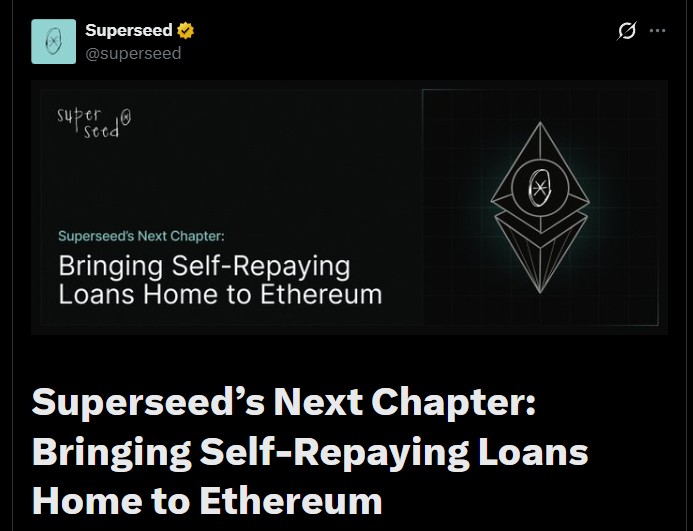
Source: Official X
Superseed Announces Ethereum Mainnet Migration and L2 Shutdown
It will discontinue its OP Stack Layer 2 chain and redirect all engineering resources toward Mainnet. Core Products:
-
Native lending markets
-
suprUSD stablecoin system
-
Super Strategies yield products
Full Details:
| Category | Details |
| Protocol | Superseed DeFi |
| Migration Target | Ethereum Mainnet |
| Previous Network | Superseed Layer 2 Chain |
| Shutdown Deadline | August 15, 2026 |
| Main Focus After Migration | Lending protocol, suprUSD, Super Strategies |
| Token Recovery | Claimable later via ETH-native SUPR claim contract |
| Other Assets Affected | USDC, USDT, oUSDT, cbBTC, OP, ETH |
| Risk After Deadline | Recovery of non-SUPR assets not guaranteed |
Why Is Superseed Moving From Layer 2 to Ethereum?
ETH Provides Deeper DeFi Liquidity. It remains the primary hub for stablecoin activity, RWA expansion, and overall DeFi liquidity. By exiting independent chain infrastructure, it positions itself closer to far larger capital pools.
It Shifts Focus From Chain Development to DeFi Products. Running a standalone blockchain demands constant engineering overhead. The team says dropping that burden lets it concentrate purely on building financial products instead of maintaining network infrastructure.
What Happens to SUPR Tokens and User Assets After Migration?
SUPR Token Migration Process: Users who move tokens before the deadline can keep using them normally. Anyone who misses the window will have their balance recorded at deprecation, with a future ETH-native claim contract to follow.
Other Assets Require Immediate Migration: USDC, USDT, oUSDT, cbBTC, OP, and ETH must all be bridged off Superseed before the deadline — recovery afterward is not guaranteed.
Which Assets Need to Be Migrated From Superseed L2?
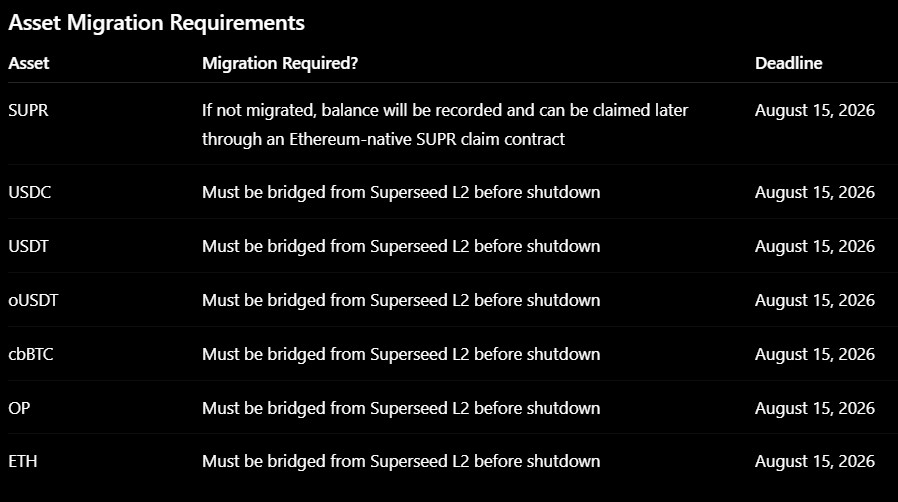
What Happens If Users Do Not Migrate Assets Before August 15?
The token balances stay eligible for a future claim even if missed. Every other asset, however, risks becoming permanently stuck once the chain deprecates — there's no promised recovery path.
Will Superseed L2 Continue Working After August 15, 2026?
No. The chain enters deprecation once the deadline passes, and users shouldn't count on continued network access or transaction support afterward.
Timeline: Superseed Ethereum Migration Roadmap
-
July 21, 2026: Migration plan announced
-
July–Aug 2026: Users begin transferring assets
-
Aug 15, 2026: Final migrating deadline
-
After Aug 15, 2026: L2 deprecation begins
-
Future Date: SUPR token claim contract opens
-
Upcoming: ETH lending protocol, suprUSD, Super Strategies launch
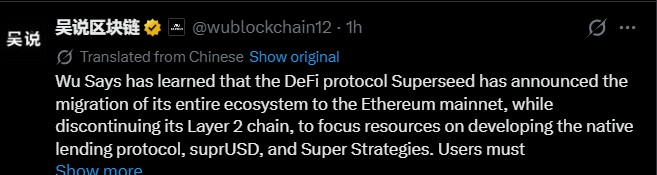
Source: Wu Blockchain X
How Will Superseed Migration Affect Token Holders?
The token becomes a fully ETH-native asset, opening the door to broader ecosystem utility, deeper integration across Ethereum DeFi protocols, and potentially wider adoption once the claim contract goes live.
How Will the SUPR Token Utility Change?
Planned upgrades include boosted yield tiers for holders, suprUSD incentive programs, potential protocol fee-sharing for stakers, and expanded participation across the wider ETH DeFi landscape.
Superseed Roadmap 2026
-
Native Money Market: ETH-based lending infrastructure supporting high-LTV self-repaying loans is already underway.
-
suprUSD Stablecoin: A core product aimed at improving capital efficiency across the ecosystem.
-
Super Strategies: Yield-generating mechanisms that replace old L2 fee-based repayment, routing protocol revenue toward paying down user loans.
How Does Ethereum Migration Compare With Other DeFi Projects?
More DeFi protocols are prioritizing liquidity over maintaining standalone chains, reflecting a broader industry shift toward application-focused development rather than independent blockchain infrastructure.
What Should Users Do Before the Deadline?
-
Connect your wallet to the network
-
Bridge all assets before August 15, 2026
-
Confirm each transaction completed successfully
-
Note your SUPR balance if migration is missed
-
Follow official channels for claim contract updates
What to Watch Next?
Track Ethereum Mainnet deployment progress, the native money market launch, suprUSD's release, the SUPR claim contract announcement, and future token utility rollouts.
Native money market deployment, the suprUSD launch, Super Strategies rollout, and official claim contract details for SUPR remain the key upcoming milestones.
Superseed Ethereum Migration News: Key Takeaways for Users
-
Superseed is shutting down its Layer 2 chain
-
The deadline is August 15, 2026
-
Non-SUPR assets must move before the deadline
-
SUPR follows a separate, later claim process
-
Future development centers entirely on Ethereum
Conclusion
This Ethereum news today represents a strategic shift from operating an independent Layer 2 network toward building a more focused DeFi ecosystem. By removing infrastructure overhead, the protocol aims to concentrate resources on its lending markets, suprUSD, and Super Strategies.
However, the transition requires immediate action from users, as assets remaining on L2 after August 15, 2026, may face recovery risks. Future updates on Ethereum deployment, token claims, and product launches will determine the next phase of growth.
Disclaimer: This article is for informational purposes only and does not constitute financial advice. Cryptocurrency investments involve risk, and readers should conduct their own research before making investment decisions.
Also read:
2 months ago
After investing a huge portion of my savings about $850,000 USD to fake investment scheme, I soon realized I had been scammed when they refused to let me withdraw any of my funds. At first, I was skeptical about recovering lost Bitcoin, until a friend introduced me to this recovery company and as I speak to you all my funds has been recovered back to me within 24 hours. If you’ve lost money in a crypto scam, don’t give up . Contact them on: recoverydarek@gmail.com they helped me recovered my scammed crypto back to me, they can also be of help to other victims.






