TikCoin Network KYC Complete: July 2026 Launch Timeline Out

What Comes After TikCoin Network KYC: July Launch, TIK Token Price
TikCoin, under the TikChain network, just closed its first KYC phase and confirmed July 1, 2026 as the date for internal transfers. The project is moving fast, and the next few weeks will define everything for the TikCoin community from early mining to exchange listing, and TikCoin price discovery.
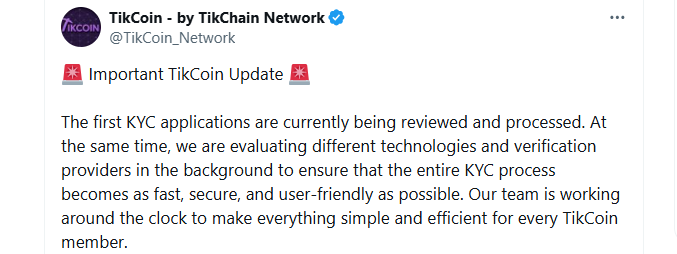
Source: Official X Announcement
TikCoin KYC Phase One Closed: Here Is What Happens Next
The first TikCoin KYC phase is now complete and temporarily closed. The team is spending the next week reviewing all applications, optimizing the verification process, and building the final version directly into the TIK mining app.
Users who have already completed KYC do not need to go through it again. The team will send email notifications once individual applications have been reviewed and processed.
When KYC reopens, it will run entirely inside the app – faster, simpler, and more convenient than the first phase.
The TikCoin network handled an extremely high volume of new registrations during the opening window, which briefly caused server strain. The infrastructure team responded immediately and all systems are now running normally.
TikCoin Launch Date and July Milestones: The Full Roadmap
The TikCoin launch date timeline is now clearly mapped out. Internal transfers between users go live on July 1, 2026. That is the first time TikCoin holders will be able to send and receive TIK tokens within the network.
Exchange listings on major platforms follow after that, with July 2026 as the target window. The TGE, Token Generation Event, ties directly to the mainnet launch, which is when mined tokens become fully transferable and tradable on exchanges.
Exact exchange names have not been confirmed yet, but the team has stated that listings on major platforms are part of the July preparation phase.
One important detail to note: a portion of user balances may be locked initially after transfers go live. The team will announce the exact amount, duration, and reasoning before anything is implemented.
The stated purpose is to protect long-term ecosystem stability.
TikChain Mining App and Token Structure Explained
The project positions itself as a Web4 social and crypto hybrid, combining decentralized identity with token rewards for everyday engagement. Users keep control of their own data while earning TIK through normal app activity.
The mining app is live right now on both Google Play and the App Store. Users register, mine TIK tokens daily through social engagement activities like check-ins, posts, likes, and comments, a model the project calls social mining.
The TikChain network, its main chain, runs on a total supply of 3,333,333,333 tokens. The tokenomics is straightforward:
80% goes to community mining,
8% to the team and development,
5% each to marketing, and partnerships, and
2% to a reserve fund.
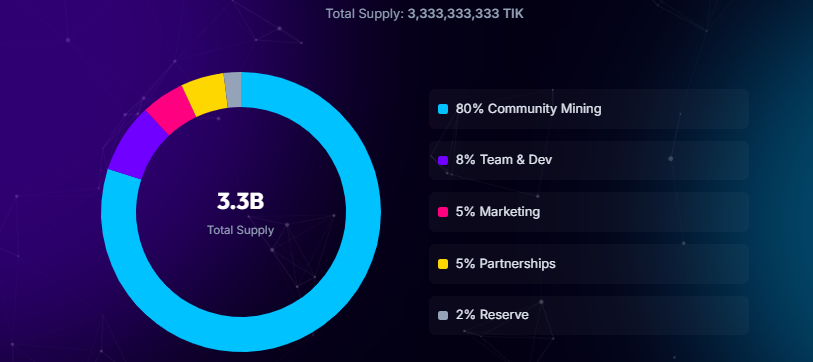
That 80% community share makes $TIK token one of the most community-heavy token structures in the current mining app space.
TikCoin Price Prediction: What to Expect After July Launch
Here’s how the crypto token price prediction looks after its official launch:
Short-term (Post-Listing): TIK has no official market value until exchange listings go live in July 2026. Looking at prices of similar structures circulating tokens or projects, a $0.50 to $1 looks possible on a heavy adoption basis.
Mid-term (1–6 Months Post-Launch): The 80% community mining allocation means a large supply enters the market at listing. At this phase TIK price can stagger up to 30% down. If social mining engagement stays high post-launch, buying pressure could absorb that supply quickly.
Long-term (6–12 Months and Beyond): TikCoin's long-term value ties directly to user retention after the launch excitement settles. A growing daily user base, active compliance across multiple countries, and a team of more than 10 full-time members give the project real structural backing.
At Conclusion
July 1, 2026 is now the date that matters most for the $TIK holders. Internal transfers go live, exchange listings follow, and the TikChain TIK token moves from mined balance to tradable asset.
The KYC process is being rebuilt inside the app for the next phase, and the team has made it clear that more features, more partnerships, and more milestones are lined up for the months ahead.
Note: This article is for information purposes only. All the information and facts are based on market present data. The article itself does not claim anything.






