Wasabi Protocol Hack: Loses $5 Million in Major DeFi Exploit

Wasabi Protocol Hack: Exploit Drains ETH & USDC on Ether and Base
The decentralized finance world is reeling today after a massive Wasabi Protocol hack drained over $5 million from the platform. On April 30, 2026, security experts at Blockaid and PeckShield flagged a major breach across Ethereum and Base. The attackers targeted the protocol's core vaults, stealing assets like WETH and USDC in a matter of minutes.
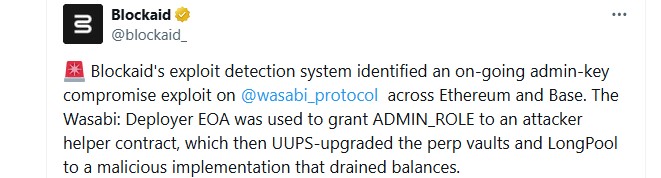
Source: Blockaid Official Account
Security researchers discovered that the root cause of the Wasabi Protocol hack was a "single point of failure." The protocol relied on a single admin key with no backup or safety delays. Once the hacker gained control of this key, they had total power over the system.
This incident is now part of the April 2026 DeFi hacks wave, which has seen hundreds of millions of dollars lost to digital thieves.
User Action Required: How to Handle the Security Breach
If you have used this platform recently, you must take immediate user action to stay safe. Security teams warn that "LP tokens" from Wasabi are now effectively worthless because the money backing them is gone. Even if your screen shows a balance, the actual value is likely zero.
Follow these steps to protect yourself:
Revoke Approvals: Use a tool like Revoke.cash to cancel any permissions you gave to Wasabi-vaults.
Check Your Tokens: If you hold sUSDC, wWETH, or sBTC from Wasabi, treat them as compromised.
Stay Alert: Watch for an official recovery plan from the team, but do not click on suspicious refund links on social media.
Wasabi Protocol Hack: How the UUPS Upgrade Attack Happened
The Wasabi exploit occurred after the attacker gained control of the “Wasabi-Deployer” account (deployer EOA exploit), which had full authority over the protocol’s smart contracts. Using this access, the attacker executed a UUPS upgrade (changing locks), replacing secure code in key contracts and draining liquidity from perp vaults and the LongPool.
Because there was no timelock or multisig (group vote) in place, the changes were executed instantly, leaving no time for intervention. The incident highlights the risks of centralized control over protocol funds.
April 2026: A Brutal Month for Crypto Security
The $5M hack is a smaller part of a much larger problem. April 2026 has been one of the worst months in crypto history, with over $600 million stolen across different platforms like Drift Protocol exploit and KelpDAO hack. This security breach serves as a loud reminder that even popular apps can fall if their master keys are not guarded by a group.
As the investigation continues, the DeFi Hack narrative is causing many investors to pull their money out of smaller projects. The recent master key exploit attack shows that until developers use better security tools, user funds will always be at risk. For now, the best move is to clean up your wallet approvals and wait for more news from the developers.
Note: The article is for informational purposes only.