Why Presale Mechanics Are Splitting Into Two Crypto Markets In 2026


Crypto Markets In 2026: Presale Risks And Trends
The crypto presale landscape has fractured into two distinct economic environments that produce wildly different outcomes for participants. On one side, projects like Pepeto have generated coordinated launch hype with structured Binance listing pathways and presale dashboards that approach traditional IPO communication standards. On the other, Rollblock crossed its planned launch date with $12.32 million already raised and produced nothing but silence, while Mozone AI promised a PancakeSwap listing that never materialized and BeCexy ended May with no exchange, no supply, and no date. Understanding which side of this divide a presale sits on has become the single most important skill for retail investors navigating the current environment.
For context on how this two-track market is showing up in user behavior, a sentiment analysis published by betstrike.com tracked engagement patterns across digital asset communities through the first quarter of 2026 and found that participants now spend twice as much time researching presale legitimacy signals as they did during the 2021 boom, with social proof, partner reveals, and exchange listing confirmations carrying significantly more weight than promotional content alone, suggesting the retail investor base has developed real defensive instincts after multiple cycles of disappointment.
The Structural Reason Some Presales Deliver And Others Vanish
The presales that actually launch successfully share characteristics that go beyond marketing quality. They have established communication cadences, named exchange partners with verifiable confirmations rather than generic listing promises, identifiable team members with prior project history, and tokenomics structures that align early holder incentives with sustainable post-launch performance. The ones that disappear typically rely on momentum-driven communication, vague exchange references, anonymous team structures, and tokenomics that concentrate value in ways that make sustained price action mathematically difficult.
Rollblock's missed launch date with $12.32 million raised demonstrates the most dangerous version of this pattern. The amount raised is large enough that the project clearly had real market interest, but the post-raise execution failure leaves holders in limbo without clear recovery paths. This is structurally different from a project that raises smaller amounts and quietly fails, because the larger raise creates compounding pressure on whatever team eventually decides to launch, list, or restructure the token.
Adam Cochran, partner at Cinneamhain Ventures and one of the more reliable analytical voices in crypto Twitter, has written extensively about this pattern. His core argument is that presale success metrics in 2026 should weight delivery execution far more heavily than fundraising totals, because the projects that raise large amounts without launching create both legal and reputational risk that ultimately damages the entire presale category.
What The Pepeto Listing Pattern Actually Reveals
The Pepeto rollout has generated consistent coverage across Tokenwire, Bhumika Baghel, and multiple other CoinGabbar contributors, with the consistent framing centering on a Binance listing pathway and 100x potential characterizations. The structural question worth examining is what specifically distinguishes credible listing narratives from speculative ones, because the same promotional language gets used by projects that ultimately deliver and projects that ultimately do not.
Three signals matter more than the others. First, the exchange itself confirming the listing through official channels rather than third-party speculation. Second, the timeline between announcement and listing being short enough that market conditions cannot shift dramatically in between. Third, the tokenomics structure producing post-listing liquidity that can absorb early holder selling without crashing the price to levels that destroy the listing narrative entirely.
Memecoin presales face an additional structural challenge that infrastructure projects do not. The value proposition rests almost entirely on attention capture and viral momentum, which makes the post-listing period particularly fragile. A successful memecoin launch needs to convert presale attention into immediate post-listing volume that itself becomes self-sustaining, because the underlying utility cannot fill the gap if community attention drifts elsewhere.
The CLARITY Act Effect On Presale Structures
The CLARITY Act passing Senate Committee has already begun reshaping how presales are structured, even before the legislation reaches final passage. Projects launching in this transition window face a choice that previous presales did not need to consider. They can structure as commodities under the anticipated CFTC framework, accepting decentralization requirements that limit founder control over the token economy. They can structure as registered securities under SEC oversight, accepting compliance costs that compress the economic upside that drove early-stage participation historically. Or they can attempt to operate in jurisdictional gray zones that the new framework explicitly targets for clarification.
The projects that have already chosen clearly fall into recognizable patterns. The ones positioning for commodity classification are aggressively decentralizing team control, distributing tokens broadly, and avoiding revenue-sharing structures that would trigger securities classification. The ones positioning for security classification are quietly building registration infrastructure and limiting their public marketing to qualified investor channels. The ones still operating in gray zones are increasingly the ones that face execution risk regardless of underlying project quality.
This regulatory shift will likely accelerate the divergence between professional presales and amateur ones across the second half of 2026. Retail investors who learn to read the regulatory positioning signals will protect themselves from a significant portion of presale failures going forward, even before evaluating the underlying token economics.
How Daily Engagement Mechanics Have Evolved
The proliferation of daily engagement products visible across CoinGabbar's coverage, including Beetz Daily Answer the Oracle, Dropee Daily Combo, Hamster Kombat Daily Cipher, Binance Word of the Day, and Xenea Wallet Daily Quiz, reveals a parallel trend that affects how attention flows through the crypto ecosystem. These products have created sustained engagement loops that previous airdrop campaigns could not match, with users returning daily for incremental rewards rather than concentrating attention around discrete launch events.
The implications for presale projects matter significantly. A project launching into an attention environment where users have multiple competing daily engagement obligations needs to either integrate with those engagement patterns or create competing patterns of its own. Static presale pages that worked during 2021 simply do not capture sustained attention in 2026, which forces projects to invest in ongoing community engagement infrastructure that adds cost and complexity to launch operations.
The HuoCore Wallet launch countdown approach and Pepeto's structured listing checklist communication style both reflect this evolution. The projects that succeed in the current environment treat presale and launch as sustained operational phases rather than discrete events, recognizing that the audience has been trained by daily engagement products to expect continuous communication and incremental progress signals.
The ETH Treasury Pattern Versus The Retail Presale Pattern
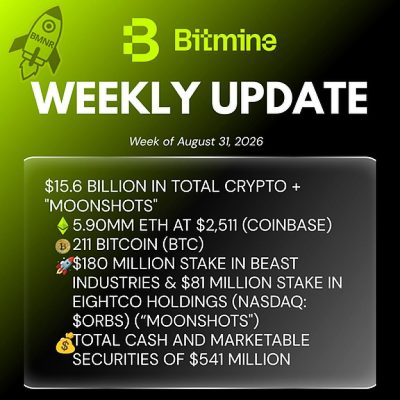
Bitmine Immersion Technologies reaching 5.28 million ETH holdings and acquiring 71,672 ETH in a single week represents the institutional side of the same market that retail presales serve. The structural difference matters for understanding how price action distributes during periods of crypto market expansion. Institutional treasuries accumulate established assets with verifiable supply mechanics. Retail presales fund speculation about future value creation that may or may not materialize.
Both can produce strong returns during favorable conditions. The risk profiles are fundamentally different. Institutional ETH accumulation participates in an asset with established price discovery, deep liquidity, and verifiable network usage. Presale participation funds projects that need to create their own price discovery, build their own liquidity, and demonstrate their own usage metrics from scratch.
The retail investor optimizing for risk-adjusted returns should probably allocate primarily to assets that have already crossed the validation threshold, with smaller allocations to presales that have demonstrated structural quality across the signals discussed earlier. The retail investor allocating primarily to presales is taking risk that experienced operators would size carefully even with significantly larger capital cushions.
What The Binance Delistings Reveal About The Tail End
Binance delisting ATA, FARM, MLN, PHB, and SYS on May 27 illustrates how the lifecycle ends for tokens that fail to maintain operational momentum after their initial launch. None of these tokens were fraudulent or particularly badly designed at launch. They simply failed to sustain the development activity, community engagement, and trading volume that exchange listings require for continued presence.
The pattern matters for presale evaluation because it provides the realistic worst-case scenario for tokens that launch successfully but fail to maintain momentum. A token that lists and then loses exchange presence within 18 to 24 months produces capital outcomes only marginally better than a presale that never launches at all. Retail investors who evaluate presales primarily on the likelihood of initial listing miss the larger risk of post-listing erosion that delisting events make visible.
Practical Evaluation Framework For The Current Environment
In 2026, the presale market rewards people who do proper research, not people who only follow hype. Retail investors who use a clear checklist may do better than those who chase the projects getting the most attention.
Some signals matter more than others. Exchange confirmation is important. If a named exchange shares its own listing announcement, it is stronger than a project only saying it will list soon. The team also matters. Named team members with a real past project history can help reduce risk. Tokenomics also matters. A good token structure should support early holders and help the project stay stable after launch. Regulation matters too. Projects with a clear compliance plan may be stronger than projects working in unclear legal areas.
Some signals look important but may not mean much. The total amount raised can show real demand, but it can also show strong marketing. Social media follower counts can be bought or boosted. General listing promises only matter when the exchange confirms them. Influencer support may also be paid promotion, not a true quality review.
The presale market is still open to retail investors. But the standards are now higher. People who treat presales as serious research may still find good chances. People who treat them like gambling on hype may keep facing the same risky results over time.

2 months ago
In a digital economy where every blockchain transaction leaves a trail, recovery begins with intelligence-not guesswork. Zeus Crypto Recovery Services is a specialized digital asset investigation and recovery consultancy focused on helping individuals and organizations navigate the complexities of cryptocurrency loss. Our approach combines blockchain intelligence, digital forensic methodologies, transaction analysis, and strategic case management to assess recovery opportunities involving Bitcoin (BTC), USDT (Tether), Ethereum (ETH), and other digital assets. Every case is treated as unique, with a structured investigation designed to identify transaction pathways, evaluate available evidence, and determine practical next steps based on the circumstances. At Zeus Crypto Recovery Services, we understand that recovering digital assets requires precision, discretion, and a methodical process. Our team works closely with clients to organize technical evidence, analyze blockchain activity, and provide clear, professional guidance throughout each stage of the engagement. We prioritize transparency by setting realistic expectations and communicating openly about the investigative process and possible outcomes. Whether your cryptocurrency has been affected by unauthorized wallet access, fraudulent investment schemes, phishing attacks, exchange-related disputes, or mistaken transfers, Zeus Crypto Recovery Services provides experienced support rooted in technical expertise and ethical standards. Our objective is to equip clients with the knowledge, documentation, and investigative insight needed to pursue every viable recovery avenue. Our commitment extends beyond investigations. We help clients strengthen their digital security posture through practical recommendations designed to reduce future risks and protect valuable crypto holdings. Why People's Choose Zeus Crypto Recovery Services * Specialized blockchain investigation expertise * Comprehensive digital asset tracing and analysis * Confidential handling of every client engagement * Transparent communication and realistic case assessments * Professional support tailored to individual recovery needs * Commitment to integrity, accountability, and client trust Zeus Crypto Recovery Services is dedicated to helping clients move from uncertainty to informed action through professional blockchain investigations, responsible recovery strategies, and unwavering commitment to excellence in the evolving world of digital asset Reach out now to recover your digital assets. WhatsApp /Call : +447353848036 Website https://zeusrecoveryservices.com